
India’s Great Weather Divide: Record Heat Scorches Plains as Snow Revives the Hills on March 9
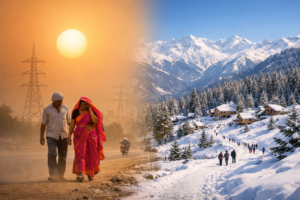
On March 9, 2026, India is experiencing a dramatic weather divide: while Delhi and large parts of northwest and central India, including Rajasthan and Gujarat, face intense early-season heat with temperatures soaring 5-8 degrees above normal and heatwave conditions, the Himalayan regions of Jammu & Kashmir, Himachal Pradesh, and Uttarakhand are bracing for a revival of winter with several days of scattered rainfall and snowfall starting March 10, offering critical relief to farmers and water tables. Simultaneously, eastern states like West Bengal, Bihar, Jharkhand, and Odisha are bracing for thunderstorms with lightning and gusty winds, marking the onset of the pre-monsoon storm season.
India’s Great Weather Divide: Record Heat Scorches Plains as Snow Revives the Hills on March 9
As the calendar flips to March 9, 2026, India is experiencing one of its most dramatic meteorological splits. While the national capital swelters under temperatures typically seen in mid-April, the Himalayan foothills are bracing for a welcome return of winter, and the eastern belt is preparing for the season’s first major thunderstorms.
The Indian Meteorological Department (IMD) has painted a complex picture for the week ahead. For the millions living in the vast swathes of northwest and central India, the primary story is an escalating battle with the sun. Daytime temperatures in places like Delhi have already begun their charge towards the 40-degree Celsius mark, a full month ahead of the usual schedule. This isn’t just a weather update; it’s a health advisory, an energy grid warning, and a farmer’s concern, all rolled into one.
Conversely, the higher reaches of Himachal Pradesh and Uttarakhand are looking at a different forecast altogether. A fresh Western Disturbance is poised to revive winter, promising a blanket of snow on peaks that have been unseasonably bare, and a much-needed drink for the glacial water sources that feed the rivers of the north.
Here is your comprehensive, region-by-region guide to what March 9, 2026, has in store for India, and what it means for your daily life.
The Scorching Core: Northwest and Central India
If you live in the Indo-Gangetic plains, the advice for the next 72 hours is simple: stay hydrated and avoid the afternoon sun.
Delhi-NCR: The “April Heat” has Arrived The capital region is waking up to a sweltering Monday. With temperatures already settling 5 to 8 degrees Celsius above normal, the mercury is expected to hover between a peak of 36 and 39 degrees Celsius. For context, the average maximum for early March in Delhi usually lingers around 30-31°C. This sudden spike means the afternoons feel more like the peak of summer.
“It felt like someone had turned on a giant hairdryer,” remarked Rajeev Sharma, a street vendor in Lajpat Nagar, as he sought shade under his stall’s awning. “I’ve lived in Delhi for 50 years, but this early heat is something else.” The IMD forecast offers a sliver of hope by the weekend. A marginal dip is expected by March 14, bringing daytime temperatures down to a more tolerable 34-35 degrees Celsius, thanks to the ripple effects of that Western Disturbance in the hills.
Rajasthan and Gujarat: The First Heatwave of the Season For the desert state of Rajasthan, the heat is not just coming; it is official. Heat wave conditions are very likely to grip West Rajasthan from March 8 through March 10. This is the season’s first official heatwave, and it serves as an early warning system. Local administrations are likely to issue advisories for vulnerable populations, particularly the elderly and those working outdoors.
In neighbouring Gujarat, the discomfort is twofold. North Gujarat, Saurashtra, and Kutch will experience heat wave conditions on March 9 and 10. Meanwhile, the coastal areas will be hit with a different kind of misery: hot and humid conditions. When high temperatures combine with coastal moisture, the heat index—or “feels-like” temperature—can climb significantly higher, making even standing still an uncomfortable experience.
Maharashtra: Marathwada on Alert The heat is also tightening its grip on the Marathwada region of Maharashtra. The IMD has predicted heat wave conditions here on March 10 and 11. This is a critical region for agriculture, and such an early heat spell could stress water resources and standing crops if it persists.
The Respite in the Hills: Snow and Rain for the Himalayas
While the plains boil, a sigh of relief is blowing through the mountains. A Western Disturbance—a weather system that brings winter moisture from the Mediterranean region—is set to become active.
Jammu & Kashmir, Ladakh: A Full Week of Weather The union territory of J&K and Ladakh is in for a dynamic week. It begins with isolated thunderstorms and gusty winds on March 9 and 10. However, the main event starts on March 10 night, with the weather system intensifying to bring scattered to widespread light to moderate rainfall and snowfall from March 10 through March 12.
For the tourism industry in Gulmarg and Pahalgam, this is excellent news. Late-season snow freshens the slopes for skiing and extends the winter wonderland experience for tourists. For the locals, it replenishes water tables and ensures that the springs and streams flow strong into the summer. The weather is expected to clear up and become isolated again by March 13-14.
Himachal Pradesh & Uttarakhand: From Heat Wave to Snowfall The contrast here is perhaps the most stark. As recently as March 8, these hill states were battling heat wave and severe heat wave conditions in isolated pockets—an unusual occurrence that left apple growers worried about the impact on their orchards, which require a period of “chilling” to bloom properly.
That worry should ease starting March 10. The IMD forecasts scattered light rainfall and snowfall over the region from March 10 to 14. The snow is expected to be heavier in the higher reaches. “This is what we call ‘Falguni Barf’ (snow of the month of Falgun),” said an elderly resident from Manali. “It comes at the end of winter and gives the mountains a fresh coat before the summer starts. It’s good for the soil and the apples.” The best part? Along with the precipitation, the region will also see a significant drop in temperature, bringing much-needed relief. However, travellers should be prepared for thunderstorms, lightning, and gusty winds on March 11 and 12, which could disrupt travel plans.
The Eastern Symphony: Thunderstorms and Gusty Winds
For eastern India, March 9 marks the beginning of the pre-monsoon thunderstorm season. These are not just rain showers; they are spectacular, and sometimes severe, weather events that break the building heat.
The Thunderstorm Belt: WB, Bihar, Jharkhand, Odisha A large swath of eastern India is under the weather radar for Monday. The IMD has issued a warning for thunderstorms accompanied by lightning and gusty winds reaching 30-50 kmph across:
- The Gangetic plains of West Bengal
- Bihar
- Jharkhand
- Odisha
- Sub-Himalayan West Bengal and Sikkim
For residents of Kolkata, Patna, and Ranchi, Monday afternoon and evening could bring sudden, sharp downpours and strong winds. While these storms can cause temporary disruptions—bringing down tree branches and causing power fluctuations—they are also nature’s way of cleansing the air and providing relief from the escalating humidity.
The Andaman & Nicobar Islands are also in the path of these thundery activities. This pattern is expected to persist over East India from March 9-11, and then shift to Northeast India from March 10-14, indicating a dynamic and active weather week for the entire eastern flank of the country.
What This Means for You
This diverse weather pattern is a powerful reminder of India’s geographical expanse. For the farmer in Punjab, the early heat wave is a signal to manage irrigation carefully. For the apple grower in Shimla, the forecasted snow is a lifeline for his crop. For the commuter in Delhi, it means starting the car earlier to let the AC cool it down. For the traveller heading to the hills, it means packing both sunscreen and a warm jacket.
As we move deeper into March, the battle between the retreating winter and the advancing summer will continue to create these dramatic contrasts. For now, whether you are reaching for a woolen cap or a bottle of cold water, staying informed is your best defence.
You must be logged in to post a comment.