
India’s Electronics Retail Revolution: How Market Forces Are Reshaping What You Buy and How You Shop
India’s consumer electronics retail market is experiencing explosive growth, driven by a powerful convergence of global scale and local disruption, fundamentally reshaping how Indians shop. Market leaders like Samsung and Apple leverage massive revenue, extensive manufacturing, and aspirational branding to dominate through nationwide retail networks and premium experiences, while agile, digital-native brands such as boAt have carved out commanding market shares by building youth-centric communities around affordable, stylish products.
This expansion is fueled by a strategic retail evolution where the lines between online and offline blur, with consumers seamlessly researching digitally while valuing in-store experiences and demos, forcing brands to adopt omnichannel models that integrate real-time inventory, interactive showrooms, and flexible financing. Ultimately, the sector’s trajectory reflects rising incomes and digital adoption, creating a fiercely competitive landscape where success hinges on delivering personalized, integrated technology experiences tailored to India’s diverse and savvy consumer base.
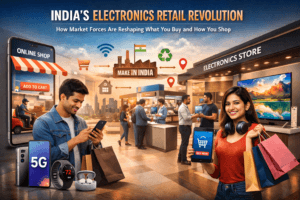
India’s Electronics Retail Revolution: How Market Forces Are Reshaping What You Buy and How You Shop
The Indian consumer electronics market is undergoing a transformation that mirrors the nation’s own economic and social evolution. Moving far beyond mere transactions, the sector is now a dynamic arena where global titans, agile domestic disruptors, and a new generation of digitally-native consumers are collectively rewriting the rules. This growth is not just about increasing sales figures; it is a story of strategic adaptation, technological democratization, and a fundamental shift in the retail experience itself. From Samsung’s unprecedented revenue milestone to the cult-like following of homegrown brand boAt, the market’s expansion is driven by distinct strategies catering to a deeply segmented and savvy consumer base.
The Titans: Market Leaders Setting the Scale
The sheer scale of India’s electronics appetite is best illustrated by its market leaders. Samsung India Electronics has achieved a landmark feat, crossing the ₹1 lakh crore revenue threshold for the first time in FY25 with an 11% growth to ₹1.11 lakh crore. This staggering figure underscores Samsung’s entrenched presence across smartphones, televisions, and home appliances. Its success is anchored in a comprehensive retail network that spans metropolitan showrooms and rural retail counters, ensuring unparalleled availability.
Not far behind, Apple India has demonstrated the potent demand for aspirational technology, reporting robust growth of 18% to reach ₹79,378 crore in revenue. This surge has been fueled by increased local assembly, an expanding network of authorised stores, and financing schemes that make premium products more accessible. Meanwhile, LG Electronics, with a total income of ₹24,630 crore, is executing a calculated pivot towards premiumisation and localisation. Its “Future Vision” strategy aims to increase local manufacturing content from about 56% to 70% over the next few years, a move designed to improve margins and tailor products for Indian consumers.
The Premium Play: Beyond Features to Experiences
For a segment of Indian consumers, electronics have transitioned from being functional gadgets to central components of a curated lifestyle. Brands like LG and Sony are strategically focusing on this premium segment, where competition is based on superior experience and technological sophistication rather than price alone.
LG is aggressively expanding its premium portfolio with products like AI-enabled washing machines and stylish front-door refrigerators. This focus is yielding results; the brand holds a commanding 62.6% share in the premium OLED TV market and over 43% in the side-by-side refrigerator segment. Similarly, Sony has historically banked on its reputation for exceptional audio and visual quality. However, the premium space is not without challenges, as evidenced by Sony’s need to adapt to intense competition and shifting consumer expectations.
The Disruptors: Digital-Native Brands Building Communities
Perhaps the most electrifying narrative in Indian electronics is the rise of digitally-native brands that have built empires by understanding the pulse of the youth. Leading this charge is boAt, which has transformed from a startup into a cultural phenomenon and market leader in the hearables and wearables space.
boAt’s journey is a masterclass in community-centric marketing. Founded in 2016, it identified a gap for affordable, stylish, and durable audio accessories. Its genius lay in selling not just products, but an identity. By leveraging influencer partnerships, iconic collaborations (like with IPL teams), and a relentless social media presence, boAt cultivated a loyal tribe of “boAtheads”. This strategy propelled it to a dominant 38.5% market share in wearables and revenue soaring past an estimated ₹4,000 crores. Its story proves that deep consumer insight and agile digital engagement can challenge global giants on home turf.
The Retail Reinvention: Blending the Physical and Digital
The battlefield for consumer attention has fundamentally shifted to the retail experience itself. Today’s consumers effortlessly navigate between online and offline channels, and winning brands are those that seamlessly integrate both.
The omnichannel model is now essential. Research indicates over 70% of Indian electronics buyers research online before purchasing in-store. Successful retailers are responding by integrating real-time inventory across platforms, enabling services like “buy online, pick up in-store.” This strategy isn’t just convenient; retailers employing these models have reported sales increases of 15-20% or more.
Furthermore, the in-store experience is being reimagined. Interactive experience zones where customers can test robotic vacuum cleaners or smart home ecosystems are becoming crucial, especially for premium and complex products. These zones, supported by knowledgeable staff, help bridge the gap between online research and physical trust, significantly boosting conversion rates.
Strategic Profiles of Key Market Drivers
| Brand | Core Revenue/Scale | Primary Market Strategy | Key Retail Focus |
| Samsung | ₹1.11 Lakh Cr (FY25) | Mass-market dominance across categories; extensive local manufacturing. | Unmatched nationwide retail network; omnichannel presence. |
| Apple | ₹79,378 Cr (FY25) | Aspirational branding & ecosystem lock-in; premium segment focus. | Growing authorised retail stores; online store & financing schemes. |
| LG | ₹24,630 Cr (FY25) | Premiumisation & product innovation; “Make in India” manufacturing. | Highlighting advanced features in experience zones; B2B expansion. |
| boAt | Est. >₹4,000 Cr | Youth-centric community building; agile, digital-first D2C model. | Dominant online marketplace presence; expanding into offline retail partnerships. |
| Xiaomi | N/A in search results | Value-for-money proposition; smart ecosystem integration. | Hybrid “online-first + Mi Store” offline expansion. |
Navigating the Road Ahead
The future of India’s electronics retail market will be shaped by several converging trends. First, the push for local manufacturing will intensify, driven by government policies and brands’ needs for supply chain resilience and cost optimisation, as seen in LG’s and Samsung’s commitments. Second, sustainability will move from a niche concern to a mainstream purchase driver, influencing product design and consumer choice.
Finally, the lines between product categories will continue to blur. The integration of artificial intelligence across devices, from refrigerators to wearables, will create new demand cycles. In this environment, success will belong to brands that can do more than just sell a device; they must sell an integrated, personalised, and sustainable experience, supported by a retail journey that is as advanced as the technology on the shelves.
The Indian consumer electronics market is a powerful engine of the nation’s retail growth. Its trajectory is a clear indicator of rising incomes, digital adoption, and evolving aspirations. As brands jostle for position—through scale, premium appeal, or community connection—the ultimate winners are Indian consumers, who enjoy an unprecedented array of choices, channels, and cutting-edge technology integrated into their daily lives.
You must be logged in to post a comment.