
India’s Bold Phone Security Rules: A Clash Between National Security and Corporate Secrecy
India’s Bold Phone Security Rules: A Clash Between National Security and Corporate Secrecy
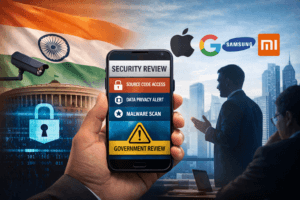
India, the world’s second-largest smartphone market with nearly 750 million phones, is on the verge of implementing one of the most stringent device security frameworks ever proposed. A package of 83 new security standards has sparked a high-stakes confrontation between the Indian government and global technology giants like Apple, Samsung, Google, and Xiaomi.
At the heart of the dispute is a fundamental question: can a government mandate access to a company’s most prized intellectual property in the name of national cybersecurity? As online fraud and data breaches rise, India’s proposals aim to fortify devices from the operating system up, but manufacturers warn they represent an unprecedented overreach that could compromise user privacy, device performance, and global product integrity.
The Core Conflict: Government Access vs. Corporate Secrets
The most contentious rule requires manufacturers to test and provide proprietary source code—the foundational programming instructions of phone operating systems—for review by government-designated laboratories. The government’s goal is to proactively identify vulnerabilities that attackers could exploit. For tech companies, this demand strikes at the core of their business. Source code is among their most closely guarded assets, containing trade secrets and unique technological innovations.
The industry’s pushback has been swift and firm. The Manufacturers’ Association for Information Technology (MAIT), representing the major tech firms, stated that compliance is “not possible” due to corporate secrecy obligations and global privacy policies. This standoff isn’t new; Apple famously declined similar requests from China between 2014 and 2016, and U.S. law enforcement has also faced resistance. Tech companies argue that no other major economy—including the EU, North America, or Australia—mandates such disclosure, setting a worrying precedent.
A New Vision for User Privacy and Control
Beyond source code, the proposed rules would fundamentally reshape the smartphone experience for Indian users, prioritizing transparency and control. The key privacy-focused proposals include:
| Proposed Requirement | Intended User Benefit | Industry Concern |
| Background Permission Restrictions | Prevents silent surveillance; apps cannot access camera, microphone, or location when phone is inactive. | No global precedent or clear testing standard exists for this rule. |
| Mandatory Permission Review Alerts | Prompts users to periodically review and reconsider app permissions. | Alerts should be limited to “highly critical” permissions to avoid user fatigue. |
| Removable Pre-installed Apps | Allows users to delete non-essential bundled apps (“bloatware”), freeing storage and increasing control. | Many pre-installed apps are critical system components that cannot be safely removed. |
These rules aim to give users visible, ongoing control over their digital footprint. The requirement for continuous status bar notifications when sensitive permissions are active, for instance, is designed to eliminate “silent” access by apps. For consumers, this could mean an end to the frustration of non-removable bloatware and greater awareness of which apps are accessing their microphone or camera in the background.
The Technical Feasibility and Performance Trade-Offs
The industry’s objections are not based solely on principle; they raise significant practical concerns about device performance, security efficacy, and storage.
- The Burden of Constant Scanning: A rule mandating periodic, on-device malware scanning is cited as a major threat to battery life and hardware performance. Companies argue that continuous scanning would significantly drain batteries and slow down devices, directly impacting the user experience.
- The Storage Dilemma: Perhaps the most quantifiable challenge is the requirement to store security audit logs—detailing app installations and login attempts—locally on the device for 12 months. MAIT contends that typical consumer phones “lack the storage capacity” for a full year of such data, which could lead to system slowdowns or the unintended deletion of other user data to make room.
- The Speed vs. Security Patch Paradox: In cybersecurity, speed is critical. Manufacturers have branded as “impractical” a rule requiring them to notify a government organization before releasing major updates or security patches. They warn that government review delays could leave millions of users vulnerable to active exploits that require immediate patching, creating a dangerous security gap.
Broader Context: Part of a Sweeping Telecom Security Overhaul
This smartphone proposal is not an isolated move. It fits within India’s expansive agenda to harden its entire digital ecosystem against fraud and cyber threats. In recent months, the Department of Telecommunications has enacted other measures, such as:
- Mobile Number Validation (MNV) Platform: A system to help service providers verify that a mobile number genuinely belongs to the person presenting it, aimed at curbing identity fraud.
- IMEI “Scrubbing” for Resold Devices: Mandating that resellers check a device’s unique IMEI number against a central blacklist to prevent the circulation of stolen or cloned phones.
These parallel reforms show a government-wide push toward greater traceability and security in telecommunications, of which smartphones are the most personal and ubiquitous component.
Market Realities and the Path Forward
The outcome of this clash has enormous stakes for the Indian market. Samsung and Xiaomi dominate with a combined 34% market share, while Apple, though holding around 5%, views India as its most critical growth market. If strictly enforced, these rules could force companies to create India-specific software variants, potentially delaying product launches and updates in the country.
The government has signaled a willingness to negotiate. IT Secretary S. Krishnan stated that “any legitimate concerns of the industry will be addressed with an open mind,” emphasizing that consultations are ongoing. Industry representatives, like Pankaj Mohindroo of the India Cellular & Electronics Association (ICEA), have called the discussions a “normal” part of a transparent consultation process.
A crucial meeting between the IT Ministry and tech executives is scheduled, which will likely determine whether the government moderates its demands or decides to enforce them as law.
The Global Implications
India’s move is being closely watched worldwide. If successful, it could inspire similar regulations in other large markets, shifting the global balance of power between tech giants and nation-states. Conversely, if companies resist and the rules are softened, it will reinforce the current model where corporations retain ultimate control over their software ecosystems.
For now, the proposal stands as a bold testament to India’s ambition to dictate the terms of digital security within its borders. It highlights the growing tension in our interconnected world: the struggle to define where corporate responsibility ends and national sovereignty over cybersecurity begins. The resolution will shape not only the future of smartphones in India but also the global debate over technology, privacy, and security.
You must be logged in to post a comment.