
India’s $25 Billion Military Makeover: Why Old Friend Russia Is Still the First Call
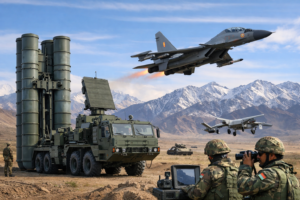
India has approved $25 billion in defence acquisitions for fiscal 2025–26, its highest single-year capital procurement, including additional Russian-made S-400 long-range missile systems, upgrades to Su-30 fighter jet engines, new medium transport aircraft to replace aging AN-32 and IL-76 planes, armed drones, and army gear such as air defence tracking systems, armour-piercing ammunition, and battlefield surveillance. Despite expanding purchases from the US, France, and Israel, the new Russian orders underscore Moscow’s enduring role as a key supplier, reflecting India’s strategic autonomy and focus on deterrence against regional threats from China and Pakistan.
India’s $25 Billion Military Makeover: Why Old Friend Russia Is Still the First Call
Forget the Hollywood headlines about a complete pivot to the West. When India’s generals needed to stop a missile in the sky, they dialed a familiar number—Moscow.
In a move that quietly resets the geopolitical narrative for South Asia, the Indian government has greenlit a staggering $25 billion worth of defense acquisitions in a single fiscal year. While the world watches the shifting alliances between Washington and New Delhi, the Defence Acquisition Council (DAC), led by Minister Rajnath Singh, just placed a very telling order: more Russian S-400 missile systems and a life-extending overhaul for the backbone of the Indian Air Force—the Sukhoi Su-30.
At a staggering 6.73 trillion rupees ($71 billion) worth of proposals cleared for the 2025-26 financial year, this isn’t just a shopping spree. It is a strategic manifesto. It is India looking at a volatile neighborhood—a rising China, a chaotic Pakistan, and the unpredictable ripple effects of the Middle East—and deciding exactly what it needs to sleep at night.
But behind the dizzying numbers and the acronyms like S-400 and AN-32, there is a human story: a story of pragmatism over politics, of desperation for “Make in India,” and of an old friendship that refuses to fade away.
The “Game Changer” That Arrived Late
To understand why India is doubling down on the Russian S-400 system, you have to look up—literally. For years, India’s air defense was a patchwork quilt of aging Soviet Pechora systems and Israeli Spyder batteries. It worked, but in a modern war involving stealth fighters and hypersonic missiles, it was like bringing a knife to a gunfight.
India bought the first batch of S-400s (dubbed the “Triumf”) despite a massive warning from the United States under the CAATSA sanctions regime. Washington essentially told India: “Buy Russian, risk American sanctions.” India bought them anyway.
Now, with the approval of additional S-400 squadrons, New Delhi is sending a blunt message to both Beijing and Washington: Our sovereignty is not for sale.
The DAC statement specifically notes that the S-400 will “counter enemy long-range air” threats. In military code, “enemy” here is a direct reference to China’s ability to strike deep into Indian territory from across the Himalayas without crossing the border. The S-400 gives India the ability to see further and hit harder, creating a “no-fly zone” for enemy bombers or AWACS planes.
What makes this interesting is the timing. The original S-400 deal was fraught with delays due to the Russia-Ukraine war. Paying for these systems in a volatile global economy is a headache. Yet, India is sticking to the Russian blueprint because, quite simply, the West doesn’t have a comparable off-the-shelf system that integrates with India’s existing Russian-heavy inventory.
The Sukhoi Heartbeat
Perhaps the most overlooked, yet most human, part of this deal is the upgrade to the Su-30 fighter jet engines.
The Su-30MKI is the workhorse of the IAF. Pilots love it for its agility and thrust. Mechanics hate it for its maintenance headaches. But with the induction of the French Rafale (only 36 jets) and the delayed Tejas Mk-1A (domestic), the IAF is facing a massive “squadron desert.” They don’t have enough planes to fight a two-front war.
Instead of buying shiny new foreign jets (which cost upwards of $200 million each), India has chosen the frugal, wise path: upgrade the engines on the 260+ Sukhois they already own.
This is the equivalent of a car enthusiast keeping a classic V8 muscle car but swapping the carburetor for fuel injection. It is familiar. The pilots know the cockpit. The ground crews know the quirks. By upgrading the power plants, India gets 80% of the performance of a new jet at 20% of the cost.
The “Drone Gap” and the End of the An-32 Era
While the Russian deals grab the headlines, the “boring” parts of the approval list are actually the most revolutionary.
The AN-32 Replacement: The IAF has been flying the AN-32 (a Soviet-era twin-engine turboprop) since the 1980s. For any soldier who has flown into the dusty airstrips of Leh or the Andaman Islands, the AN-32 is a familiar rattling beast. But it is old. It crashes. It is loud. The approval for “new medium transport aircraft” means the logistical lifeline to the Siachen Glacier (the world’s highest battlefield) is about to get a modern upgrade. This saves lives by making supply runs safer.
The Armed Drones (RPAS): The approval for “Remotely Piloted Strike Aircraft” is India finally joining the 21st century. While the US, China, and Turkey have been using drones to blow up tanks and hideouts for a decade, India has been largely reliant on surveillance drones (Herons) that can’t shoot back.
The new drones will be capable of “both attack and surveillance.” For the infantryman on the ground facing terrorists in the dense forests of Kashmir or soldiers watching Chinese bunkers in the high-altitude deserts of Ladakh, this is a game changer. It means a drone can loiter for 30 hours, spot a hostile mortar team setting up, and take them out without waiting for a fighter jet to scramble from 200 miles away.
The Army’s Quiet Revolution
The media loves fighter jets and missiles, but the Army’s list reveals the real grind of modern warfare.
- Armour-Piercing Tank Ammunition: Against modern Chinese Type-15 or Pakistani Al-Khalid tanks, you need more than just a big gun. You need a specific dart of depleted uranium or tungsten moving at Mach 5. This approval ensures that Indian tank crews don’t have to “shoot twice” while the enemy is shooting once.
- Battlefield Surveillance System: This is the “eye in the sky” for the general on the ground. It ties together radar feeds, drone footage, and satellite imagery into a single tablet. For a battalion commander, this is the difference between walking into an ambush and setting one up.
The Geopolitical Tightrope
Here is the raw truth: India cannot afford to choose sides.
India buys oil from Russia. India buys iPhones from the US. India buys wheat from Ukraine. India buys natural gas from the Middle East.
By approving this $25 billion package—which includes Russian systems, Western engines, and Israeli avionics—India is practicing what strategists call “strategic autonomy.”
The US would love India to dump Russia completely. But India remembers 1965 and 1971, when the US sent the USS Enterprise into the Bay of Bengal to intimidate India, and the Soviet Union was the only one that vetoed UN resolutions against it. That institutional memory runs deep.
However, the “Make in India” angle is the real win here. The Su-30 upgrades will happen at Nashik. The drones are likely to be built by a joint venture involving an Indian private firm (like Adani or Tata) with foreign tech transfer. The radios and artillery are indigenous.
The bottom line? India is spending $25 billion not just to win a war, but to prevent one. When Pakistan sees that India has S-400s that can shoot down its missiles mid-flight, or when China sees that Indian drones can harass their supply lines without risking a pilot’s life, the calculus for conflict changes.
This is not about aggression. It is about deterrence. And for the soldier freezing in a bunker at 18,000 feet, or the pilot pulling Gs in a Sukhoi, that $25 billion is the only insurance policy that matters.
You must be logged in to post a comment.