
India’s $12 Billion RDIF: Can a Cash Infusion Spark a Deep-Tech Revolution?
India’s newly operational $12 billion Research, Development and Innovation (RDIF) fund is a strategic attempt to overcome the nation’s long-standing innovation deficit—marked by R&D spending of just 0.64% of GDP—and transition from a technology consumer to a global creator.
Structured as a “Fund of Funds” managed by professional investors, it deploys patient, risk-sharing capital to bridge the “valley of death” for deep-tech startups in strategic sectors like green hydrogen, AI, and quantum computing. By de-risking early-stage investments in critical decarbonization technologies and other frontier fields, the RDIF aims to crowd in private capital, strengthen domestic supply chains, and position India as a competitive leader in the global clean energy and technology ecosystems, ultimately supporting its economic and climate goals.
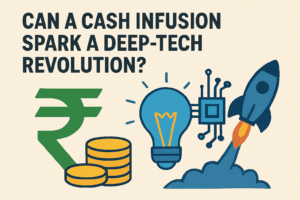
India’s $12 Billion RDIF: Can a Cash Infusion Spark a Deep-Tech Revolution?
India is making a historic $12 billion bet on its own ingenuity. The newly operational Research, Development, and Innovation (RDI) Fund represents more than just a financial boost; it’s a strategic pivot to transform the nation from a technology consumer into a global innovation powerhouse. With a laser focus on “deep-tech” and decarbonization, this fund could redefine India’s economic trajectory and its role in solving global challenges like climate change.
The Innovation Gap: Why India Needs the RDIF
For decades, India’s spending on research and development (R&D) has lagged significantly behind other major economies. The country invests a mere 0.64% of its GDP in R&D, a stark contrast to China’s 2.68%. More critically, the private sector contributes only about 36.4% of this national R&D expenditure, while in advanced economies, private investment routinely exceeds 70%.
This underinvestment has created a structural deficit in India’s innovation ecosystem. Industry R&D investment is estimated to be just 0.2% of GDP—about 11% of China’s level and 7% of that in the United States. The consequence is a persistent “valley of death,” where promising scientific discoveries made in labs fail to cross the chasm into commercially viable prototypes and products.
Table: India’s R&D Investment in Global Context
| Metric | India | China | Advanced Economies (Typical) |
| R&D Spend (% of GDP) | 0.64% | ~2.68% | >2.0% |
| Private Sector Share of R&D | 36.4% | – | >70% |
| Industry R&D (% of GDP) | ~0.2% | ~1.8% (est.) | – |
Beyond a Grant: The RDIF’s Novel Architecture
The RDIF, with a corpus of ₹1 lakh crore (approx. $12 billion), breaks from traditional government funding models. It is not a grant-giving body but a sophisticated, market-driven investor structured as a “Fund of Funds.”
The capital is housed in a Special Purpose Fund under the Anusandhan National Research Foundation (ANRF) and is managed by professional Second-Level Fund Managers (SLFMs). These SLFMs—which can include venture capital funds, investment institutions, and focused research organizations—are responsible for identifying and financing promising Indian companies and startups.
This model is designed to inject “patient capital” into the system, de-risking private investment. The RDIF can take on different risk profiles (like first-loss tranches) to attract private co-investors, with the goal of crowding in multiples of private capital for every public rupee spent.
Strategic Priorities: From Green Hydrogen to Quantum Computing
The fund has a clear mandate to finance “transformative projects” in strategic, sunrise sectors. Eligible projects must be at Technology Readiness Level (TRL) 4 or above, meaning they have moved beyond basic research to validation in a laboratory environment. The priority sectors include:
- Energy Security & Climate Action: Green hydrogen, sustainable energy materials, Carbon Capture, Utilization and Storage (CCUS).
- Deep Technologies: Artificial Intelligence, quantum computing, robotics, and space technologies.
- Biotechnology: Biomanufacturing, synthetic biology, and medical devices.
- Digital Economy & Advanced Materials.
For climate technology, the timing is critical. India has launched a first-of-its-kind R&D roadmap for CCUS to achieve its 2070 net-zero goal, explicitly aiming to leverage the RDIF’s pathways. The fund is seen as a tool to help India become a “green lab for climate innovation,” developing and scaling solutions for hard-to-abate sectors like cement and steel that can be adopted across the Global South.
A Welcome Sign for Innovators and Investors
The operationalization of the RDIF creates clear opportunities:
- For Entrepreneurs & Companies (Eligible Technology Entities): Access to a new source of long-term, patient capital for scaling deep-tech innovations. Strict eligibility rules apply: companies must be controlled by resident Indian citizens, have their global headquarters in India, and must register any resulting intellectual property in India.
- For Fund Managers: Professional SLFMs can apply to manage portions of the RDIF corpus. Selection is based 80% on the quality of the team, track record, and investment thesis, and 20% on cost competitiveness.
- For the Broader Ecosystem: The fund aims to strengthen industry-academia linkages, encourage corporate R&D, and attract global talent and partnerships.
The Road to Success: Key Challenges and Real-World Metrics
Deploying capital is one thing; generating transformative outcomes is another. Experts argue that for the RDIF to succeed, India must address deeper ecosystem challenges.
- Bridging the Translation Gap: Money must be paired with “translational infrastructure.” This includes creating proof-of-concept funds, entrepreneur-in-residence programs at universities, and shared industry-academia testbeds to push inventions from the lab to the market.
- Redefining Academic Success: Universities and research institutions need to evolve from being “knowledge producers to impact platforms.” This requires incentives for faculty to engage in commercialization, equitable IP sharing models, and performance metrics that value patents and spin-outs alongside publications.
- Smart Governance and Patience: The fund must maintain strategic clarity, empower its professional managers with autonomy, and resist bureaucratic bottlenecks. Success should be measured not just by financial returns but by a broader dashboard: the number of high-impact patents filed, technologies commercialized, private capital mobilized, and strategic supply chains developed.
Conclusion: A Defining Bet on India’s Future
The RDIF is a bold acknowledgment that India’s future growth must be built on a foundation of innovation and technological self-reliance. By strategically de-risking private investment in deep-tech and climate solutions, it has the potential to alter the nation’s economic composition and global standing.
The ultimate test will be whether this $12 billion catalyst can ignite a lasting cultural shift—one where industry sees R&D as a strategic imperative, academia embraces its role as an innovation engine, and the world looks to India not just for IT services, but for the breakthrough technologies that will shape the coming decades. The fund’s launch is the beginning of a critical journey; its success will determine if this is remembered as a mere funding moment or India’s genuine deep-science revolution.
You must be logged in to post a comment.