
India Smart Utility Week 2026: Shaping the Future of Energy in New Delhi
India Smart Utility Week (ISUW) 2026, the 12th edition of the India Smart Grid Forum’s flagship conference held in New Delhi from March 10-14, brought together over 2,000 delegates, 230+ experts, and representatives from 40+ utilities for a week of high-level dialogue on smart grids, energy digitalization, and electric mobility. The event featured bilateral workshops with the UK, Brazil, and Indonesia, technical sessions on cutting-edge topics like Agentic AI, vehicle-to-grid technologies, and cybersecurity, as well as the 10th ISGF Innovation Awards and an international exhibition, reinforcing India’s role as a global hub for energy transition collaboration and showcasing practical solutions for building future-ready, sustainable utilities.
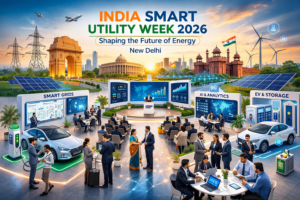
India Smart Utility Week 2026: Shaping the Future of Energy in New Delhi
A Landmark Gathering of Global Energy Leaders
The 12th edition of India Smart Utility Week (ISUW) 2026 concluded successfully in New Delhi, bringing together over 2,000 delegates, 230+ experts, and representatives from more than 40 electricity utilities across India and overseas. This flagship conference, organized by the India Smart Grid Forum (ISGF), has firmly established itself as one of the world’s premier platforms for discussions on smart grids, digitalization of utilities, energy transition, electric mobility, and smart cities.
The five-day event, held from March 10 to 14, 2026, transformed the national capital into a global hub for energy innovation, collaboration, and knowledge exchange. With participation from countries including the USA, UK, Brazil, Indonesia, Netherlands, France, Australia, Slovenia, UAE, African nations, and Korea, ISUW 2026 demonstrated the growing international importance of India’s energy dialogue.
The Inaugural Ceremony: Setting the Tone for Transformation
The conference opened with a traditional lamp-lighting ceremony that symbolized the illumination of new pathways in the energy sector. Distinguished dignitaries who graced the occasion included Mashal Dhawan, CEO – Asia, SEW.AI and General Secretary, ISGF; Brian Motherway, Head-Energy Efficiency Division, IEA; Amal Sinha, Director and Group CEO, BSES; Ashish Khanna, DG, International Solar Alliance; Shivkumar Kalyanaraman, CEO, ANRF; Ashish Goel, Chairman, UPPCL; Alok Kumar, DG, All India DISCOMs Association; Ghanshyam Prasad, Chairperson, CEA; and Richard Schomberg, Special Envoy on Smart Electrification, IEC.
The presence of such high-profile leaders from both domestic and international organizations underscored the significance of ISUW as a platform where policy meets practice, and where global challenges find local solutions.
Beyond the Numbers: What 2,000+ Delegates Experienced
While the statistics are impressive – 2000+ delegates, 230+ speakers, 40+ utilities – the real story lies in the quality of interactions and the depth of discussions that took place over five intense days.
Bilateral Workshops: Strengthening International Collaboration
A key highlight of ISUW 2026 was the series of bilateral smart grid workshops with partner countries including the UK, Brazil, and Indonesia. These sessions went beyond ceremonial agreements, diving deep into technical collaborations, grid modernization strategies, and renewable integration challenges that are common across borders.
The India-UK workshop, for instance, focused on how both nations are tackling the intermittency challenges of renewable energy. British experts shared their experiences with offshore wind integration, while Indian counterparts presented innovations in solar forecasting and grid balancing. This exchange of real-world experiences proved invaluable for utility professionals facing similar challenges in different contexts.
Similarly, the India-Brazil collaboration explored the digitalization of utilities, with both countries sharing their journeys from traditional grid management to data-driven operations. Brazilian delegates expressed particular interest in India’s rapid deployment of smart meters and the accompanying data analytics frameworks.
The India-Indonesia workshop addressed the unique challenges of archipelagic grids, with discussions on how distributed energy resources can be effectively managed across geographically dispersed networks.
Technical Sessions: Where Theory Meets Practice
The conference featured a rich tapestry of technical sessions that covered the entire spectrum of modern utility challenges and opportunities. What set these sessions apart was the emphasis on practical implementation rather than theoretical possibilities.
Agentic AI: How to Build and Deploy AI Agents
One of the most anticipated sessions focused on agentic AI – autonomous AI systems that can make decisions and take actions without human intervention. The discussion moved beyond the hype to address practical considerations: How do you train AI agents on utility data? What safeguards are necessary? How do you ensure these systems align with regulatory requirements?
Utility leaders shared their experiences with pilot projects where AI agents are already managing distribution network faults, optimizing voltage levels, and even interacting with customers for basic service requests. The consensus was clear: agentic AI is not science fiction but a practical tool that forward-thinking utilities are already deploying.
Digitalization Roadmap for Utilities and Data Governance Framework
This session addressed one of the most pressing challenges facing utilities today: how to manage the deluge of data from smart meters, sensors, and IoT devices. Experts emphasized that digitalization is not just about installing hardware but about creating ecosystems where data flows securely and productively.
The discussion on data governance was particularly timely, with speakers highlighting the need for frameworks that protect consumer privacy while enabling innovation. Several utilities shared their experiences with data anonymization techniques, consent management systems, and the ethical use of customer data for grid optimization.
Flexumers: The New Energy Consumers
A concept that generated considerable excitement was that of “flexumers” – consumers who actively participate in grid flexibility by adjusting their consumption patterns in response to grid conditions. Sessions explored how utilities can identify potential flexumers, design incentive structures that encourage participation, and integrate this flexibility into grid operations.
Case studies from European utilities that have successfully implemented demand response programs provided valuable lessons for Indian counterparts. The discussion acknowledged that while the concept is promising, significant work remains in areas like consumer education, technology deployment, and regulatory frameworks.
Electric Mobility and Vehicle-to-Grid Technologies
With India’s electric vehicle revolution gathering pace, sessions on V2G technologies attracted standing-room-only audiences. Experts discussed how EV batteries can serve as distributed storage resources, providing grid services when vehicles are parked – which, for most personal vehicles, is over 90% of the time.
Technical challenges around battery degradation, bi-directional charger standards, and grid integration were debated alongside business model considerations. Utility representatives shared their early experiences with V2G pilot projects, highlighting both the potential and the practical hurdles that need to be overcome.
Artificial Intelligence and Data Analytics for Utilities
Beyond the agentic AI discussions, broader sessions on AI and data analytics explored how machine learning is transforming utility operations. From predictive maintenance of transformers to customer churn prediction, from load forecasting to fraud detection, AI applications are becoming mainstream in progressive utilities.
What made these sessions valuable was the emphasis on implementation challenges: data quality issues, skills gaps, integration with legacy systems, and the cultural shift required to become data-driven organizations. Speakers shared both successes and failures, providing realistic perspectives for utilities at different stages of their AI journey.
Cybersecurity for Power Systems
As grids become more digital and interconnected, cybersecurity concerns have moved from IT departments to boardroom discussions. Sessions on cybersecurity explored the evolving threat landscape, with experts noting that power systems are increasingly attractive targets for state-sponsored actors, cybercriminals, and hacktivists.
The discussions went beyond technical controls to address governance frameworks, incident response planning, and the importance of creating a security-aware culture across organizations. Representatives from utilities that have experienced cyber incidents shared their learnings, emphasizing that preparedness is not optional but essential.
Gender Balance in Power Sector
A notable session addressed the gender imbalance that persists in the power sector globally. Leaders discussed initiatives to attract and retain women in technical roles, create inclusive workplace cultures, and ensure that the energy transition benefits from diverse perspectives.
The session featured success stories from utilities that have implemented mentorship programs, flexible work arrangements, and targeted recruitment efforts. Participants agreed that achieving gender balance is not just a matter of social justice but a business imperative, as diverse teams make better decisions and drive more innovation.
The ISGF Innovation Awards 2026: Celebrating Excellence
The 10th edition of the ISGF Innovation Awards recognized outstanding contributions from utilities, technology providers, and startups that are accelerating transformation in the energy sector. The awards ceremony highlighted innovations across categories including grid modernization, customer engagement, renewable integration, and electric mobility.
What distinguished this year’s awards was the quality of entries from startups, indicating a vibrant ecosystem of young companies bringing fresh perspectives to utility challenges. Several winning entries demonstrated how frugal innovation – a hallmark of Indian engineering – can deliver world-class solutions at costs appropriate for developing economies.
The International Exhibition: Technology in Action
The exhibition floor buzzed with activity throughout the conference, with leading global and Indian companies showcasing their latest innovations. Visitors experienced demonstrations of advanced smart grid technologies, digital solutions, AI-based energy management platforms, energy storage systems, electric mobility infrastructure, and cybersecurity tools.
What made the exhibition valuable was the opportunity for utility professionals to have hands-on interactions with technologies they had only read about. Engineers from distribution companies could test user interfaces, discuss integration challenges with vendors, and see proof of concepts in action.
Several exhibitors noted that the quality of conversations at ISUW 2026 was exceptionally high, with visitors asking sophisticated questions about technical specifications, total cost of ownership, and implementation timelines. This reflects the growing maturity of Indian utilities and their readiness to adopt advanced technologies.
Technical Tours: Learning from Real-World Implementations
Beyond the conference halls, technical tours gave delegates the opportunity to visit operational smart grid projects in the Delhi area. These tours provided invaluable insights into how theoretical concepts translate into practical implementations.
Visits to BSES Rajdhani Power Limited and BSES Yamuna Power Limited showcased how utilities in the national capital are modernizing their networks, deploying smart meters, and improving customer service through digital channels. Delegates from overseas utilities were particularly impressed by the speed of deployment and the innovative approaches to engaging customers during the transition.
Tours to Tata Power Delhi Distribution Limited demonstrated how artificial intelligence is being used for distribution transformer monitoring, predictive maintenance, and outage management. The integration of rooftop solar and the management of bidirectional power flows were of particular interest to international delegates facing similar challenges in their home markets.
Supporting the Energy Transition: India’s Ambitious Journey
Throughout ISUW 2026, a recurring theme was India’s rapid progress in its energy transition journey. With ambitious renewable energy targets, grid modernization initiatives, and the electrification of mobility, India is positioning itself as a global leader in sustainable energy.
The conference provided a platform to showcase how Indian utilities are rising to the challenge of integrating large-scale renewable energy while maintaining grid stability and reliability. Discussions explored the technical, regulatory, and market innovations required to achieve India’s goals of 500 GW of non-fossil fuel capacity and 30% electric vehicle penetration by 2030.
What emerged clearly was that India’s approach to energy transition is not a copy-paste of Western models but a uniquely Indian path shaped by local conditions, constraints, and opportunities. The emphasis on affordability, reliability, and accessibility alongside sustainability reflects the complex realities of a developing economy with diverse energy needs.
Voices from ISUW 2026
Mr. Reji Kumar Pillai, President of India Smart Grid Forum, captured the essence of the event when he said: “India Smart Utility Week has evolved as a globally recognized platform that brings together leaders from utilities, governments, technology companies, and academia to accelerate the transformation of the power sector. As energy systems become more digital, decentralized, and sustainable, platforms like ISUW are critical to enable collaboration, knowledge exchange, and innovation.”
His words were echoed by participants from around the world. A delegate from a Brazilian utility noted that the Indian experience with smart meter deployment offers valuable lessons for Latin American countries at earlier stages of their digitalization journey. A technology provider from Europe commented that the energy challenges India faces today are those that Europe will face tomorrow, making collaboration essential.
The Road Ahead: From Dialogue to Action
As ISUW 2026 concluded, the focus shifted from dialogue to action. The connections made, ideas shared, and partnerships formed during the conference will continue to bear fruit in the months and years ahead.
For Indian utilities, the conference provided exposure to global best practices and emerging technologies that can accelerate their transformation. For international participants, India offered a living laboratory where innovative solutions are being tested at scale in one of the world’s most complex and dynamic energy systems.
The India Smart Grid Forum has announced that preparations for ISUW 2027 are already underway, with plans to build on this year’s success and further strengthen the platform’s role in shaping the future of energy.
Conclusion: A Week That Mattered
India Smart Utility Week 2026 was more than just another conference. It was a meeting of minds committed to solving one of the greatest challenges of our time: how to provide reliable, affordable, and sustainable energy to a growing global population.
The 2,000+ delegates who gathered in New Delhi returned to their organizations with new ideas, new connections, and renewed commitment to the work ahead. The 230+ speakers who shared their insights contributed to a collective understanding that will inform decisions in boardrooms, control rooms, and policy offices around the world.
In a world facing climate change, energy security concerns, and rapid technological change, platforms like ISUW play a vital role in accelerating the transition to smarter, cleaner, and more resilient energy systems. The 12th edition of India Smart Utility Week demonstrated that when the global energy community comes together, the possibilities are limitless.
As the lights went down on ISUW 2026, the work of building the future of energy continued – fueled by the connections made, the knowledge shared, and the inspiration gained during five remarkable days in New Delhi.
You must be logged in to post a comment.