
Hyundai Makes a Strategic Bet on India’s Taxi Economy: Can the ‘Prime’ Range Redefine Commercial Mobility?
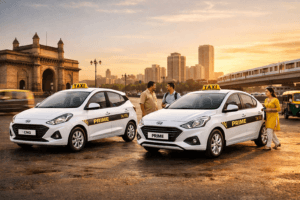
Hyundai Motor India has strategically entered the commercial mobility sector with the launch of its purpose-built ‘Prime Taxi’ range, comprising the Prime HB hatchback and Prime SD sedan, designed specifically to address the core demands of fleet operators and taxi drivers by prioritizing maximum vehicle uptime, predictable maintenance costs, and low operational expenses through an exclusive petrol-CNG powertrain. This move signals a shift from viewing taxis as merely stripped-down passenger cars to treating them as essential livelihood tools, combining Hyundai’s brand promise of comfort with practical economics—including accessible financing up to 72 months—to empower driver-entrepreneurs and challenge established competitors by focusing on total cost of ownership and driver well-being within India’s evolving ride-hailing ecosystem.
Hyundai Makes a Strategic Bet on India’s Taxi Economy: Can the ‘Prime’ Range Redefine Commercial Mobility?
Introduction: A Calculated Entry into a Crucial Market
On December 30, 2025, Hyundai Motor India Ltd. (HMIL) did more than just launch two new cars. It formally planted its flag in the fiercely competitive and strategically vital commercial mobility segment with its ‘Prime Taxi’ range. This isn’t merely a variant launch; it’s a targeted, data-driven strategy aimed at a sector that forms the backbone of India’s daily transit—the taxi and fleet operator market. While the headlines announce the Prime HB (Hatchback) and Prime SD (Sedan), the real story lies in Hyundai’s recognition of the taxi driver not just as a customer, but as a micro-entrepreneur, and the vehicle as a primary tool of livelihood. This move challenges the dominance of established players and redefines what fleet operators should expect from an OEM.
Decoding the “Commercial Mobility” Mindset
For decades, the taxi segment in India was often an afterthought—a base model of a passenger car, stripped of features, sold in bulk. Hyundai’s approach with the Prime range flips this script. Their stated focus on “maximum uptime, predictable maintenance, and low operating costs” addresses the perennial pain points that silently eat into a driver’s daily earnings.
- Uptime is Revenue: For a taxi driver, a day off the road is a day of negative income. Loans and living costs don’t pause. “Maximum uptime” translates directly to earning consistency. This implies robust engineering, readily available spare parts, and a service network optimized for quick turnarounds—not just for one vehicle, but for an entire fleet.
- Predictability Over Price: The initial ex-showroom price (₹5.99 lakh for HB, ₹6.89 lakh for SD) is just the entry ticket. The true cost lies in the unknown: an unexpected clutch failure, a faulty sensor, a week-long wait for a part. By promising “predictable maintenance,” Hyundai is offering financial peace of mind. Fleet operators can budget for service, not panic over surprises.
- The CNG Imperative: The sole offering of a 1.2-litre Kappa petrol+CNG engine is a masterstroke in market alignment. With fuel costs constituting up to 40-50% of operational expenses, CNG’s lower cost per kilometer is non-negotiable for profitability. This isn’t about performance; it’s about practical economics. Hyundai is selling a lower cost of ownership per kilometer, packaged as a car.
The Competitive Landscape: Where Does Prime Fit?
Hyundai enters an arena with entrenched players. Maruti Suzuki’s Tour series (Dzire, Swift, Eeco) has long been the default choice, leveraging unparalleled service reach and proven reliability. Tata Motors has made significant inroads with its rugged, often diesel-heavy fleet options. Kia, Hyundai’s sister concern, also has a presence.
Hyundai’s potential edge lies in its brand proposition of premiumness at scale. The Prime range isn’t likely to be a bare-bones product. Expect durable yet more premium interiors, superior ergonomics for drivers logging 12-hour shifts, and Hyundai’s strengths in design and comfort. This creates a compelling proposition: a vehicle that promises lower running costs than many competitors while offering a cabin experience that can command a slight premium on aggregator apps like Uber and Ola, attracting better-rated drivers and more discerning customers.
The Human Element: Beyond Specs and Sheets
The real insight here is human-centric design for the professional driver. A taxi is a mobile office. The “superior comfort” HMIL mentions isn’t a luxury; it’s a productivity and safety feature.
- Driver’s Well-being: A more supportive seat, intelligently placed controls, better cabin ventilation, and reduced NVH (Noise, Vibration, Harshness) levels combat driver fatigue. A less fatigued driver is a safer, more courteous, and more efficient driver.
- Passenger Experience as a Differentiator: In an era where ride-hailing apps show driver ratings and car models, a cleaner, more comfortable, and modern-looking Prime taxi can improve a driver’s acceptance rate and tips. It enhances the brand value of the driver’s own small business.
- The 72-Month Finance Key: The extended repayment tenure is perhaps the most crucial enabler. It dramatically lowers the monthly EMI burden, making vehicle acquisition feasible for first-time owner-drivers. This isn’t just a sales tactic; it’s an empowerment tool, lowering the barrier to entrepreneurship.
Strategic Implications for the Indian Mobility Ecosystem
Hyundai’s entry signals several broader trends:
- The Institutionalization of Fleet Mobility: Large fleet operators are becoming a more organized, powerful customer bloc. OEMs can no longer offer hand-me-downs; they need purpose-built solutions with dedicated support. This pushes the entire segment toward higher standards.
- The EV Shadow: While the Prime range launches with CNG, its very architecture as a dedicated commercial vehicle hints at a future-ready platform. The next logical step could be a Prime EV, tailored for intracity fleets where charging infrastructure and TCO (Total Cost of Ownership) math are rapidly improving. Hyundai’s global EV expertise will eventually trickle down here.
- Data and Telematics: Modern fleet management relies on data—fuel efficiency patterns, route monitoring, maintenance alerts. While not mentioned in the launch, a platform like Prime could seamlessly integrate with Hyundai’s connected car tech, offering operators a digital dashboard to manage their assets, a significant value-add over traditional models.
Challenges on the Road Ahead
Success is not guaranteed. Hyundai must:
- Build a Separate Service Ethos: Taxi vehicles need fast-track service lanes, priority on high-wear items (clutches, brakes), and perhaps even differentiated service pricing. The dealership experience for a fleet owner with ten cars must be radically different from that of a retail buyer.
- Prove Durability in the Crucible: The real test will come after 150,000 km on Mumbai’s potholes and Delhi’s stop-start traffic. Word-of-mouth in the tight-knit driver community will be the ultimate marketing tool.
- Navigate Aggregator Dynamics: Building strong relationships with Uber, Ola, and new-age fleet management companies will be crucial for bulk deals and promotions within their driver apps.
Conclusion: A Vehicle for Aspiration
Ultimately, the Hyundai Prime range is more than a taxi. It is a statement of intent. It acknowledges that the commercial mobility segment in India has matured from a market for the cheapest possible wheels to one that values total ecosystem value—reliability, cost predictability, driver comfort, and passenger satisfaction.
For the individual driver, it represents a chance to upgrade their livelihood tool, to reduce financial anxiety, and to potentially earn more through greater uptime and customer preference. For the large operator, it offers a promise of calculable ROI and scalable asset management. By focusing on these human and business realities, Hyundai isn’t just selling cars; it’s selling economic resilience and aspirational professionalism. If it can deliver on its promises of uptime and low TCO, the Prime range has the potential not just to find a market niche, but to fundamentally elevate expectations for an entire industry. The race for India’s roads just got a serious new contender.
You must be logged in to post a comment.