
Historic Deep Freeze: Northern India’s Plains Turn Colder than Himalayan Hill Stations
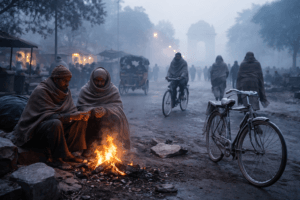
Historic Deep Freeze: Northern India’s Plains Turn Colder than Himalayan Hill Stations
Northern India is experiencing a historic cold wave, with Gurugram recording a near-freezing 0.6°C, matching a temperature last seen in 1977 and making the plains colder than many Himalayan towns.
This intense cold snap, fueled by clear skies and frigid winds, has triggered widespread health alerts and disrupted daily life across several states, highlighting an unusual winter inversion where the plains shiver more than the hills.
01: The Scope of the Chill: Record-Breaking Temperatures Across the North
The cold wave gripping northwest India is not just severe but historically significant, breaking records that have stood for nearly half a century. The epicenter is Gurugram, a bustling satellite city of Delhi, which on the morning of January 12, 2026, recorded a bone-chilling minimum temperature of 0.6 degrees Celsius.
This reading:
- Matches a 49-year record from January 22, 1977.
- Ranks among the coldest days in the city’s recorded history, with only three instances (in 1966, 1970, and 1979) where the mercury dipped lower.
The phenomenon was widespread. In Rajasthan, Fatehpur Shekawati recorded an astonishing -3.5°C, while Churu registered 1.3°C. Delhi’s main Safdarjung observatory logged 3.2°C, marking the capital’s coldest January morning in three years. Other cities like Amritsar (1.1°C) and Hisar (0.5°C-2.6°C) also plunged into a deep freeze.
The most striking aspect of this cold wave is the complete inversion of typical winter geography. For several days, the plains of the National Capital Region (NCR) have been significantly colder than famous hill stations.
Comparison of Minimum Temperatures (Mid-January 2026)
| Location | Region Type | Minimum Temperature (°C) | Context |
| Gurugram | National Capital Region (Plains) | 0.6 | Historic low, matching 1977 record |
| Fatehpur, Sikar | Rajasthan (Plains) | -3.5 | Extreme sub-zero condition |
| Delhi (Safdarjung) | Capital City (Plains) | 3.2 | Coldest January morning in 3 years |
| Shimla | Himalayan Hill Station | 8.8 | Notably warmer than the plains |
| Mussoorie | Himalayan Hill Station | 7.7 | Warmer by over 7 degrees |
| Kangra | Himalayan Foothills | 3.0 | Comparable to Delhi |
02: Unpacking the Meteorological “Perfect Storm”
This record-breaking cold did not happen by chance. It is the result of a specific and potent combination of atmospheric conditions converging over the North Indian plains.
- Radiative Cooling Under Clear Skies: The primary driver has been the presence of persistent, clear night skies. In the absence of cloud cover, which acts like a blanket trapping heat, the earth’s surface rapidly loses heat to the atmosphere. This process, known as radiative cooling, allows temperatures to plummet after sunset.
- Icy Winds from the Northwest: Complementing the clear skies have been persistent cold northwesterly winds blowing from the snow-clad Himalayas and drier regions. These winds have transported frigid air masses directly into the plains, continuously reinforcing the cold.
- The Hill Station “Blanket” Effect: Ironically, while the plains suffered under clear skies, the Himalayan region was under the influence of active western disturbances. These systems brought cloud cover over the hills, which trapped heat and prevented temperatures from dropping as drastically. This created the unusual scenario where elevated hill stations were milder than the freezing plains below.
- The Role of a Dry Winter: The 2025-26 winter has been exceptionally dry. Northwest India recorded a rainfall deficit of over 80% in December 2025. The lack of rain and snow meant there was no moisture to moderate temperatures or provide insulating snow cover, allowing the cold air to dominate freely.
03: Immediate Impacts: From Health Risks to Frozen Fields
The human and economic impacts of this extreme cold are immediate and multifaceted, affecting millions.
- Public Health Emergency: The India Meteorological Department (IMD) has issued orange alerts, warning of heightened health risks. Prolonged exposure poses severe dangers, including frostbite, hypothermia, and a sharp aggravation of respiratory illnesses like asthma and bronchitis. The elderly, children, and those with pre-existing conditions are most vulnerable.
- Transportation Gridlock: Dense fog, a companion to the cold wave, has reduced visibility to near-zero in parts of Punjab, Haryana, and Uttar Pradesh. This has severely disrupted road, rail, and air travel. Flight operations at Delhi’s airport have been conducted under low-visibility CAT III conditions, leading to widespread delays and cancellations.
- Agricultural Double-Edged Sword: The visible layer of frost (pala) covering crops presents a mixed blessing. While traditional winter wheat can benefit from the cold, vegetable crops like potatoes, peas, and mustard are highly vulnerable to frost damage. Farmers have been advised to perform light irrigation to create a protective microclimate for their crops.
04: The Bigger Picture: La Niña, Arctic Blasts, and Climate Patterns
While local weather phenomena triggered the event, larger climate patterns have set the stage for this severe winter.
- The La Niña Influence: We are currently in a La Niña phase of the El Niño-Southern Oscillation (ENSO), which is typically associated with colder-than-normal winters over the Indian subcontinent. This phase strengthens certain atmospheric circulations, facilitating the southward movement of cold air from higher latitudes.
- Specter of an Arctic Blast: Meteorologists are closely monitoring forecasts that suggest a potential “polar vortex” extension from Siberia towards South Asia later in January. Some models, like the European Centre for Medium-Range Weather Forecasts (ECMWF), indicate the possibility of an “unprecedented cold wave” around January 24-30. However, experts caution that this long-range forecast is uncertain and other models show less extreme scenarios.
- A Nationwide Chill: The cold is not confined to the north. East, central, and even south India have experienced uncharacteristically cold conditions since December 2025. Cities in Tamil Nadu, for instance, reported a barely perceptible difference of just 1-2°C between their day and night temperatures—a very rare occurrence.
05: Looking Ahead: Forecast and Cautious Hope for Relief
In the immediate future, relief will be slow. The IMD forecasts that cold wave to severe cold wave conditions will persist over Punjab, Haryana, and Rajasthan for the next few days, with dense fog continuing to shroud the mornings.
A change is expected around January 16-18, as a fresh western disturbance is likely to approach the Western Himalayas. This system is predicted to bring:
- Light to moderate rain and snow to Jammu & Kashmir, Himachal Pradesh, and Uttarakhand.
- Isolated rainfall to the plains of Punjab and Haryana.
- A gradual rise in minimum temperatures across northwest India as cloud cover increases, acting as a thermal blanket.
While this will moderate the extreme cold, it may also intensify foggy conditions in the short term as moisture meets the cold air. The long-range forecast for a potential severe Arctic blast later in January remains a point of vigilant observation.
06: Navigating the Freeze: Practical Guidance for Readers
During such extreme weather, practical preparedness is crucial. Here are key recommendations synthesized from official advisories and expert advice:
- Personal Protection: Layer clothing to trap body heat. Cover extremities—head, ears, hands, and feet—to prevent frostbite. Moisturize skin regularly to combat dryness and cracking.
- Health-Conscious Behavior: Limit prolonged outdoor exposure, especially during early morning and late night hours. Consume warm fluids and vitamin-C-rich foods to boost immunity. Ensure proper ventilation when using indoor heaters to prevent carbon monoxide poisoning.
- Safe Travel: If travel is necessary, use fog lights and drive at reduced speeds. For air travel, check flight status directly with airlines before heading to the airport, as delays are common.
- Community Care: Check on vulnerable neighbors, the elderly, and those living alone. Community bonfires, a common sight, provide necessary warmth for those who must work outdoors.
Conclusion
The current deep freeze in northern India is more than a spell of cold weather; it is a potent reminder of how regional weather extremes can defy typical patterns and set new benchmarks. As residents bundle up and navigate the fog, the event underscores the importance of heeding meteorological warnings, understanding the broader climatic forces at play, and preparing for the possibility that winter’s grip may tighten further before it finally loosens. The plains, for now, hold the dubious distinction of being winter’s coldest throne.
You must be logged in to post a comment.