
Google’s UPI Credit Card Play: Decoding India’s Digital Financial Revolution
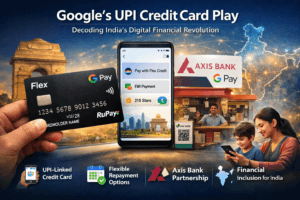
Google is strategically expanding its financial services footprint in India through the launch of Flex by Google Pay, a RuPay-based, UPI-linked credit card developed in partnership with Axis Bank, aiming to bridge the significant gap between the country’s widespread digital payment adoption and limited formal credit access by targeting first-time users with flexible repayment options and transparent charges; this move is part of a broader ecosystem play that includes family-oriented “Pocket Money” features and merchant tools, positioning Google Pay not just as a payments app but as a comprehensive financial hub in a competitive market where co-branded cards are projected to capture over 25% of the market by 2028, leveraging Google’s massive existing user base to potentially transform financial inclusion and credit distribution in India’s digital economy.
Google’s UPI Credit Card Play: Decoding India’s Digital Financial Revolution
The Unprecedented Move Reshaping India’s Payment Ecosystem
India’s digital finance landscape is undergoing its most significant transformation since the introduction of UPI in 2016. Google, in partnership with Axis Bank, has launched Flex by Google Pay—a RuPay-powered, UPI-linked credit card aimed squarely at India’s vast population of digital payment users who have remained outside the formal credit system. This strategic move represents more than just another financial product; it’s a calculated effort to bridge the chasm between India’s world-leading digital payments infrastructure and its underpenetrated credit market. With fewer than 50 million credit card holders in a country of 1.4 billion people, Google is positioning itself at the forefront of what could become the world’s largest credit expansion.
The significance of this launch extends beyond mere numbers. Google Pay, as one of India’s most widely used UPI platforms, serves over 530 million unique users and 23 million small merchants. By embedding credit directly into this existing ecosystem, Google isn’t just introducing a new product—it’s fundamentally altering the financial relationship between technology platforms, banks, and millions of Indian consumers. The launch coincides with Google’s introduction of family-focused “Pocket Money” features and upgraded merchant tools, creating a comprehensive ecosystem strategy that positions Google Pay not just as a payments app, but as a complete financial services hub for the Indian market.
- Decoding the Flex Card: More Than Plastic in a Digital World
Bridging UPI’s Success with Credit Inclusion
India’s Unified Payments Interface (UPI) has been nothing short of a financial revolution, processing billions of transactions monthly and making digital payments accessible to virtually every smartphone user. Yet this remarkable success in payments has not translated into comparable access to formal credit. Google’s Flex card represents a strategic effort to connect these two worlds by offering what’s essentially a credit overlay on India’s existing UPI infrastructure.
Unlike traditional credit cards that operate independently, Flex integrates directly with Google Pay’s UPI functionality, allowing users to access credit through the same interface they already use for daily payments. This approach addresses what Sharath Bulusu, Senior Director of Product Management for Google Pay, describes as the “same users getting more and more credit” problem in India’s financial system. By targeting the hundreds of millions already comfortable with UPI transactions but wary of traditional credit products, Google aims to create natural pathways into formal credit systems.
Flexible Features for First-Time Users
Google has clearly designed Flex with India’s credit-cautious consumers in mind. The card’s most notable innovation is its repayment flexibility—users can choose to pay balances in full or convert them into EMIs, with all charges shown upfront in the app. This transparency directly addresses what Bulusu identifies as concerns around “unpredictable billing for first-time credit users.”
The card’s rewards program further demonstrates Google’s understanding of the Indian market. Rather than complex point systems common with premium cards, Flex offers simple “Stars” worth ₹1 each—a straightforward value proposition for users who may be navigating credit systems for the first time. Built on the government-backed RuPay network, the card also aligns with India’s digital sovereignty initiatives while ensuring compatibility with the country’s payment infrastructure.
- Strategic Context: Why Now, and Why This Way?
Reading India’s Credit Card Evolution
Google’s timing coincides with a pivotal moment in India’s credit evolution. According to PwC data, while the number of outstanding cards has grown at approximately 14% annually to around 110 million, this expansion has largely been driven by existing users rather than new entrants to the credit system. Annual spending per card has increased significantly—from roughly ₹132,000 to about ₹192,000—suggesting cards are increasingly used for routine payments rather than occasional major purchases.
The co-branded credit card segment where Google is entering represents perhaps the most dynamic part of this market. Redseer Strategy Consultants projects these partnerships will grow at 35-40% annually, capturing more than a quarter of India’s credit card market by volume by 2028, up from 12-15% in the 2024 financial year. Google’s move places it alongside established players like Amazon, Flipkart, and PhonePe in what’s becoming a crowded but rapidly expanding space.
Google’s Multi-Pronged Ecosystem Strategy
Flex is just one component of Google’s broader financial ecosystem push in India. Simultaneously launched “Pocket Money” features represent an equally significant play for future market share. Unlike earlier fintech attempts at children’s banking through prepaid cards (like FamPay and Junio), Google’s approach leverages the UPI Circle framework to keep money in parental accounts until transactions occur. This addresses a cultural preference in Indian families for maintaining financial control while introducing younger generations to digital payments.
For merchants, Google is integrating transaction reviews directly into Google Maps listings and introducing AI-powered advertising tools within the Google Pay for Business app. These moves create a virtuous cycle where more merchant participation improves consumer experience, which in turn drives greater adoption of Google’s financial products, including the new Flex card.
- Competitive Landscape and Market Implications
The Co-Branded Card Wars Intensify
Google enters a field where competition is already fierce. The table below illustrates how major players are positioned in India’s co-branded credit card market:
| Platform | Bank Partner(s) | Key Features | Target Audience |
| Google Pay (Flex) | Axis Bank (with more partners planned) | UPI integration, flexible repayment, RuPay network, virtual “Stars” rewards | First-time credit users, existing UPI users |
| Amazon Pay | ICICI Bank | Amazon-specific rewards, easy EMI options | Amazon shoppers, prime members |
| Flipkart (Walmart) | Axis Bank | Flipkart shopping benefits, fuel surcharge waiver | E-commerce focused consumers |
| PhonePe (Walmart) | Various banks | UPI integration, multiple card options | Digital payment users across platforms |
| Swiggy/Zomato | HDFC, ICICI banks | Food delivery benefits, dining discounts | Millennial food and dining enthusiasts |
What distinguishes Google’s approach is its foundational integration with UPI—the payment system already used by hundreds of millions of Indians. While competitors like PhonePe also leverage UPI, Google’s massive existing user base through its Android ecosystem provides a unique advantage in user acquisition and retention.
Beyond Cards: The Battle for Financial Identity
The deeper competition unfolding in India’s fintech space extends beyond specific products to a broader contest over financial identity and data. Each transaction through Flex provides Google with insights into spending patterns, credit behavior, and financial preferences—data that’s increasingly valuable in a digital economy. This positions Google not just as a financial service provider but as a gatekeeper of financial identity for millions of Indians.
Axis Bank’s partnership in this venture reflects a growing trend among traditional lenders to leverage technology platforms for credit distribution at scale, moving beyond physical branch networks. For banks, such partnerships offer access to digitally-active customers at lower acquisition costs, while for Google, they provide essential banking infrastructure and regulatory compliance.
- Cultural and Behavioral Considerations in Design
Addressing India’s Unique Credit Psychology
Google’s product decisions reveal a sophisticated understanding of Indian consumer psychology around credit. The flexible repayment options directly address what Bulusu identifies as concerns around “unpredictable billing”—a significant barrier for first-time credit users in a culture where debt carries substantial social stigma.
The Pocket Money feature similarly reflects cultural nuances. By keeping funds in parental accounts until the moment of transaction (via UPI Circle), rather than requiring advance loading onto prepaid instruments, Google acknowledges Indian families’ preference for retained financial control while facilitating children’s financial literacy. This approach builds on existing comfort with Google Pay among Indian families rather than requiring adoption of an entirely new system.
Building Trust Through Transparency
Google emphasizes upfront disclosure of all charges related to repayment choices—a crucial feature in a market where hidden fees have historically eroded trust in financial products. This transparency extends to the card’s security features, including in-app controls for blocking cards or resetting PINs. For a population with relatively low exposure to formal credit systems, these trust-building mechanisms may prove as important as the financial features themselves.
- Future Trajectory and Industry Implications
The Road Ahead for Google’s Financial Ambitions
Google has indicated plans to add more issuer partners beyond Axis Bank—a move that would significantly expand the reach and versatility of its credit offerings. This multi-partner approach could allow Google to tailor products to different customer segments while mitigating concentration risk.
The integration of AI-powered features, as seen in the merchant advertising tools, suggests a future where predictive credit and personalized financial guidance become part of Google’s offerings. As transaction data accumulates, Google could leverage its AI capabilities to offer dynamic credit limits, spending insights, and financial wellness recommendations—creating a more sophisticated product that evolves beyond its initial “first credit” positioning.
Broader Impact on India’s Financial Ecosystem
Google’s move accelerates several broader trends in Indian finance. First, it reinforces the platformization of banking, where technology companies mediate the relationship between traditional financial institutions and consumers. Second, it advances the convergence of payments and credit, potentially transforming UPI from a pure payments system into a comprehensive credit infrastructure.
Perhaps most significantly, Google’s entry at scale could accelerate financial inclusion by bringing formal credit to segments of the population previously served only by informal lenders or excluded entirely. The government-backed RuPay network integration further aligns this initiative with national priorities around financial sovereignty and inclusion.
- Potential Challenges and Considerations
Regulatory Landscape and Data Privacy
As Google deepens its financial integration in India, it will inevitably face increased regulatory scrutiny. The Reserve Bank of India has demonstrated particular attention to data localization, consumer protection, and the appropriate boundaries between technology and financial services. Google’s handling of financial data—especially sensitive credit information—will be closely monitored by regulators and consumer advocates alike.
Competition authorities may also examine whether Google’s position in the Android ecosystem creates unfair advantages in financial services distribution—a concern already raised in other jurisdictions regarding tech companies’ expansion into finance.
Sustainable Growth Versus Rapid Expansion
A key challenge will be balancing the imperative for rapid user acquisition with the need for credit quality and responsible lending. The Indian market has seen previous waves of credit expansion followed by spikes in non-performing assets. Google and its banking partners will need to develop underwriting models that expand access while maintaining portfolio health—a complex challenge given the limited credit histories of target users.
Conclusion: A Strategic Inflection Point for Indian Fintech
Google’s launch of Flex by Google Pay represents far more than another credit card option—it signals a strategic inflection point in India’s digital finance evolution. By seamlessly integrating credit into the country’s dominant UPI payment infrastructure, Google is addressing one of Indian finance’s most persistent gaps while positioning itself at the center of consumers’ financial lives.
The simultaneous introduction of family-focused Pocket Money features and merchant tools reveals a comprehensive ecosystem strategy that extends beyond credit to encompass intergenerational financial literacy and small business empowerment. This multi-layered approach suggests Google views India not just as a market for individual financial products, but as a blueprint for how technology platforms can integrate with national financial infrastructure in emerging economies worldwide.
As competition intensifies in India’s co-branded credit space, Google’s advantages include its massive existing user base, deep integration with Android, and sophisticated understanding of local consumer behavior. However, success will ultimately depend on maintaining the trust of Indian consumers—a responsibility that extends beyond transparent pricing to encompass data protection, inclusive design, and responsible lending practices.
In the broader narrative of India’s digital transformation, this launch may be remembered as the moment when credit became truly democratized—not through traditional banking channels, but through the payment platforms already woven into the daily fabric of Indian life. The implications extend beyond finance to touch questions of digital sovereignty, platform power, and the future relationship between technology giants and national economic development.
You must be logged in to post a comment.