
Gaza Tragedy: 6 Devastating “Technical Errors” That Expose the Shocking Human Cost of War
The term “technical error” has become a grim euphemism in Gaza, used to explain deadly military misfires like the one in Nuseirat that killed six children collecting water. While the Israeli military claims it targeted militants, the impact on civilians has been catastrophic, with strikes also killing pedestrians and demolishing homes. These aren’t isolated incidents, but recurring tragedies in a war where urban density magnifies every mistake.
The IDF justifies its actions by blaming Hamas for operating among civilians, but over 58,000 Palestinians—mostly women and children—have died since October. As ceasefire talks remain deadlocked and mutual distrust persists, the humanitarian toll deepens. Regret from military officials does little to comfort grieving families or prevent future loss.
Children suffer disproportionately, both physically and emotionally, as their lives are shattered by violence they neither caused nor understand. This ongoing devastation demands more than diplomatic statements—it calls for urgent re-evaluation of tactics and a renewed commitment to preserving civilian life.
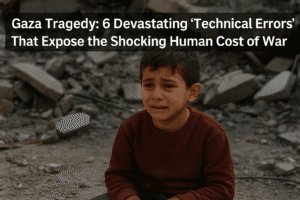
Gaza Tragedy: 6 Devastating “Technical Errors” That Expose the Shocking Human Cost of War
The phrase “technical error” carries a chilling weight when it reads as the footnote to the deaths of six children. That was the Israeli military’s explanation for a strike near a water distribution point in Nuseirat, Gaza, on Sunday. Hospital officials reported ten dead, including those children, while seeking a basic necessity – water.
The IDF stated it targeted an Islamic Jihad militant, but a malfunction sent the munitions “dozens of metres” off course. They acknowledged awareness of “claims regarding casualties” and expressed regret for “any harm to uninvolved civilians,” adding the incident is under review.
This single incident, however, unfolded amidst a tapestry of devastation across Gaza that day:
- Central Gaza City: Emergency services reported an Israeli strike hitting pedestrians, killing 11 people and injuring approximately 30 others.
- Al-Zawida (Zawaida): An Israeli strike leveled a home belonging to the Al-Arabid family. Al-Aqsa Martyrs Hospital reported nine killed, including three children. Later, Al-Awda Hospital stated another strike in Zawida killed two more people.
- Military Operations: The IDF confirmed striking over 150 targets in 24 hours – weapons storage, launchers, sniping posts – but stated it was unaware of the specific strike on the Al-Arabid family home. It reiterated its stance that Hamas bears responsibility for civilian casualties by operating within populated areas.
The “Error” in Context: A Recurring Nightmare
While the IDF frames incidents like Nuseirat as isolated technical failures, the sheer volume of civilian casualties reported daily paints a different picture. The deaths in Nuseirat weren’t an anomaly; they were part of a pattern:
- Water Point Strike: Targeting near a vital humanitarian resource, where civilians, especially children, congregate.
- Street Strike: Hitting people simply walking in an urban area.
- Home Strike: Destroying a residential building, a recurring cause of mass casualties throughout the conflict.
The phrase “technical error,” however precise for a malfunctioning system, feels grotesquely inadequate to the families burying children. It cannot capture the obliteration of a home, the shrapnel tearing through a crowd, the final moments of children collecting water. The “error” is experienced as absolute, irreversible loss.
The Stalemate Fueling the Suffering
Beneath these specific tragedies lies the crushing weight of a conflict seemingly without end:
- Ceasefire Deadlock: Months of negotiations remain gridlocked. Israel demands Hamas’s surrender, disarmament, and exile for a permanent end. Hamas demands a complete Israeli withdrawal and an end to the war in exchange for releasing remaining hostages (approximately 50, 20 believed alive).
- Intractable Positions: The core dispute over whether Israeli troops would remain deployed during any temporary pause highlights the fundamental lack of trust and incompatible end goals.
- Mounting Toll: The human cost is staggering. According to Gaza’s Health Ministry (Hamas-run, not distinguishing combatants), over 58,000 Palestinians, predominantly women and children, have been killed since October. Israel mourns 1,200 civilians killed in the initial Hamas attack and 890 soldiers lost since.
Beyond Regret: The Human Insight
The real value in understanding this news lies not just in recounting events, but in grappling with the human reality they represent:
- “Regret” Doesn’t Rebuild Lives: Official expressions of regret ring hollow for those who have lost everything. The focus shifts inevitably to accountability, prevention, and the fundamental question: are current military tactics compatible with protecting civilian life in such a dense urban environment?
- The Normalization of Tragedy: When incidents like Nuseirat, the street strike, and the leveled home occur alongside hundreds of other strikes daily, there’s a risk of becoming numb to the scale of suffering. Each “error” or “unaware” strike represents unique worlds destroyed.
- The Children’s Burden: Children are disproportionately bearing the brunt – killed collecting water, playing near home, caught in crossfire. Their deaths are not collateral damage; they are the catastrophic failure of the adults waging war around them.
- The Cycle Deepens: Every civilian death, especially children, fuels rage, despair, and radicalization, making the prospects for future peace even more remote. The stated goal of destroying Hamas seems increasingly elusive amid the rising civilian toll.
Conclusion: The Weight of Words
The news from Sunday in Gaza isn’t just a list of strikes and errors. It’s a stark reminder of the brutal arithmetic of urban warfare where technological failures and disputed intelligence have human faces – six children at a water point, three in a destroyed home, pedestrians on a street. While armies cite technical terms and strategic necessities, the ground truth is measured in funerals.
As the diplomatic deadlock persists and the strikes continue, the phrase “technical error” becomes a grim euphemism for a profound human tragedy repeating itself daily, demanding more than regret, but a fundamental reassessment of the path towards ending the bloodshed. The genuine value for readers lies in seeing beyond the military jargon to the shattered lives that remain.
You must be logged in to post a comment.