
Gaza Food Crisis: 7 Shocking Truths Behind the Deadly Aid Lines That the World Can’t Ignore
Israeli forces opened indiscriminate fire on Palestinians seeking food aid near Khan Younis, killing over 30 people. This horrific event occurred near a hub operated by the U.S.- and Israel-backed Gaza Humanitarian Foundation (GHF). Gazans, facing Israel’s manufactured famine where nearly a third go days without food, are forced to arrive hours early for any chance of aid, directly contradicting GHF’s claim the shooting happened “before opening.”
Survivors state desperation drives them: “Bread is what drives me to risk death.” The UN reports over 870 Palestinians killed seeking aid since May, labeling distribution points “death traps.” Cruelly, UNRWA confirms enough food for Gaza’s entire population for months is stockpiled nearby but blocked by Israel’s siege. The world’s failure to ensure safe aid access enables this ongoing catastrophe.
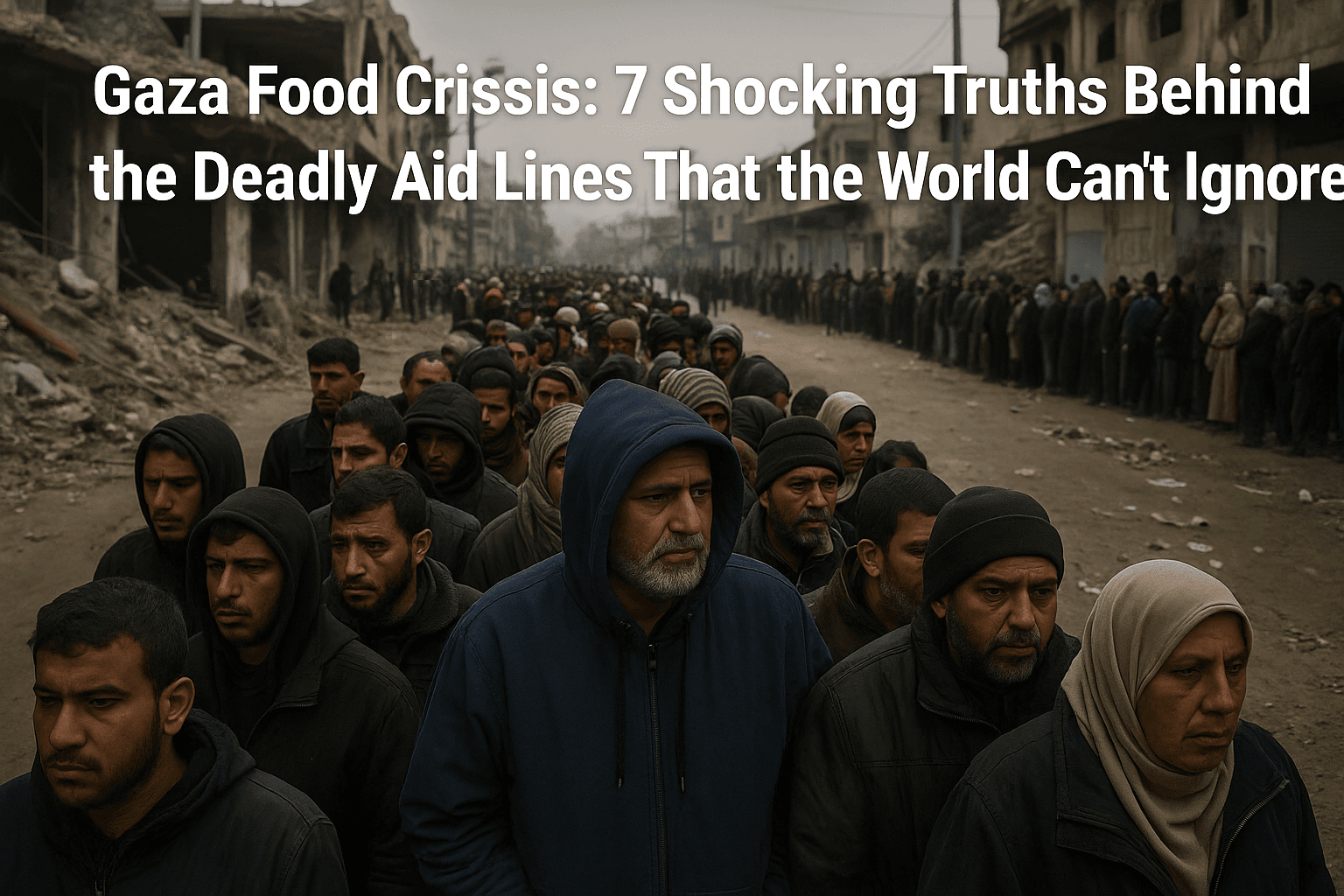
Gaza Food Crisis: 7 Shocking Truths Behind the Deadly Aid Lines That the World Can’t Ignore
The tragedy unfolding in Gaza transcends the horrifying statistics. It’s a story etched in the predawn darkness, in the desperate footsteps of starving people walking towards food aid hubs, knowing the journey itself could be fatal. The latest massacre – over 30 Palestinians gunned down by Israeli forces near a U.S.- and Israel-backed aid distribution point in Khan Younis – isn’t an isolated incident. It’s a brutal symptom of a man-made catastrophe.
The Unfolding Horror: Witness accounts paint a chilling picture. Mahmoud Mokeimar described traveling with a crowd towards the Gaza Humanitarian Foundation (GHF) hub early Saturday morning when Israeli forces “opened fire at us indiscriminately.” The GHF, attempting to distance itself, claimed the shooting happened “hours before our sites opened.” Yet, this defense rings hollow against the grim reality Gazans live: people arrive hours early because that’s the only chance to secure life-sustaining aid. Arriving “on time” means going home empty-handed, possibly to watch your family starve.
The Driving Force: Calculated Risk in a Manufactured Famine Why would anyone walk knowingly into such danger? The answer is devastatingly simple, voiced by a Palestinian man recently shot in the leg while seeking aid: “Bread is what drives me to risk death. There’s no alternative.” His words cut to the heart of the crisis. Israel’s comprehensive blockade has weaponized hunger. The UN World Food Program confirms nearly a third of Gazans are “not eating for days at a time,” with thousands facing “catastrophic hunger.” When the choice is between certain slow starvation for your family and the risk of a bullet, the calculation, however horrific, becomes tragically clear.
The Cruel Irony: Food Stockpiled, People Starving Adding profound insult to fatal injury is the revelation from the UN Relief and Works Agency (UNRWA): Enough food for Gaza’s entire population for over three months sits stockpiled in warehouses, including in Al Arish, Egypt, just miles away. “The supplies are available. The systems are in place,” UNRWA stated. Their plea is agonizingly simple: “Open the gates, lift the siege, allow UNRWA to do its work.” The blockage isn’t logistical; it’s political. Food exists, but the will to let it reach starving civilians – including one million children – is absent.
A Pattern of Lethal Aid Access: Saturday’s massacre is horrifyingly familiar. The UN Human Rights Office estimates Israeli forces have killed more than 870 Palestinians seeking food aid since late May alone. Aid distribution points, rather than symbols of hope, have become “death traps,” as described by UN agencies and aid organizations. The systematic obstruction of aid, coupled with the lethal force used against those driven to seek it, points to a pattern that demands urgent international investigation and accountability.
The Unanswered Question: The wounded Palestinian man’s question hangs heavy in the air, unanswered and damning: “Has the world failed to provide a safe channel for aid delivery?” The evidence screams “yes.” Calls for an immediate ceasefire and safe, unhindered humanitarian access from the WFP, UNRWA, and countless others remain unmet. While nations debate, Gazans die – not just from bombs, but from bullets fired while they sought bread, and from the slow, agonizing violence of starvation enforced by siege.
The Human Insight: This isn’t merely a “conflict.” It’s the deliberate creation of conditions where parents are forced to gamble their lives for a bag of flour to feed their children. It’s the reduction of human beings to scrambling for survival under gunfire, while the means to save them sit uselessly beyond a wall. The value of a life in Gaza seeking aid has become terrifyingly cheap in the eyes of those pulling the triggers and enforcing the blockade. Until that fundamental reality changes, and the siege is lifted allowing aid to flow freely and safely, the massacres at food lines will continue, and the world’s failure will be measured in empty stomachs and fresh graves.
You must be logged in to post a comment.