
Gaza Crisis Exposed: 7 Chilling Facts Behind the Shocking Collapse of Survival Systems
On July 13, 2025, Israeli airstrikes on a Gaza City market and a water point in Nuseirat refugee camp killed 95 people, including a respected doctor and seven children, turning essential survival spaces into deadly zones. The death toll in Gaza has now surpassed 58,000, with over 138,000 injured and thousands of children acutely malnourished. Repeated attacks on aid sites and infrastructure expose a grim tactic: weaponizing basic needs.
UN agencies warn that fuel shortages will soon halt all humanitarian work, as seen in the tragic death of a 7-month-old baby, Salam. Ceasefire talks remain stalled, with Israel refusing key guarantees like ending aggression or ensuring safe aid delivery. The societal collapse is stark—Gaza is losing its doctors, its children, and the ability to sustain life. Hospitals face imminent shutdowns without fuel, threatening the survival of newborns and the wounded. As one grieving father put it, Gazans are dying either swiftly by bombs or slowly by starvation—condemned for simply existing.
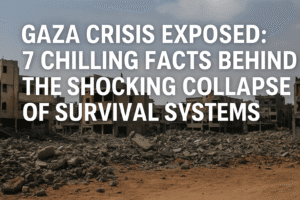
Gaza Crisis Exposed: 7 Chilling Facts Behind the Shocking Collapse of Survival Systems
In a single devastating Sunday (July 13, 2025), Israeli strikes hit two core lifelines in Gaza: a crowded Gaza City market and a water distribution point in Nuseirat refugee camp. Among the 95 killed were Dr. Ahmed Qandil, a physician treating war-wounded, and seven children queueing for drinking water. These strikes epitomize Gaza’s horrifying reality: spaces essential for survival now double as killing fields.
By the Numbers: A War on Civilians
- 58,026 confirmed deaths – over half women and children
- 138,500+ wounded amid decimated hospitals
- 5,800+ children acutely malnourished (1,000+ severe cases)
- 67+ children starved to death since October 2023
Weaponizing Basic Needs
The Nuseirat water point attack reveals a brutal pattern:
- Israel claims “technical failure” in targeting one fighter.
- International lawyers note repeated “mistakes” lack accountability.
- Gaza’s Media Office labels U.S.-backed aid sites “death traps,” citing 805 killed while seeking aid since May.
Famine as Policy
UN agencies warn fuel blockades will halt all humanitarian operations within days. The death of 7-month-old Salam from malnutrition hours after the strikes underscores the dual assault: bombs shatter bodies while siege starves survivors. As UNICEF states: “This isn’t just a nutrition crisis. It’s a child survival emergency.”
Ceasefire Stalemate: Politics Over People
While U.S. envoys express “hope,” Palestinian negotiators reveal Israel’s refusal to guarantee:
- An end to aggression
- Full withdrawal from Gaza
- Safe aid delivery
“We cannot legitimize aid traps that kill our people,” states Islamic Jihad’s deputy leader. Meanwhile, Netanyahu’s aides face indictment for leaking classified captives’ information—prioritizing narratives over lives.
The Unspoken Crisis: Societal Annihilation
Beyond the numbers, Gaza faces irreversible societal collapse:
- Doctors like Qandil (killed buying groceries) symbolize lost expertise.
- 13-year-old Seraje Ebrahim’s funeral (killed at water point) represents a generation extinguished.
- Fuel-less hospitals will cease sterilizing tools, pumping water, or running incubators.
Conclusion: The Threshold of Moral Failure
When collecting water or bread becomes lethal, and malnourished infants die in aid clinics, Gaza has passed a threshold. The international community’s paralysis amid UN warnings of total operational shutdown implicates us all. As one Gaza father burying his son told reporters: “They kill us quickly with bombs, or slowly with hunger. Our crime is existing.”
You must be logged in to post a comment.