
From Summer’s Sizzle to Stormy Skies: How a Western Disturbance is Set to Disrupt the Weekend in Chandigarh, Punjab, and Haryana
A yellow alert has been issued for Chandigarh, Punjab, and Haryana for March 29–30 as a fresh western disturbance is set to bring a sharp weather shift from Sunday, ending the region’s spell of above‑normal temperatures. After two largely dry days, thunderstorms with lightning and gusty winds of 40–60 kmph are expected to arrive, causing maximum temperatures to dip by several degrees. The India Meteorological Department advises residents to avoid outdoor activity during the storm, secure loose objects, and—for farmers—halt irrigation and protect standing wheat crops from potential wind and hail damage.
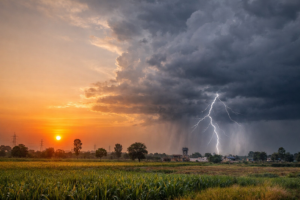
From Summer’s Sizzle to Stormy Skies: How a Western Disturbance is Set to Disrupt the Weekend in Chandigarh, Punjab, and Haryana
For the past few days, residents of the Tricity—Chandigarh, Panchkula, and Mohali—have been enjoying what felt like an early summer. The sun has been relentless, the air warm, and the familiar hum of air conditioners has started to fill the neighborhoods. On Thursday, Chandigarh sizzled at 32.4 degrees Celsius, a full two degrees above the normal for this time of year. It felt like spring had been fast-tracked, and we were being thrust directly into the heat of April.
But if you felt the air was a little too still, or noticed the clouds building a bit heavier on the horizon, your instincts were right. The India Meteorological Department (IMD) has just pulled the rug out from under our summer aspirations. A significant weather shift is brewing in the Himalayas, and by the time Sunday rolls around, the party hats and sunglasses might need to be swapped for umbrellas and windbreakers.
The IMD’s Meteorological Centre in Chandigarh has issued a Yellow Alert for March 29 and 30, warning of a dramatic turn in the weather. This isn’t just a passing shower; it’s a classic North Indian weather phenomenon where a powerful Western Disturbance collides with moisture-laden winds, turning a placid weekend into a potentially turbulent one.
The Calm Before the Storm
Before we look ahead to the chaos of the weekend, let’s appreciate the warmth we are leaving behind. On Thursday, the Tricity wasn’t alone in its heat. Patiala recorded the highest maximum in Punjab at a scorching 34 degrees Celsius—4.3 degrees above normal. Meanwhile, Nuh in Haryana topped the charts at 35.6 degrees Celsius. For farmers and those working outdoors, this has been a grueling week. The Punjab average maximum has been running 3.2 degrees above the seasonal norm, while Haryana is close behind at 1.8 degrees above normal.
But as the old saying goes, “the higher they rise, the harder they fall.” This sharp contrast in temperature—the intense heat on the plains versus the incoming cold air from the Western Disturbance—is exactly what meteorologists look for when predicting severe thunderstorms. The greater the difference, the more violent the instability in the atmosphere.
According to the special weather bulletin released on Thursday, the next two days (Friday and Saturday) will serve as a transition. Expect partly cloudy skies, but largely dry conditions. For those planning outdoor events or late-night strollks in the Sector 17 Plaza or Sukhna Lake, Friday evening should still be manageable, with temperatures hovering around a pleasant 30 degrees Celsius during the day and dropping to 18-19 degrees Celsius at night.
What the Yellow Alert Actually Means
Starting Sunday, the forecast takes a sharp turn. The IMD has specifically warned of “light to moderate rainfall accompanied by thunderstorm and lightning with gusty winds of 40-50 kmph, gusting up to 60 kmph.”
For those unfamiliar with the wind speeds, 60 kmph is significant. It’s not a hurricane, but it is enough to uproot poorly secured hoardings, break weak tree branches, and cause driving hazards, especially on the highways connecting Chandigarh to Ludhiana or Ambala.
The alert covers the entire Tricity region, as well as the broader expanse of Punjab and Haryana. This is a widespread system, not just an isolated urban event. The impact will likely be felt from the Shivalik foothills down to the plains.
Here is the breakdown of what to expect in the coming days:
- Friday & Saturday (March 27-28): The “waiting room.” Partly cloudy skies. Temperatures remain high (around 30°C max). A last chance to get any outdoor chores done.
- Sunday & Monday (March 29-30): The storm arrives. Thunderstorms and gusty winds are likely. Maximum temperatures are expected to dip significantly—down to 29°C on Sunday and 28°C on Monday. The drop will feel refreshing after the recent heat, but the accompanying wind and rain will be the main story.
The Human Impact: Beyond the Forecast
While weather alerts are common, this particular shift demands attention for two specific groups of people: farmers and commuters.
- The Farmer’s Dilemma
In the agricultural heartlands of Punjab and Haryana, this is a critical time. The rabi crop, particularly wheat, is nearing maturity. Standing crops are heavy with grain, making them vulnerable to the “lodging” effect—where strong winds and heavy rain flatten the crop. Once the stalk bends or breaks, the yield drops significantly, and harvesting becomes a logistical nightmare.
The IMD has issued a specific advisory for farmers: suspend all farming operations during the spell. This is not just about staying dry. Spraying pesticides or fertilizers during gusty winds is futile—the chemicals will blow away or wash off. Similarly, irrigating fields before a predicted storm can lead to waterlogging, which, combined with wind, creates the perfect conditions for root rot and fungal attacks like Fusarium head blight in wheat.
Farmers are advised to walk their fields before the storm hits to ensure drainage channels are clear, but once the thunderclouds gather, they should head indoors. For a community that often works from dawn to dusk, the next 48 hours are about preparation, not action.
- The Urban Commuter and Resident
For city dwellers in Chandigarh, Mohali, and Panchkula, the Sunday timeline is particularly inconvenient. Sunday is a major outing day—brunches, family visits to the Rock Garden, or drives to Kasauli and Pinjore. The IMD has urged residents to avoid venturing outdoors during thunderstorms.
This advice goes beyond just getting wet. Lightning strikes are a real danger in this region during pre-monsoon thunderstorms. Similarly, the “gusty winds of 40-50 kmph” mean that seeking shelter under a tree is not a safe option; it’s one of the most dangerous places to be during a lightning storm.
For those traveling on Sunday evening or Monday morning, authorities are likely to see an uptick in traffic snarls if visibility drops. If you are traveling between cities—say, from Chandigarh to Delhi or Amritsar—it would be wise to plan for delays.
The Science: Why the Sudden Change?
The culprit behind this dramatic weather flip is a “fresh Western Disturbance” approaching the Himalayan region, expected to become active from March 28. For those unfamiliar with the term, a Western Disturbance is an extratropical storm originating in the Mediterranean Sea that brings sudden winter rain to the northwestern parts of the Indian subcontinent.
However, we are at the tail end of March. This is no longer “winter rain.” As this disturbance moves eastward, it pulls in moisture from the Arabian Sea and the Bay of Bengal. When this moisture-laden air hits the relatively warm landmass of Punjab and Haryana (currently experiencing above-normal temperatures), the result is atmospheric instability. Warm air rises rapidly, cools, and condenses into massive cumulonimbus clouds—the kind that produce thunder, lightning, and strong, gusty winds.
A Practical Guide for the Weekend
To help you navigate the next few days safely, here is a checklist based on the IMD advisory and practical local knowledge:
Do’s:
- Secure loose objects: If you have patio furniture, garden tools, or hanging planters on your balcony, bring them inside or tie them down. Winds gusting to 60 kmph can turn a flowerpot into a projectile.
- Charge your devices: Storms can sometimes cause power fluctuations or outages. Ensure your phones, power banks, and inverters are fully charged by Saturday night.
- Protect your vehicles: If you have parking under trees, especially old Gulmohar or Neem trees that are prone to branch breakage, move your car to a safer spot.
- Farmers: Check your dhaan (wheat) fields for drainage. If the crop is ripe, consider whether harvesting can be advanced to Saturday, but prioritize safety over speed.
Don’ts:
- Don’t take shelter under trees: This cannot be stressed enough. If you are caught in a storm, find a sturdy building or a hard-top vehicle.
- Don’t ignore the advisory: The Yellow Alert is a “be aware” signal. It means the weather is likely to deteriorate. If you have travel plans to the hills (Himachal Pradesh will also be impacted), check road conditions before leaving.
- Don’t water crops: Avoid irrigation on Saturday night or Sunday morning. The combination of saturated soil and high winds is a recipe for crop collapse.
Looking Ahead
There is a silver lining to the stormy forecast. For those who love the freshness that comes after a heavy downpour, Sunday and Monday will offer a reprieve from the rising mercury. The maximum temperature is expected to dip by 4 to 5 degrees, bringing the feel of a pleasant, cool spring back for a few days.
Moreover, for the region’s environment, these pre-monsoon thunderstorms—often called Mango Showers in other parts of the country—help clear the dust and pollution that accumulate during the dry weeks. The rain washes the particulate matter out of the air, leaving the skies clearer and the iconic Sukhna Lake views a little crisper.
As we head into the weekend, the advice from the meteorological department is simple: enjoy the calm of Friday and Saturday, but be ready to hunker down on Sunday. Whether you are a farmer guarding your harvest, a student heading back to hostels, or a family looking forward to a lazy Sunday, the stormy weather ahead is a reminder that in North India, spring is rarely predictable. It arrives not with a gentle sigh, but often with a thunderous roar.
You must be logged in to post a comment.