
From Haze to Snowfall: How a Single Weather System Reshaped North India’s Winter Narrative
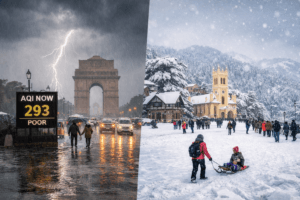
A powerful western disturbance, the season’s first intense one, dramatically reshaped North India’s winter narrative on January 23rd, 2026, delivering dual and contrasting impacts across the region. In Delhi and the National Capital Region, non-stop rain and thunderstorms cleansed the air, pulling the AQI from ‘Very Poor’ to ‘Poor’ and bringing a palpable, chilly relief to residents, though it simultaneously disrupted flight operations and daily life. Meanwhile, the same weather system ended a prolonged dry spell in the Himalayas, blanketing Shimla, Kashmir, and Manali in heavy snow—a transformation that brought joy to tourists and critical relief for agriculture and water resources, even as it caused significant disruptions to power, transport, and essential services in the hills. This single event underscored the profound interconnectedness of the plains and mountains, showcasing how one meteorological phenomenon can simultaneously deliver much-needed environmental respite and complex logistical challenges.
From Haze to Snowfall: How a Single Weather System Reshaped North India’s Winter Narrative
For weeks, the story of North India’s winter had been one of stagnation: a persistent, gritty haze over Delhi, a worrying dry spell in the mountains, and a sense of seasonal delay. Then, on Friday, January 23rd, 2026, the narrative flipped. A powerful western disturbance, the season’s first intense one, swept across the region, scripting a dramatic transformation. This wasn’t just a weather event; it was a profound reset button for the environment, the economy, and the public psyche. The rain that relentlessly washed Delhi’s streets and the snow that blanketed Shimla and Kashmir are two sides of the same coin, revealing the interconnectedness of our climate and our lives.
The Capital’s Cathartic Cleanse: More Than Just a Number Drop
In Delhi, the change was visceral. The rain began in the pre-dawn hours, not as a timid drizzle but as a determined downpour accompanied by theatrical lightning and gusts of wind. By morning, the city smelled different—the petrichor of wet earth had replaced the metallic tang of pollution. The immediate metric of success was the Air Quality Index (AQI), plummeting from ‘Very Poor’ (322) to the lower end of ‘Poor’ (293) in a matter of hours. But to reduce this to a number is to miss the human experience.
The improvement in AQI was a tangible relief for millions. For parents, it meant a less anxious glance at the air purifier’s reading before letting children step out. For morning walkers and street vendors, it meant deeper, less cautious breaths. The government’s decision to lift Stage 3 of the Graded Response Action Plan (GRAP) was a bureaucratic confirmation of what lungs across the city were already feeling. This rain did what policy and restrictions struggle to achieve instantly: it physically scrubbed the atmosphere, weighing down and washing away the particulate matter that had lodged itself into the fabric of daily life.
However, the shift came with its own set of disruptions, a reminder of urban fragility. At Indira Gandhi International Airport, the sudden deterioration in visibility and crosswinds led to a cascade of delays and diversions, particularly affecting routes to and from Srinagar. The travel plans of thousands were unraveled by the very system that brought relief. On the roads, the feel-like temperature of 12°C (against an actual 16°C) translated into a biting chill, catching many off-guard and sending them scrambling for winter wear they had almost deemed unnecessary this season. The orange alert was not just a forecast; it was an active participant in the day’s rhythm, advising caution and altering routines.
The Hills Reclaim Their Winter Crown: Snow, Smiles, and Struggles
While Delhi traded smog for showers, the hill stations underwent a magical metamorphosis. In Shimla, the four-month dry spell broke with a silent, persistent snowfall that draped the Victorian architecture and pine forests in a thick, pristine white. The familiar postcard view was restored, triggering not just aesthetic joy but economic hope. In Kashmir, the transformation was even more critical. The prolonged dry period had raised alarms about water scarcity and agricultural distress. The season’s first major snowfall, with over two feet in Gulmarg, was a collective sigh of relief for farmers, particularly apple growers who rely on winter snow for spring irrigation.
The social media feeds turned white with jubilant videos from Manali, Shimla, and Gulmarg. Tour operators, who had been fielding cancellations, now saw a surge in inquiries. The local economy, heavily dependent on winter tourism, felt an immediate injection of optimism. However, beneath the Instagrammable surface lay significant challenges. Essential services were disrupted: key highways were closed, power outages hit parts of the Valley, and flights to Srinagar were suspended. In districts like Rajouri and Poonch, schools were closed for safety. The snowfall, while beautiful and beneficial, is a double-edged sword, testing infrastructure and resilience even as it blesses the land.
The Western Disturbance: The Unseen Architect of Change
The protagonist of this wide-ranging story is an impersonal climatic feature: the western disturbance. This year, its late but intense arrival underscored its role as the primary rain- and snow-bearer for North India’s winter. The IMD’s accurate forecasting and the subsequent orange alerts across the NCR and hills demonstrate how far weather prediction has come, allowing for preparedness that mitigates risk. This event is a classic case study in how a single meteorological system can have diametrically different yet equally vital impacts across regions—pollution abatement in the plains, water security in the mountains.
The Human Insight: A Lesson in Interconnectedness and Resilience
Beyond the headlines of “AQI improves” and “flights hit” lies a deeper narrative. This weather event is a stark lesson in environmental interconnectedness. The same atmospheric system that cleanses Delhi’s air also replenishes the Himalayas’ water towers, which in turn feed the rivers that sustain the plains. It’s a cycle we often forget in our urban silos.
The human response also highlights our adaptability and our vulnerabilities. From Delhi’s commuters navigating wet roads and flight delays with resigned patience, to Kashmiri farmers looking at the snow with hopeful eyes, to Himachali hoteliers swiftly clearing pathways for guests—the event showcased a spectrum of resilience. It also revealed the gaps in our infrastructure, from aviation’s vulnerability to sudden weather shifts to the perennial power issues in the hills during heavy snow.
Looking Ahead: A Transient Respite or a Lasting Shift?
The critical question now is: what comes next? Meteorologically, this intense activity may settle, but its effects will linger. For Delhi, the key is whether this rain acts as a true reset or if pollution will creep back without sustained winds and further showers. For the hills, the snowpack’s longevity will determine its agricultural and hydrological value.
Ultimately, this day of rain and snow serves as a powerful reminder. It reminds us that in an age of human-driven environmental change, nature still holds the pen to write dramatic chapters. It reminds us that relief and disruption often arrive together. And for the millions who experienced it, from the office worker in Gurugram enjoying a cleaner commute to the child in Shimla seeing snow for the first time, it was a shared, palpable moment where the weather did more than change—it transformed, challenged, and hopefully, rejuvenated.
You must be logged in to post a comment.