
From Farm to Future: How an Indo-Norwegian Venture is Redefining Animal Nutrition with Insects and AI
Elmentoz Research, an India-Norway backed deep-tech biotech firm, has secured seed funding to revolutionize animal nutrition by establishing India’s largest automated facility to produce smart feed from Black Soldier Fly larvae, which converts industrial waste into high-protein feed while integrating antimicrobial peptides to enhance gut health and disease resilience, thereby aiming to reduce the livestock industry’s dependence on imported additives and antibiotic growth promoters, lower its environmental footprint, and improve farmer profitability through a sustainable, circular economy model that addresses both nutritional security and antimicrobial resistance.
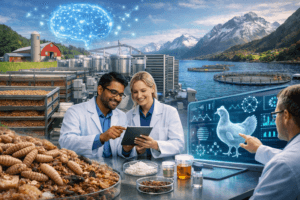
From Farm to Future: How an Indo-Norwegian Venture is Redefining Animal Nutrition with Insects and AI
In a significant development for sustainable agriculture, Elmentoz Research Pvt. Ltd., a pioneering deep-tech biotech firm, has successfully closed its inaugural seed funding round. The investment, backed by angel investors from India and Norway, signals a growing global confidence in alternative, science-driven solutions to some of animal husbandry’s most pressing challenges. This isn’t just another funding announcement; it’s a glimpse into a future where livestock and aquaculture feed is formulated with surgical precision, where waste becomes nutrition, and where the health of our food systems is bolstered by biotechnology and smart manufacturing.
The Core Challenge: More Than Just “Food Security”
At the heart of Elmentoz’s mission is a critical distinction highlighted by its CEO, Dr. Jayashankar Das: the shift from mere “food security” to “nutritional security.” India, as an agrarian powerhouse, remains heavily reliant on imports for functional feed additives like amino acids (lysine, methionine) and vitamin premixes. This reliance not only strains foreign exchange but also creates biosecurity vulnerabilities. The overuse of antibiotic growth promoters (AGPs) in this context has become a double-edged sword—boosting short-term growth while fueling the terrifying rise of antimicrobial resistance (AMR), a silent pandemic that threatens both animal and human health.
Furthermore, traditional feed ingredients like soybean and fishmeal carry substantial environmental footprints, demanding vast tracts of arable land and water resources. Elmentoz’s proposition addresses this multi-faceted crisis at its root, aiming to build a resilient, homegrown solution.
The Engine of Innovation: BSF, AMPs, and Deep Tech
Elmentoz’s approach is built on two intertwined technological pillars: Black Soldier Fly (BSF) larvae cultivation and Antimicrobial Peptide (AMP) research.
- The Power of the Insect: Nature’s Ultimate Bio-ConverterBlack Soldier Fly larvae are not a novel discovery, but Elmentoz is applying deep-tech rigor to their potential. As Dr. Padmaja Mohanty, Co-founder & CTO, states, “Insects are nature’s most efficient bio-converters.” These larvae can consume 200-300% of their body weight daily in organic byproducts—from agricultural waste to food processing leftovers—and convert it into high-quality protein and fat. Elmentoz’s planned facility, slated to be India’s largest BSF-based smart protein plant, aims to process 2,000 metric tonnes of industrial byproducts monthly. This creates a powerful circular economy model: waste reduction coupled with sustainable protein production.
- The Precision of Peptides: Moving Beyond Broad-Spectrum AntibioticsWhere BSF provides the nutritional base, Antimicrobial Peptides (AMPs) provide the smart, targeted health boost. Unlike broad-spectrum antibiotics, which wipe out both harmful and beneficial gut bacteria, AMPs are naturally occurring molecules that can selectively target pathogens. Elmentoz’s research in genomics and proteomics focuses on fortifying their insect-based ingredients with these functional AMPs. The result is their ELTIDE line—”immune-smart premixes” designed to enhance gut health, improve disease resilience, and ultimately replace AGPs. This precision-nutrition approach moves away from a one-size-fits-all model to tailored health solutions for poultry, aquaculture, and pets.
The Seed Funding: Fuel for a National Infrastructure
The undisclosed seed investment is strategically allocated to build tangible infrastructure and advance core R&D:
- Building Scale: The cornerstone is scaling up India’s first advanced automated cGMP (Current Good Manufacturing Practice) smart-protein facility. This ensures production meets stringent pharmaceutical-grade quality standards, a rarity in the feed industry.
- Product Portfolio Expansion: Funding will accelerate the development of their ELGROW (smart protein formulations) and ELTIDE lines, catering to the specific needs of different species and growth stages.
- Deepening the Science: Continued investment in AMP technology and platform development is crucial to maintaining their IP edge and efficacy.
- Strategic Global Partnerships: The Norway connection is key. Norway is a global leader in sustainable aquaculture and feed technology. This partnership likely provides not just capital, but also access to cutting-edge Scandinavian research and potential entry into European markets.
The Ripple Effect: Farmer Profitability and Planetary Health
The implications of this venture extend far beyond the laboratory.
For the Farmer: The promise is twofold: reduced cost and reduced risk. By replacing expensive imported additives with locally produced, high-performance alternatives, feed costs can stabilize. More importantly, healthier animals mean lower mortality rates, reduced veterinary costs, and better feed conversion ratios (FCR)—directly boosting profitability. In an era of climate volatility and disease outbreaks, such resilience is invaluable.
For the Planet: The sustainability metrics are compelling. BSF production requires a fraction of the land and water used for soybean cultivation. It upcycles waste streams, reducing landfill burden and methane emissions. By displacing fishmeal, it alleviates pressure on already over-exploited marine ecosystems. As Dr. Mohanty powerfully frames it, “sustainability isn’t a feature, it is the operating system for the next decade of animal nutrition.”
For Global Health: By providing a viable, effective alternative to AGPs, Elmentoz contributes to the global fight against AMR. Healthier livestock also means safer food products for human consumption.
A Vision Validated: The Investor Perspective
Christen Hveem, the Norwegian angel investor, encapsulates the broader vision: “What Elmentoz is building is not just a company—it is a transformative platform.” This view underscores that the investment is in a systemic solution. India, with its massive agricultural base, scientific talent, and urgent sustainability challenges, is positioned to become a global exporter of next-generation feed technology, not just a consumer.
The Road Ahead
With the facility set to open in January 2026, the journey is just beginning. The challenges are significant—scaling biotech production consistently, gaining widespread farmer acceptance, and navigating complex regulatory environments. However, Elmentoz’s research-driven, IP-led model, combining entomology, molecular biology, and advanced automation, offers a uniquely integrated answer.
In conclusion, the story of Elmentoz’s seed round is more than a business milestone. It is a case study in how targeted biotechnology, powered by strategic international investment and a deep understanding of local agricultural challenges, can pave the way for a more secure, sustainable, and profitable future for farming. It represents a shift from resource-intensive brute-force methods to an era of intelligent, circular, and precise animal nutrition—where the health of the animal, the farmer, the consumer, and the planet are fundamentally aligned. The seeds have been sown; now, the industry watches for the harvest.
You must be logged in to post a comment.