
February’s Second Winter: Decoding the Twin Western Disturbances Set to Rewrite North India’s Weather Script
In a rare mid-February meteorological event, twin Western Disturbances are set to strike Northwest India on February 11, 14, and 15, delivering heavy snow and rain to Jammu & Kashmir, Himachal Pradesh, and Uttarakhand—a blessing for apple orchards and winter wheat crops but a logistical challenge for high-altitude passes—while starkly contrasting with Eastern India, where minimum temperatures have already surged by 2-3°C, ushering in premature summer-like conditions; Delhi-NCR will escape the rain entirely, enjoying clear skies and daytime highs of 26°C, though chilly nights and morning mist persist, highlighting a nation divided by the same season, where the Himalayas cling to winter’s last gasp just as the rest of the country begins to sweat.
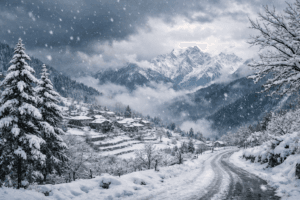
February’s Second Winter: Decoding the Twin Western Disturbances Set to Rewrite North India’s Weather Script
Forget the calendar. For North India, winter isn’t ending—it’s reloading.
Just as the sun began to assert itself and the biting chill of January started to fade into a distant memory, the weather gods have thrown a curveball. In a rare mid-February meteorological maneuver, two back-to-back Western Disturbances (WDs) are preparing to slam into Northwest India, promising to drape the Himalayas in a fresh blanket of snow and chase Delhi-NCR back under the quilt.
While the India Meteorological Department (IMD) has issued the standard alerts for Jammu & Kashmir, Ladakh, Himachal Pradesh, and Uttarakhand for February 11, 14, and 15, the story here is bigger than a simple rain forecast. This is a tale of two Indias living through the same season: one bracing for icy winds and crop-saving snow, and the other sweating through an unrelenting early heatwave.
Here is what is actually happening above our heads, on the ground, and why this “second winter” matters more than just the mercury drop.
Part I: The Atmospheric Architects – Understanding the ‘Twin’ Threat
To understand why this weather event is noteworthy, we have to look 12,000 kilometers west, toward the Mediterranean Sea and the Atlantic Ocean.
A Western Disturbance is essentially a moisture-laden storm system that travels eastward, riding the subtropical westerly jet stream. Usually, by the second week of February, these disturbances weaken or shift northward, allowing the core winter season to wrap up. However, the current synoptic chart reveals a unique traffic jam in the upper atmosphere.
The First Disturbance (WD I): Currently active (February 11), this is a moderate-intensity system. It is acting as the “moisture injector.” It carries a significant amount of humidity from the Caspian and Mediterranean Seas. When this warm moisture collides with the cold Arctic air already settled over the Pir Panjal and Zanskar ranges, the result is instantaneous heavy snowfall.
The Second Disturbance (WD II): Currently a deep trough in the upper air, positioned to hit on February 14 and 15. This is the “cold maker.” While it brings less precipitation than the first, it pulls bone-dry, freezing winds from the higher latitudes directly into the foothills.
The Human Insight: For the locals in Lahaul & Spiti, the arrival of two disturbances within 72 hours is not just a weather update; it is a logistical nightmare. It means the difference between the Rohtang Pass being open for emergency supplies or remaining sealed for an extra week.
Part II: The 72-Hour Breakdown – More Than Just ‘Rain and Snow’
The IMD bulletin technically predicts “rain and snowfall,” but the on-ground reality will be a dynamic spectrum of weather hazards over the next five days.
February 11: The Whitewash Begins High-altitude areas above 2,500 meters (Gulmarg, Sonamarg, Auli, Keylong) will likely wake up to zero visibility. This isn’t a gentle snowfall; it is the “sticking type” that weighs down power lines. In the lower reaches like Jammu, Kathua, and Dehradun, the day will feel claustrophobic—heavy grey clouds, a sharp drop in daytime temperature, and intermittent rain that turns the Doon Valley’s soil red.
February 14-15: The Valentine’s Day Chill There is something poetic—and punishing—about snow arriving on Valentine’s Day. The second WD will be a classic “back-to-back” system, meaning the ground from the first rain will still be wet when the second wave of cold arrives. This is dangerous for infrastructure. Wet snow followed by a deep freeze creates “snow load” that collapses orchards and greenhouses. For apple growers in Shopian and Kullu, this timing could damage the delicate buds that are just beginning to stir, thinking spring was near.
Part III: The Great Indian Thermal Divide – 2°C vs 26°C
Perhaps the most striking aspect of this IMD update is the schizophrenic nature of the forecast. While the news ticker focuses on snow in the north, the fine print reveals a worrying trend for Eastern and Peninsular India.
The East is Baking: The IMD has noted a “rise in minimum temperatures by 2-3°C” over East India. To the layman, this sounds like a pleasant warm-up. To a farmer in Bihar or a laborer in Kolkata, it is the onset of “February Summer.”
- The Disconnect: In West Bengal, the nauka (boat) races on the Ganges are happening under a hazy sun, with people eating pite (traditional winter sweets) in 28°C weather. The winter treats are being consumed in summer-like heat.
- Human Cost: While North India stocks up on heaters, East India is already seeing an uptick in coolers and AC servicing. This isn’t just comfort; it’s a drain on household electricity budgets months before the peak season.
The Plains: The Great Suspense Delhi, Punjab, and Haryana exist in a weather purgatory right now.
- Temperatures (5°C to 10°C): These are “deceptive” temperatures. The air is cold, but the sun is sharp.
- The Fog Paradox: Meghalaya is forecasted to get dense fog, but the northern plains are getting “shallow mist.” This indicates that while the moisture is present, the thermal inversion needed for thick smog is breaking down. For asthmatic patients in NCR, this is a relief. The “gas chamber” days of November are over, but the dry cold still triggers respiratory issues.
Part IV: The Unspoken Economics of a Western Disturbance
Weather news is usually relegated to the lifestyle or breaking news slot, but a twin Western Disturbance event has tangible economic ripples that affect the common man’s wallet.
- The Rabi Savior:Farmers in Punjab and Haryana are quietly cheering this forecast. January 2026 was unusually dry. The wheat crop (Rabi season) is currently in its “crown root initiation” stage—the most irrigation-sensitive phase.
- The Value: One good spell of rain in mid-February can replace one round of diesel-powered tube well irrigation. For a farmer with 5 acres, this saves roughly ₹3,000-4,000 in diesel costs. Moreover, rain “washes” the crop, removing dust and aphids, leading to better yields.
- The Tourism Tax:For Himachal and Uttarakhand, the timing is bittersweet. February is the “lean season.” The Christmas and New Year rush is over, and the summer traffic hasn’t started.
- The Opportunity: A fresh spell of snow on February 11 and 14 acts as free advertising. “Snowfall in February” sells hotel rooms in Mussoorie and Manali for the weekend.
- The Risk: The risk of blocked roads (Narkanda, Kinnaur) means that tourists might be stranded or forced to turn back. The local taxi unions will have to decide whether to fit chains or refuse trips.
- The Vegetable Price Volatility:Delhi’s mandis are delicate ecosystems. Rain in February delays the harvesting of leafy greens (spinach, fenugreek) and damages tomatoes in transit. If the rain extends to the plains, expect a ₹5-10/kg hike in vegetable prices in the NCR by February 16.
Part V: The Delhi-NCR Reality Check – Why ‘No Rain’ is Actually Good News
The article states: “No rain is forecasted for Delhi-NCR through Thursday.”
On the surface, this seems like the most boring part of the forecast. In reality, it is the best possible news for the capital.
The Infrastructure Angle: The report subtly mentions “water supply disruptions due to maintenance work on February 11 and 12.”
- The Insight: Delhi Jal Board often schedules pipeline flushing and maintenance during “dry spells.” If it were to rain during these maintenance windows, the exposed trenches would flood, mixing mud and sewage with drinking water lines. The absence of rain ensures that the maintenance work is effective and the water coming out of your tap next week is cleaner.
The Commute: Delhi’s traffic collapses under 2 mm of rain. With clear skies and daytime temperatures peaking at 26°C, the Capital remains functional. The “mist” in the morning is just enough to remind you it’s winter, but not enough to delay the IndiGo flights at IGIA.
Part VI: A Traveler’s Advisory (Beyond the Generic Warnings)
Most news reports end with a generic “drive safely” note. Here is specific, actionable insight for those impacted by this weather:
- For the Himalayas (J&K, HP):
- Don’t be fooled by the sun: February sun is high-intensity. You can get a sunburn and frostbite on the same day. The UV reflection off fresh snow is brutal. Pack polarized sunglasses; snow blindness is real.
- Roads: The Zojila and Sadhna Pass may close preemptively. If you are traveling to Leh, do it before February 13. After the 14th, air travel is your only bet.
- For the Plains (Delhi, Haryana):
- Pets: The temperature swing (26°C day / 10°C night) is hard on street animals and indoor pets. Dogs and cats are sensitive to the 15-degree diurnal variation. Ensure water bowls are not kept in direct afternoon sun (heating plastic) and that bedding is available at night.
- Skin: Humidity will drop sharply after the WD passes. “Winter cream” will feel too heavy; switch to a lighter, gel-based moisturizer to prevent breakouts.
Conclusion: The Quiet Resilience of the Indian Winter
Every year, we assume the shawls can be packed away. Every year, February reminds us that winter, in Northwest India, writes its own departure date.
These two Western Disturbances are not record-breaking. They are not causing a “monster storm” or a “whiteout apocalypse.” They are, however, a perfect example of the transitional chaos that defines Indian meteorology. While East India sweats under a premature summer sun, the West is clutching at the last few snowflakes of the season.
This weather event is a testament to the diversity of the Indian subcontinent. At the exact moment a shepherd in Ladakh is digging his sheep out of a drift, a college student in Gangtok is wiping sweat from his brow, and a bureaucrat in Delhi is sipping tea under a clear, indifferent sky.
You must be logged in to post a comment.