
Delhi’s Winter Siege: Unpacking the Intense Cold Wave and Travel Chaos Gripping North India
Delhi’s Winter Siege: Unpacking the Intense Cold Wave and Travel Chaos Gripping North India
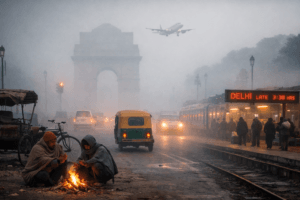
With temperatures plunging to their lowest in six years and visibility dropping near zero, Delhi and the National Capital Region (NCR) are in the grip of an intensifying winter siege. The India Meteorological Department (IMD) forecasts that the severe cold wave and dense fog will tighten their hold until at least January 7, creating a cascade of disruptions from grounded flights to serious public health concerns. This isn’t just a spell of cold weather; it’s a complex environmental event where plummeting temperatures, stagnant air, and trapped pollutants converge to test the city’s resilience.
The Meteorological Perfect Storm
The current conditions stem from a combination of classic winter phenomena. The IMD has issued a yellow alert for dense fog and warns of cold wave conditions at isolated places in Delhi until January 5. A “cold wave” is officially declared when the minimum temperature dips 4.5°C to 6.5°C below the seasonal average. While recent minimums have hovered around 6°C to 9°C, the more telling statistic is the daytime maximum, which struggled to reach 14.2°C on December 31—marking Delhi’s coldest day since 2019.
The dense fog, described as “very dense” in many areas, is primarily radiation fog. It forms on cold, clear nights when the ground rapidly loses heat, cooling the moist air directly above it to its dew point. This process is amplified by calm winds, which prevent the fog from dispersing. The result is a thick blanket that shrouds the city from late night through the morning hours, drastically reducing visibility.
Regional Impact: A Widespread Chill
The crisis extends far beyond Delhi. The IMD’s multi-day warnings highlight a broad swath of North and Central India under similar duress.
| Region/State | Expected Conditions (Till Jan 7-9) | Key Impact |
| Punjab, Haryana, Chandigarh | Dense to Very Dense Fog, Cold Wave | Major disruption to road & air travel |
| Uttar Pradesh | Prolonged dense fog spells | Low visibility affecting all transport |
| Rajasthan | Cold wave conditions | — |
| Bihar, Odisha, Northeast | Dense fog at isolated places | Disrupted morning movement |
Transportation Gridlock: Flights, Rails, and Roads Paralyzed
The most immediate and visible impact has been on transportation, with aviation bearing the brunt. The situation reached a peak recently when 148 flights were cancelled and over 150 delayed at Delhi’s Indira Gandhi International Airport (IGI) in a single day as visibility neared zero.
Operations have been forced to shift to CAT III protocols, a special instrument landing system that allows only suitably equipped aircraft and trained pilots to operate in extremely low visibility. Major airlines have been compelled into crisis management:
- IndiGo proactively cancelled several early morning flights to “minimize inconvenience,” advising passengers to check their flight status before heading to the airport.
- Air India activated its FogCare program, offering passengers on affected flights options to change or cancel without penalty.
- Delhi Airport authorities have consistently urged passengers to contact their airlines for real-time updates, as delays can create a domino effect throughout the day.
The chaos isn’t confined to the skies. Road and rail networks have suffered equally. Dense fog reduces visibility on highways to dangerous levels, sometimes below 50 meters, leading to increased accidents and traffic jams. Train schedules across North India have also been massively disrupted, with numerous delays and cancellations reported.
The Twin Threat: “Very Poor” Air Quality Meets the Cold
Beneath the fog lies a more insidious layer of pollution. Delhi’s Air Quality Index (AQI) has been persistently in the “Very Poor” (301-400) category, with readings around 298-383. The fog acts as a lid, trapping pollutants close to the ground and preventing their dispersion.
A critical insight from a 2025 study reveals that a staggering 65% of Delhi’s PM2.5 pollution originates from outside the city, primarily other NCR districts. Local sources, which account for the remaining 35%, are dominated by vehicular emissions (nearly 50%), followed by industry and construction. This creates a dangerous synergy: the cold air exacerbates respiratory problems, while the trapped pollution intensifies the risk of asthma attacks, bronchitis, and cardiovascular issues, especially for the elderly, children, and those with pre-existing conditions.
Navigating the Siege: A Guide for Residents and Travelers
For the millions living in and traveling through this affected zone, preparedness is key.
For Daily Life:
- Health First: Limit early morning outdoor activities when fog and pollution are at their peak. Wear N95 or N99 masks outside to filter pollutants. Stay hydrated and consume warm foods and drinks to help maintain body temperature.
- Home Care: Use air purifiers indoors if possible. Seal windows and doors to keep out cold and polluted air. Check on vulnerable neighbors and family members.
- Travel Advisory: If you must drive, use fog lights, maintain a significant distance from other vehicles, and avoid high speeds. Public transport, while potentially delayed, is often a safer alternative to private vehicles in such conditions.
For Travelers (Air/Rail):
- Confirm Before You Go: Always check your flight or train status directly with the airline or Indian Railways before leaving home. Do not rely on general schedule times.
- Build in Buffer Time: Expect massive delays on roads leading to airports and railway stations. Plan to arrive early, but be prepared for long waits.
- Know Your Rights: Familiarize yourself with airline policies for cancellations and delays due to weather. Keep essential medications, snacks, and warm clothing in your carry-on luggage.
Pre-Travel Checklist for Fog Season
Before Leaving Home: ✅ Verify flight/train status via official airline/rail site or app. ✅ Pack essentials (medicines, snacks, charger, warm layer) in hand luggage. ✅ Inform family/friend of your travel details.
On the Road: ✅ Use fog lights and demisters. ✅ Drive slowly, maintain a safe distance. ✅ Follow traffic advisories and announcements.
At the Terminal: ✅ Monitor information display systems (FIDS). ✅ Stay near your departure gate for announcements. ✅ Practice patience; ground staff are managing a difficult situation.
Looking Ahead: The Forecast and Broader Implications
The IMD’s extended forecast offers little immediate respite. Dense to very dense fog conditions are very likely to continue during night and morning hours over North India for the next seven days. Cold wave conditions are also expected to persist in isolated pockets of Punjab, Haryana, Chandigarh, and Delhi until January 7.
This recurring annual crisis underscores deeper, systemic challenges. It highlights the interconnectedness of weather, urban planning, and regional environmental policy. While weather patterns are a natural phenomenon, their impact is magnified by human factors—from stubble burning in neighboring states (though reports note a 10.6% decrease in 2025 compared to 2024) to urban emissions and infrastructure strain.
The enduring fog and cold are more than a temporary inconvenience; they are a stark reminder of the urgent need for coordinated, long-term strategies on clean energy, sustainable transportation, and regional cooperation to mitigate a public health and economic challenge that revisits Delhi with chilling predictability each winter.
You must be logged in to post a comment.