
Delhi’s Winter Dichotomy: Soaring Daytime Sun, Biting Nights as Mercury Plunges to 9.6°C
Delhi-NCR is experiencing a sharp contrast in weather conditions, with residents facing sunny daytime skies that push temperatures to a pleasant 26°C, while nights and early mornings bring a significant chill as the mercury plummets to around 9°C; this pattern is expected to persist, accompanied by shallow fog and a more concerning layer of toxic smog, as the city’s air quality remains in the ‘Very Poor’ category, creating a dual health challenge of biting cold and hazardous pollution that necessitates caution.
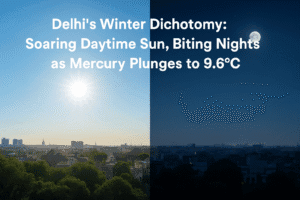
Delhi’s Winter Dichotomy: Soaring Daytime Sun, Biting Nights as Mercury Plunges to 9.6°C
Residents of Delhi-NCR are experiencing the classic winter conundrum. As the sun climbs high in a brilliant blue sky, it offers a deceiving promise of warmth. But step out after sundown, and a distinct chill grips the air, a stark reminder that winter is firmly settling over the plains. According to the India Meteorological Department (IMD), the region recorded a minimum temperature of 9.6°C on a recent night, a clear signal of the colder days ahead.
This pattern of sunny, pleasant days followed by sharply cold nights is characteristic of the North Indian winter. The IMD forecast suggests this is not a fleeting cold spell but the beginning of a sustained pattern, with nights expected to hover between 9°C and 11°C for the coming week. While the days will remain comfortable with highs around 26°C, it’s the significant drop after sunset that defines the current weather narrative.
The Science Behind the Chill: Why Are Nights Getting Colder?
This isn’t just a simple case of “winter is coming.” The specific pattern Delhi is experiencing—sunny days and cold nights—is driven by several key meteorological factors:
- Radiational Cooling: During the day, the earth’s surface absorbs sunlight and heats up. As night falls and the sun sets, this accumulated heat begins to radiate back into the atmosphere. With clear, cloudless skies—a hallmark of the current weather—this escaping heat faces no obstacle. There are no clouds to act as a blanket and trap the warmth, allowing it to vanish freely into space. This results in a rapid and significant drop in ground-level temperatures.
- Dry Continental Winds: The region is currently under the influence of dry, north-westerly winds blowing in from the colder interiors of the continent. These winds, which have low moisture content, are efficient at replacing the relatively warmer, localized air with a cooler, denser mass, further driving down the nighttime mercury.
- Shortening Days: As we move deeper into November, the days become progressively shorter, meaning there are fewer hours of sunlight to heat the earth and more hours of darkness for that heat to dissipate.
This combination creates a high diurnal temperature range—the difference between the day’s high and the night’s low. A swing from 26°C to 9°C is a 17-degree difference, a signature of the dry, continental winter that defines the capital’s climate.
Delhi Weather: Your Detailed 7-Day Forecast and Analysis
Planning your week requires more than just a glance at the temperatures. Here’s a deeper dive into the IMD’s forecast, with insights on what each day will truly feel like.
- Tuesday & Wednesday: The week starts with a mainly clear sky. However, a key feature to watch is the onset of shallow to moderate fog during the morning hours, particularly on Wednesday. This isn’t just water vapor; it’s often a mix of fog and smoke/particulates, leading to smog that can reduce visibility and impact respiratory health. Daytime will remain pleasant, perfect for outdoor activities, but the evenings will demand a warm layer.
- Thursday & Friday: A slight warming trend is expected, with nighttime lows potentially creeping up to 12°C. Don’t be fooled; the winter chill is far from over. The mornings will still be crisp, and the persistent shallow fog will continue, meaning the air quality is unlikely to see significant improvement. These are classic “jacket weather” days.
- The Weekend Outlook (Saturday & Sunday): The pattern holds steady. Expect mainly clear skies but with the now-familiar blanket of morning fog. Maximum temperatures will be comfortable, but the minimums are predicted to dip again, with Sunday night potentially touching 9°C. This makes for perfect bonfire weather in the evenings but requires extra warmth, especially for vulnerable groups like the elderly and young children.
- Looking Ahead to Next Monday: The forecast indicates a slight intensification of the cold. The minimum temperature is expected to drop to a range of 8°C to 10°C, potentially making it the coldest night of the forecast period. The clear skies and calm winds will continue to facilitate this intense radiational cooling.
The Invisible Enemy: Delhi’s Air Quality Crisis Worsens
While the cold is a tangible feeling, an equally pressing concern is the air we breathe. As of the latest data, Delhi’s average Air Quality Index (AQI) has surged into the ‘Very Poor’ category at 341. Specific monitoring stations paint a grimmer picture:
- Anand Vihar: 381
- Akshardham: 381
- Dhaula Kuan: 365
This toxic smog is a cocktail of factors: vehicular emissions, industrial pollution, and crucially, post-harvest stubble burning from neighboring states. The meteorological conditions—calm winds and low temperatures—create a lid-like effect, trapping these pollutants close to the ground. This combination of cold and pollution creates a double whammy for public health.
Staying Safe and Healthy: A Proactive Guide for Residents
Navigating this season requires a proactive approach to health and wellness. Here are some essential tips:
- Layer Up: Dress in multiple layers rather than one heavy piece of clothing. This traps body heat more effectively. Don’t forget a warm hat, as a significant amount of body heat is lost through the head.
- Protect Your Lungs: The AQI demands caution. Limit strenuous outdoor activities like jogging or cycling during the early morning and late evening when pollution levels are at their peak. If you must go out, a well-fitted N95 or N99 mask is non-negotiable.
- Mind Your Morning Drive: The forecast of shallow to moderate fog can lead to reduced visibility. Drive with your headlights on low beam (high beams reflect off the fog and worsen visibility), maintain a safe distance from other vehicles, and avoid speeding.
- Boost Indoor Air Quality: Invest in a good quality air purifier for your home, especially in bedrooms. Keep windows closed during peak pollution hours but air out your home briefly when the AQI is marginally better, typically in the afternoon.
- Nourish and Hydrate: Consume warm foods and beverages. Traditional remedies like herbal teas with ginger and tulsi, warm soups, and a balanced diet rich in Vitamin C can help boost immunity. Cold air is dry, so staying hydrated is equally important in winter.
The crisp, sunny days of Delhi’s winter are a time to be enjoyed. But as the IMD data clearly shows, this beauty comes with a bite. By understanding the weather patterns, staying informed about the air quality, and taking sensible precautions, you can safeguard your health and navigate the season safely and comfortably.
You must be logged in to post a comment.