
Delhi’s Weather Rollercoaster: From Summer Heat to Weekend Washout—What to Expect
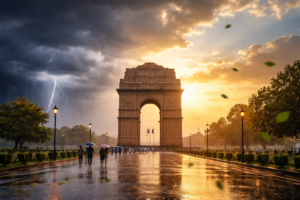
Delhi’s Weather Rollercoaster: From Summer Heat to Weekend Washout—What to Expect
As Delhiites peeled off their layers and reluctantly reached for the air conditioner remote on Thursday, a familiar rhythm of the pre-summer season was interrupted. The mercury soared to a sultry 34.8°C at Safdarjung, three notches above normal, offering a sudden, jarring preview of the scorching months ahead. But in a city where the weather rarely follows a straight line, this taste of summer is set to be short-lived.
The India Meteorological Department (IMD) has confirmed a dramatic shift on the horizon. A fresh Western Disturbance is barreling towards Northwest India, promising to turn the tables from a warm, dusty haze to a weekend of gusty winds, thunderstorms, and widespread showers.
For residents of the National Capital Region (NCR), the next 72 hours represent a classic Delhi weather paradox: a battle between a rising sun and an incoming storm system. Here is a deep dive into what is happening, why it matters for your weekend plans, and how long this pleasant reprieve from the heat is likely to last.
Friday: The Calm Before the Storm (Or the Start of It)
If you are stepping out on Friday, March 27, the weather will likely feel like a coin toss. According to the IMD, the day will begin with the legacy of Thursday’s heat. The maximum temperature is expected to hover between 29°C and 31°C, slightly more bearable than the previous day, but the humidity may make it feel sticky.
However, the defining characteristic of Friday will be instability. The weather office has forecast “spells of very light rain or drizzle accompanied by thunderstorms, lightning and gusty winds of 20–30 km/hr.”
For the average Delhiite, this translates to a morning that might feel like a typical spring day, followed by an afternoon where the sky darkens unexpectedly. Those winds—gusting up to 40 km/hr in some areas—will be enough to send loose awnings flapping, kick up the dust that has settled over the last few dry days, and offer a welcome, if slightly chaotic, cooling effect.
The key phrase here is “patchy light rain.” Unlike the widespread, drenching monsoon showers, Friday’s precipitation is likely to be scattered. One neighborhood might see a 10-minute drizzle strong enough to wet the roads, while a few kilometers away, residents might only witness a dramatic play of clouds and lightning without a single drop. For commuters, particularly those on two-wheelers, Friday evening could be tricky—visibility may drop suddenly due to drizzle combined with blowing dust.
The Main Event: The Western Disturbance (March 29–30)
While Friday serves as the appetizer, the main course arrives on the weekend. The IMD has flagged a “fresh Western Disturbance” likely to affect Northwest India from the night of March 28, with its impact peaking in Delhi from March 29 onward.
For those unfamiliar with the term, a Western Disturbance is an extratropical storm originating in the Mediterranean Sea that brings sudden winter rain to the northwestern parts of the Indian subcontinent. However, when these systems arrive in late March, their behavior changes. They interact with the rising temperatures and moisture trapped in the lower atmosphere, often resulting in more volatile weather.
Sunday, March 29: A yellow alert has been issued. The day is expected to be windy, with speeds jumping to 30–40 km/hr. The cloud cover will be dense, suppressing the daytime temperature significantly. This isn’t just a drizzle; forecasters expect “widespread light rain.” For Delhi, which has seen a relatively dry March so far, this will be a significant wet spell.
Monday, March 30: The system’s tail end is likely to linger. The forecast suggests a continued possibility of light rain. By this time, the Western Disturbance will have moved eastward, but the residual moisture will keep the weather pleasant and cool.
Mahesh Palawat, vice-president at Skymet Weather, emphasized the distinction between the two weather events. “We expect light patchy rain on Friday, with the next western disturbance to be more active. It should bring widespread light rain to Delhi on Sunday and Monday,” he explained.
A Deep Dive: Why the Sudden Temperature Dip Matters
Thursday’s high of 34.8°C was a wake-up call. For the past week, Delhi had been enjoying relatively pleasant nights, with the minimum temperature dropping to 16.4°C just 24 hours prior. Thursday night, however, saw a sharp rise, with the minimum settling at 19.2°C—a jump of nearly three degrees in a single day.
This fluctuation is tough on the human body. Rapid shifts between heat and cold can exacerbate respiratory issues, trigger allergies, and make it difficult for the body to regulate its internal temperature.
However, the silver lining is the forecasted dip. As the Western Disturbance takes hold, the maximum temperature is expected to retreat to a comfortable range. While the IMD predicts Friday’s high between 29-31°C, the actual “feel” temperature during the Sunday rains will likely be much lower—perhaps dipping into the low 20s during the day. This offers a brief, albeit welcome, extension of the “pleasant weather” window that usually slams shut by mid-March.
Air Quality: A Temporary Improvement
One of the most immediate benefits of this weather system will be on the air we breathe. As of Thursday, the 24-hour average Air Quality Index (AQI) stood at 186, lingering in the “moderate” category. While not hazardous, this level is still irritating for sensitive groups, especially as the heat began to trap pollutants closer to the ground.
The arrival of gusty winds—particularly the 30–40 km/hr gusts expected on Sunday—acts as a natural “flushing” mechanism for the city. High winds disperse accumulated pollutants, while rain washes particulate matter (PM2.5 and PM10) out of the atmosphere. Forecasts indicate the AQI is likely to remain in the moderate band over the next seven days, with a strong possibility of dipping into the “satisfactory” category following the weekend rains.
Human Insight: Navigating the Weekend
For Delhi’s residents, this weather pattern requires a shift in planning. Here’s how to make the most of it—and stay safe:
- Gardening and Greenery: For those with terrace gardens or parks in their colonies, the light rain forecast for Sunday is a boon. However, the gusty winds (up to 40 km/hr) pose a risk to potted plants and unsecured furniture. It’s advisable to secure hanging pots and bring delicate saplings indoors before Saturday night.
- Travel and Commute: The Delhi-NCR roads are notorious for becoming waterlogged even during brief spells of rain due to clogged drains. While the forecast isn’t for a cloudburst, the combination of wind and sudden rain often leads to fallen tree branches and traffic snarls. If you have plans for a long drive on Sunday, consider postponing them to Monday afternoon when the system is likely to weaken.
- Health Precautions: The dramatic temperature swing—from near-summer heat to cool, rainy conditions—is a classic trigger for viral infections. Parents of young children and the elderly should be cautious. While the rain is pleasant, sitting in damp clothes due to an unexpected downpour or prolonged exposure to cold winds can lead to a spike in fever and cold cases.
- The “Dust and Thunder” Phenomenon: One thing to watch out for on Friday is the pre-rain wind. Often in Delhi, the wind picks up dust and debris before the rain arrives, creating a temporary “dust storm” effect. Visibility on the roads drops to near zero for about 10–15 minutes before the drizzle settles the dust. If you see the sky turning a dusty brown and the wind picking up, it’s best to pull over safely rather than try to outrun the storm.
The Bigger Picture: A Changing March
Historically, March in Delhi is a transitional month—a time when you can wear a light sweater in the morning and switch to a cotton shirt by noon. However, in recent years, this transition has become increasingly volatile.
The phenomenon we are witnessing—a sudden spike to 34.8°C followed by a sharp drop due to a late-season Western Disturbance—reflects a broader pattern of climate variability. The “break” period between winter and summer is shrinking, replaced by extreme swings. While a Western Disturbance in March is not unusual, the intensity of the heat preceding it (three degrees above normal) followed by the potential for widespread rain highlights how these systems are interacting with a warmer atmosphere, leading to more energy for thunderstorms and lightning.
Conclusion: A Weekend to Savor
For a city that bakes under relentless heat from April to June, the upcoming weekend offers a precious window of respite. Friday will likely be a day of contrasts—warm patches interrupted by cool gusts and sudden drizzles. Saturday may serve as the interlude, with temperatures starting to dip as clouds gather. By Sunday, Delhi will likely transform into a version of itself that feels more like a pleasant hill station than a bustling metropolis: overcast skies, a cool breeze, and the rhythmic pitter-patter of rain washing the dust off the leaves.
As the IMD keeps its vigil, residents would do well to enjoy this shift. It’s a reminder that despite the challenges of urban living—the pollution, the traffic, the noise—nature still holds sway over the capital. Just remember to carry an umbrella this weekend, not just for the rain, but for the sudden gust of wind that might just carry the promise of a slightly delayed, but much more pleasant, summer ahead.
You must be logged in to post a comment.