
Delhi’s Unusual March Chill: Why the Capital is Shivering with a 20°C Temperature Dip
Delhi is experiencing an unexpected weather shift with temperatures dropping nearly 20°C due to active thunderstorms and light rain, bringing the capital a cool, cloudy March day far removed from its usual pre-summer warmth. The IMD forecasts generally cloudy skies and possible thunderstorms across the NCR on March 23, with drier conditions returning from March 24. While the rain offers temporary relief from pollution, air quality remains poor in several areas, and similar weather disturbances are affecting parts of Rajasthan and eastern India under orange alerts. Residents are advised to carry rain gear and stay updated, as this brief spell of unseasonable coolness—driven by a large-scale thunderstorm system—is expected to subside by the weekend.
Delhi’s Unusual March Chill: Why the Capital is Shivering with a 20°C Temperature Dip
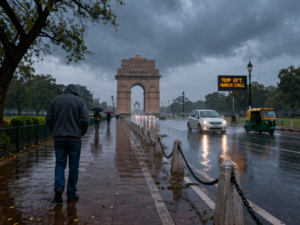
A sudden weather shift has transformed Delhi’s spring into a surprisingly cool spell, bringing thunderstorms, rain, and a dramatic drop in temperatures that has left residents reaching for their jackets once again.
If you stepped out in Delhi this morning expecting the usual pre-summer warmth, you were in for a surprise. The national capital woke up to grey skies, a gentle drizzle, and a distinctly un-March-like chill that has completely altered the rhythm of daily life. The India Meteorological Department (IMD) has been tracking this unusual weather pattern closely, and what we’re experiencing isn’t just a passing cloud—it’s a significant weather event that has brought temperatures down by nearly 20 degrees Celsius in some parts of the city.
What’s Happening with Delhi’s Weather?
As of Monday morning, Delhi is experiencing conditions more typical of February than late March. The temperature was recorded at 20°C at 7:48 AM, though it felt closer to 24°C due to humidity levels hovering around 65 percent. Gentle westerly winds at 2 mph are carrying moisture across the region, creating that perfect setup for continued precipitation throughout the day.
But here’s what makes this particularly noteworthy: just days ago, Delhi was grappling with temperatures touching the mid-30s. This sharp contrast—a drop of nearly 20 degrees in some areas—is what has everyone talking. It’s not just about the numbers on a thermometer; it’s about how this sudden shift affects everything from morning commutes to evening plans, from what we wear to how we feel.
The IMD’s forecast for March 23 indicates that the entire National Capital Region—including Faridabad, Gurugram, Ghaziabad, and Noida—will remain under a “generally cloudy sky.” There’s a real possibility of very light rain accompanied by thunderstorms and lightning during the forenoon to afternoon hours. For those planning outdoor activities, the message is clear: keep an umbrella handy and stay updated on weather alerts.
A Tale of Two Delhis: Temperature Variations Across the City
One fascinating aspect of Delhi’s microclimates is how differently weather manifests across various parts of the city. While the overall narrative is one of cooler temperatures, the data reveals interesting variations that speak to the city’s complex urban landscape.
Faridabad recorded 21.1°C with active light rain and humidity at 73 percent—conditions that make you want to curl up with a hot cup of tea. At New Delhi’s Safdarjung observatory, the temperature reached 26.0°C, while Palam showed 25.2°C. But here’s the outlier: Narela recorded a significantly higher 31.0°C. This disparity highlights how urban density, green cover, and local geography create pockets of distinct weather even within the same metropolitan area.
The Air Quality Question: When Rain Brings Mixed Blessings
Delhi’s air quality is never far from anyone’s mind, and this weather event presents a complex picture. The real-time Air Quality Index (AQI) was recorded at 213 at 7:58 AM, hovering in the “poor” and “unhealthy” bracket. The city-wide average stood at 163 (US AQI) as of 7:48 AM.
There’s reason for cautious optimism, though. Light showers like the ones we’re experiencing can help scavenge particulate matter from the air, essentially washing away some of the pollutants that accumulate during dry spells. However—and this is a significant however—certain areas tell a different story. Anand Vihar continues to report “hazardous” levels at 436, a stark reminder that while weather patterns can offer temporary relief, the underlying air quality challenges remain deeply entrenched.
Other areas like Baba Kharak Singh Marg and Pusa reported levels in the 182 to 164 range. For those with respiratory conditions, the advice remains consistent: monitor local AQI readings and limit prolonged outdoor exposure, especially during peak pollution hours.
Beyond Delhi: Weather Patterns Across North India
This weather system isn’t confined to the capital. Jaipur experienced its own fresh spell of rain on Monday, with showers beginning in the early hours across different parts of the city. The sudden transition has transformed Rajasthan’s capital from warm to pleasantly cool—a welcome change for many.
The broader context matters here. Rajasthan Chief Minister Bhajanlal Sharma has already directed all district collectors to conduct immediate surveys assessing crop damage from recent heavy rainfall across the state. This isn’t just about weather; it’s about livelihoods. Farmers across Rajasthan are assessing damage to their crops, and the state government has emphasized its commitment to providing prompt assistance.
“Instructions have been issued to all District Collectors to immediately conduct surveys and submit reports at the earliest for the proper assessment of the damage caused to our farmer brethren due to heavy rainfall in various regions of the state,” Sharma posted on X. “The prosperity of Rajasthan rests on the foundation of our farmer brothers and sisters. The state government stands firmly with you with complete sensitivity and responsibility.”
The Bigger Picture: A Large-Scale Weather System
IMD Scientist Akhil Shrivastava offered valuable context, noting that this isn’t an isolated Delhi phenomenon but rather a large-scale thunderstorm activity currently being witnessed across India. In Delhi specifically, rainfall activity has already resulted in a significant drop in maximum temperatures.
For those wondering what’s next, Shrivastava indicated that this activity is expected to subside in Delhi starting Saturday, with the probability of rain decreasing from that point onward. But for other parts of the country, the weather drama continues. An ‘Orange Alert’ has been issued for regions including eastern Uttar Pradesh, Bihar, Jharkhand, Chhattisgarh, Odisha, and parts of West Bengal due to expected thunderstorms, gusty winds, and possible hailstorms.
Here’s a number worth noting: wind speeds in eastern India may reach 60 to 70 kmph. That’s enough to cause real disruption—fallen branches, power outages, and dangerous conditions for anyone caught unprepared outdoors.
Practical Advice for Delhi Residents
So, what should you do with this information? First, if you’re heading out today, dress in layers. The morning chill might give way to afternoon humidity, and sudden rain showers could catch you off guard. Keep an umbrella or raincoat accessible, and if you’re driving, exercise extra caution—roads can become slippery, and visibility may reduce during thunderstorms.
For those with respiratory conditions, the mixed air quality picture means you’ll want to balance the benefits of fresh air with the risks of pollution. The rain may temporarily improve air quality, but hotspots like Anand Vihar remain concerning. Check local AQI readings before planning outdoor activities.
Residents in low-lying areas should be aware of potential waterlogging during heavier showers, particularly in parts of Delhi where drainage infrastructure struggles to keep up with sudden rainfall.
Looking Ahead: What the IMD Forecast Shows
The IMD’s outlook for the coming days offers some clarity. March 24 is expected to bring partly cloudy skies, with dry weather conditions likely to prevail for the remainder of the week. This suggests that the current spell of unseasonable coolness is temporary—a brief interruption in what is otherwise the steady march toward summer.
For those who’ve been enjoying the respite from the heat, this is the time to appreciate it while it lasts. For farmers, civic authorities, and emergency services, it’s a reminder to stay vigilant as weather patterns continue to show increasing variability.
A Final Thought
Delhi’s weather has always been a topic of conversation, but events like this—with their sudden temperature dips, their dramatic swings, and their wide-ranging impacts—tell us something important about how our climate is changing. What we’re experiencing isn’t just “unusual weather”; it’s a snapshot of the kind of variability that may become more common.
For now, though, there’s something almost nostalgic about this March chill—a reminder of the Delhi winters we’ve left behind, a brief encore before the summer heat takes center stage. Whether you’re rushing to work, planning an evening out, or simply watching the clouds roll in from your window, take a moment to appreciate this unexpected gift of cool weather. Just don’t forget your umbrella.
You must be logged in to post a comment.