
Delhi’s Unsettling Prelude to Summer: When 29.7°C and ‘Poor’ Air Quality Become the New Normal
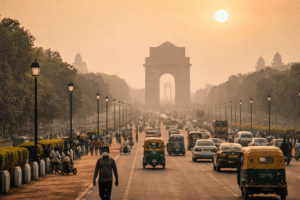
On a seemingly pleasant late February day in Delhi, where the temperature soared to 29.7°C—four notches above average—and a morning mist promised comfort, the reality was a deceptive environmental paradox: the “poor” Air Quality Index of 229 meant that residents were breathing air that causes discomfort on prolonged exposure, highlighting the city’s unsettling new normal where warm, spring-like weather is inextricably linked with toxic air, an early and alarming preview of summer heat, and the health risks of an invisible crisis that thrives in the gap between how the weather feels and what the data reveals.
Delhi’s Unsettling Prelude to Summer: When 29.7°C and ‘Poor’ Air Quality Become the New Normal
The morning of Sunday, February 25, 2024, dawned with a deceptive calm in the national capital. The harsh chill of winter has finally receded, and the sun, now with a hint of assertion, warms the skin rather than just providing light. For the residents of Delhi, it felt like a pleasant late-February day. But beneath this comfortable exterior, the data tells a more complex and concerning story about the city’s evolving environmental reality.
According to the India Meteorological Department (IMD), the day temperature in Delhi soared to 29.7 degrees Celsius, a staggering four notches above the seasonal average. While the minimum temperature settled at a comfortable 12 degrees Celsius, the real story of the day was this dramatic spike in heat and the invisible enemy hanging in the air: an Air Quality Index (AQI) of 229, firmly lodged in the ‘poor’ category.
This isn’t just a weather update; it is a snapshot of a megacity living on the edge of seasonal transition, caught between a shifting climate and a persistent pollution crisis. This article delves deeper into what these numbers mean for the 20 million-plus residents of Delhi, why this is happening, and how to navigate the complexities of a “pleasant” day that is, in reality, anything but healthy.
The False Comfort of a Warm Winter Day
To the average Delhiite stepping out for a Sunday stroll or a chai at a roadside stall, 29.7°C feels fantastic. After months of layering up in sweaters and hoodies, the warmth is a welcome relief. However, in meteorological terms, this is an anomaly. The “normal” maximum temperature for late February in Delhi hovers around the 25-26°C mark. Crossing the 29°C threshold means the city is effectively experiencing temperatures typical of late March or early April.
Why is this happening? This sudden surge in temperature is primarily attributed to a change in wind patterns. As the western disturbances—the weather systems that bring winter rain to North India—become less frequent, the city has come under the influence of dry, northwesterly winds. However, these aren’t the biting cold winds of January. These winds, coming from the landmass, are now warmer and are preventing any significant cooling.
Furthermore, the lack of rainfall this month has played a crucial role. February usually acts as a transition month where occasional rains “settle” the dust and keep temperatures in check. The absence of this natural coolant means the ground has become dry, and the sun’s radiation heats the surface more efficiently, pushing the mercury up. For residents, this means an extended period of warm afternoons, but also a concerning preview of the summer ahead. If February ends with near-30 degree days, what will happen in May and June, when temperatures routinely hit 40-45°C? The thought alone raises red flags about heatwaves, water scarcity, and strain on the power grid.
Decoding the ‘Poor’ AQI of 229
The most dangerous aspect of this weather update is not something you can feel on your skin; it’s what you breathe. At 4 pm on Sunday, the Central Pollution Control Board (CPCB) recorded an AQI of 229. To put this in perspective, the air was officially declared ‘poor’.
The CPCB classifies air quality on a scale:
- 0-50 (Good): Minimal impact.
- 51-100 (Satisfactory): Minor discomfort for sensitive people.
- 101-200 (Moderate): Breathing discomfort for sensitive groups.
- 201-300 (Poor): Breathing discomfort to most people on prolonged exposure.
- 301-400 (Very Poor): Respiratory illness on prolonged exposure.
- 401-500 (Severe): Affects healthy people and seriously impacts those with existing diseases.
An AQI of 229 means that while the air might not look thick with smog (like the ‘severe’ episodes of November), it is still laced with fine particulate matter (PM2.5 and PM10) that is detrimental to human health.
The Invisible Threat Unlike the acrid smell of a “Severe” day, a “Poor” AQI is deceptive. You might not cough immediately, and visibility is usually fine. But prolonged exposure to this level of pollution acts as a silent stressor on the body. The microscopic PM2.5 particles penetrate deep into the lungs and enter the bloodstream, causing inflammation. For the millions of Delhiites, a day at this AQI contributes to a cumulative toxic load.
Why is the air ‘Poor’ in February? The ‘why’ is a mix of seasonal and local factors:
- Calm Winds and Inversion: As winter ends, the strong western winds that clear the sky start to wane. At night, the ground cools rapidly, creating a shallow layer of inversion where cooler air is trapped near the surface. This acts like a lid, trapping pollutants emitted by vehicles and industry close to the ground. During the day, while the sun is strong, the mixing height increases, dispersing pollutants slightly—which is why the AQI of 229 was recorded at 4 PM. It would have likely been worse in the morning.
- Dust and Dryness: With the ground dry and temperatures rising, dust from roads, construction sites, and barren land gets suspended in the air. This contributes heavily to the PM10 fraction of the AQI.
- Vehicular Exhaust: Delhi’s vehicle population is a constant source of emissions. With no rain to wash the pollutants away, the daily load of nitrogen oxides and particulates accumulates in the atmosphere.
Living in the ‘Poor’ Zone: A Guide for Residents
For a Delhi resident, the news isn’t just information; it’s a directive on how to navigate the next 24 to 48 hours. Here is how to interpret and act on this data to protect your health and well-being:
- Rethinking the Morning Walk:With the minimum temperature at 12°C and mist predicted, mornings might look inviting. However, the air quality is at its worst during the early hours due to the inversion layer. For the elderly and those with asthma or cardiac issues, an early morning walk on a day with ‘poor’ AQI can do more harm than good. It is advisable to wait until the sun is high (post 10 AM) when the inversion breaks and pollutants disperse slightly.
- The Dilemma of Ventilation:On a 30-degree day, the instinct is to open the windows and let the “fresh” air in. But in Delhi, the air is not fresh. If you live near a main road, keeping windows open during peak traffic hours (morning and evening) will invite a plume of exhaust fumes and dust inside. The best strategy is to ventilate the house in the early afternoon (around 2-3 PM) when wind movement is typically higher, and then keep the windows closed during the evening buildup.
- Diet and Hydration:Ayurveda and modern medicine converge on one point: pollution creates oxidative stress. Increasing the intake of Vitamin C (amla, citrus fruits) and Omega-3 fatty acids can help bolster the body’s defense mechanisms. Staying hydrated helps the body flush out toxins and keeps the mucosal linings of the lungs moist, making them more effective at trapping particulates.
- Monitoring Vulnerable Groups:An AQI of 229 is specifically flagged as causing “breathing discomfort to most people on prolonged exposure.” This means children, who breathe faster and spend more time outdoors, are at significant risk. Schools are in session, and children have outdoor play periods. It is crucial for parents to ensure kids with a history of allergies or asthma carry their medication. If a child develops a persistent cough on such days, it might be the pollution, not a viral infection.
The Psychological Impact of Environmental Dissonance
There is a psychological phenomenon at play in cities like Delhi that meteorologists and psychologists are beginning to study: environmental dissonance. It’s the disconnect between what our senses tell us (it feels nice and warm) and what the data tells us (the air is harmful).
This dissonance breeds apathy. When the weather is pleasant, people let their guard down. They are less likely to wear masks, less likely to check the AQI app before planning a picnic. This exposes them to higher doses of pollution than they might have on a visibly smoggy day. It also makes it harder for activists and authorities to push for change. When the crisis is invisible, the urgency to solve it diminishes.
A Glimpse into Monday: What to Expect
The IMD has predicted mist on Monday, with temperatures expected to swing wildly between a minimum of 14°C and a maximum of 30°C. This diurnal range of 16 degrees is massive and places stress on the human body.
- Morning Commute: Mist, combined with pollutants, can form a shallow fog that reduces visibility slightly. Commuters, especially those on two-wheelers, should be cautious. The moisture in the air will also cling to the particulates, making the air feel heavy to breathe.
- Afternoon Heat: By midday, the mist will burn off, and the temperature will climb towards 30°C. This will feel like the first day of summer. Light, cotton clothing will be necessary.
- Evening Cool Down: As the sun sets, the temperature will drop rapidly. It will be a cool evening, but the air quality will likely deteriorate again as the traffic builds up and the atmospheric mixing slows down.
The Bigger Picture: Climate and Policy
The news report from the Press Trust of India is a micro-story with macro implications. The combination of above-normal temperatures and poor air quality is the hallmark of the “New Delhi.”
The rising baseline temperature is a clear signal of climate change. Urban heat islands—areas of Delhi with dense concrete and little greenery—record even higher temperatures than the official observatories. This forces higher energy consumption for cooling, which, if powered by coal-based electricity, contributes to emissions, creating a vicious cycle.
On the policy front, an AQI of 229 is a reminder that the battle against pollution is year-round. While the Graded Response Action Plan (GRAP) kicks in during winter to tackle emergencies, the “Poor” and “Moderate” days of summer and monsoon are often ignored. There is a need for consistent, long-term strategies:
- Dust Control: Enforcing strict guidelines at construction sites.
- Greenery: Expanding green cover not just for aesthetics, but as a biological filter for air.
- Public Transport: Aggressively expanding the metro and e-bus fleet to take vehicles off the road.
- Industrial Emissions: Moving to cleaner fuels and enforcing standards even when the air isn’t visibly bad.
Conclusion
February 25th was not a day of records. It wasn’t the hottest, nor the most polluted. But it was an ominous reminder that for Delhi, the seasons are blurring. The city is skipping spring and inching toward an early, harsh summer, all while breathing air that slowly chips away at public health.
As Delhiites wake up to a misty Monday morning and a forecast of 30 degrees, the takeaway should be one of cautious awareness. Enjoy the warmth, yes. But remain vigilant. Keep that mask handy, keep the air purifier running, and understand that in this city, a “pleasant” day is a complex equation where the comfort of warmth is often cancelled out by the cost of toxic air. The fight for Delhi’s environment is not just for the “Severe” days; it is won or lost on these deceptive, warm, and polluted days of late February.
You must be logged in to post a comment.