
Delhi’s Dual Crisis: Navigating a Week Shrouded in Fog and Smog
Delhi faces a hazardous start to the week under an orange alert issued by the India Meteorological Department for very dense fog, which has severely reduced visibility and disrupted daily life. This meteorological crisis is compounded by a severe pollution emergency, with the overall Air Quality Index (AQI) at 390 (“very poor”) and 19 monitoring stations, including Anand Vihar at 457, recording “severe” levels, creating a toxic blend of fog and smog that poses serious respiratory health risks. The combination of low temperatures, high humidity, and stagnant atmospheric conditions has trapped pollutants, making this a recurring systemic challenge that highlights the urgent need for long-term solutions beyond immediate crisis management, such as cleaner energy transitions and comprehensive urban environmental policies.
Delhi’s Dual Crisis: Navigating a Week Shrouded in Fog and Smog
A City in Hibernation
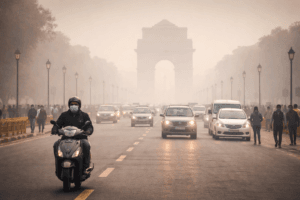
As the first light of dawn attempted to pierce the Delhi sky on Monday morning, it met with an impenetrable wall of grey. The India Meteorological Department’s orange alert had materialized into a tangible reality—a world reduced to silhouettes, where familiar landmarks dissolved into nothingness, and the morning commute transformed into a cautious navigation through a soupy, polluted haze. This isn’t merely weather; it’s a seasonal phenomenon that annually reshapes life in India’s capital, challenging infrastructure, testing resilience, and posing serious questions about urban living in the 21st century.
Understanding the Alert: What “Orange” Really Means
The IMD’s color-coded warning system places Delhi at the second-highest level of caution. An orange alert for “very dense fog” signifies visibility dropping below 50 meters—conditions where even the most familiar routes become disorienting. But this meteorological event rarely travels alone. It arrives hand-in-hand with its more insidious counterpart: smog. This toxic partnership creates what locals have come to recognize as Delhi’s winter signature—a combination of natural weather patterns and human-made pollution that settles over the city like a leaden blanket.
The science behind this phenomenon is both straightforward and complex. Winter nights in North India grow long and cold, allowing the earth’s surface to radiate heat quickly. As dawn approaches, the moisture in the air condenses around abundant particulate matter, forming dense fog. When this fog mixes with pollutants from vehicles, industry, construction, and seasonal agricultural burning, it transforms into smog—a visible, palpable manifestation of an ongoing air quality crisis.
The Human Experience: Life in the Haze
For Delhi’s residents, the orange alert translates into tangible adjustments to daily routines. Morning walkers—a dedicated tribe in the city’s parks—either abandon their rituals or don masks that make their exercises feel vaguely apocalyptic. School administrations send out cautious advisories, sometimes delaying start times or canceling outdoor activities. Commuters face the most direct impact, with reduced visibility slowing traffic to a crawl and increasing the risk of multi-vehicle collisions on highways where visibility can drop suddenly.
The aviation sector braces for disruption. Flight schedules at Indira Gandhi International Airport, one of Asia’s busiest, face inevitable delays and cancellations. The procedural shift to low-visibility protocols slows operations considerably, creating a ripple effect that travels across the country’s air network. Railway authorities, meanwhile, monitor multiple corridors, as northern routes particularly suffer from signaling challenges and necessary speed restrictions.
Beyond Visibility: The Pollution Emergency
While the fog captures immediate attention with its visible density, the accompanying pollution represents the more dangerous, invisible threat. Sunday’s AQI reading of 390 (“very poor”) and the 19 stations recording “severe” levels (401-500) tell a story of chronic environmental challenge. Anand Vihar’s startling 457 reading exemplifies how specific locations—often transportation hubs with heavy traffic—become pollution epicenters.
The health implications are immediate and severe. Medical professionals report increased emergency visits for respiratory distress, aggravated asthma, bronchial infections, and eye irritation. The particulate matter (PM2.5) penetrating deep into lung tissue carries carcinogens and toxins that have both immediate and long-term consequences. Vulnerable populations—children, the elderly, and those with pre-existing conditions—face the highest risk, with doctors recommending strict indoor limits during such episodes.
Meteorological Nuances: Why This Happens
Delhi’s geography conspires with seasonal patterns to create these conditions. Nestled away from major coastlines, the region experiences significant temperature variations. The current dip to 6.3°C—0.5 degrees below seasonal average—creates ideal fog-forming conditions. Meanwhile, the higher daytime maximum (22.5°C, 2.1 degrees above normal) reflects how pollution traps heat, creating a miniature greenhouse effect.
The remarkable 100% humidity recorded on Sunday evening completes the perfect storm. Saturated air not only reduces visibility further but also prevents pollutant dispersion. Without significant wind or rain to “flush” the atmosphere, the toxic cocktail simply recirculates, growing denser with each passing day of emissions.
Systemic Responses: Between Immediate Measures and Long-Term Solutions
Authorities respond to such alerts with a graduated protocol. The Graded Response Action Plan (GRAP) activates specific measures based on AQI thresholds. During “very poor” to “severe” days, these include increased parking fees to discourage private vehicles, enhanced public transportation, strict enforcement on dust control at construction sites, and possible restrictions on certain vehicle categories.
The Delhi government occasionally experiments with more innovative approaches, such as cloud seeding or “anti-smog guns,” though their effectiveness at scale remains debated. What becomes increasingly clear with each annual crisis is that temporary measures, while necessary, cannot substitute for structural changes in urban planning, transportation policy, and regional agricultural practices.
The Psychological Fog: Living with Constant Environmental Stress
Beyond physical health and logistical inconvenience lies a less discussed dimension: the psychological impact of persistent environmental distress. The inability to see blue skies for weeks, the constant physical discomfort of breathing polluted air, and the anxiety about long-term health effects create a low-grade environmental stress that mental health professionals are beginning to document. This “ecological anxiety” manifests in various ways, from hyper-vigilance about air purifier filters to difficult decisions about continuing to raise children in such conditions.
Contrasting Narratives: Two Delhis in One Article
Interestingly, the same publication that reports Delhi’s environmental crisis carries another story hinting at solutions. The interview with Hitachi Energy’s N Venu outlines how India’s clean energy transition depends on grid modernization—a long-term systemic approach that contrasts sharply with the immediate crisis management of fog and smog alerts. This juxtaposition itself tells a story: of a nation grappling with immediate environmental emergencies while simultaneously building infrastructure for a cleaner future.
The renewable energy corridors mentioned—like the Bhadla-Fatehpur and Khavda-Nagpur HVDC links—represent precisely the kind of systemic change that could eventually reduce Delhi’s dependence on the fossil fuels and agricultural burning that contribute to its winter smog. The expansion of energy storage solutions could enable greater reliance on clean power even when conditions don’t favor immediate generation.
Personal Adaptation: How Delhi Residents Cope
In the face of systemic challenges, Delhi’s residents have developed their own culture of adaptation. Air purifiers, once luxury items, have become middle-class necessities. Monitoring AQI apps is as routine as checking the weather. A sophisticated understanding of different mask standards (N95 vs. N99 vs. cloth masks) has developed. There’s growing awareness about creating “clean air rooms” in homes, using certain plants alongside purifiers, and timing outdoor activities for relatively better periods.
Communities share real-time updates about localized air quality, creating informal networks of environmental awareness. This bottom-up response demonstrates resilience, but also highlights the gap between individual responsibility and systemic action.
Looking Ahead: Beyond the Immediate Crisis
As Monday’s orange alert conditions gradually ease—as they eventually will with subtle wind shifts or temperature changes—the fundamental questions will remain. Delhi’s air quality crisis represents a complex interplay of meteorological factors, urban density, transportation patterns, industrial emissions, agricultural practices across states, and geographical constraints.
True progress will require moving beyond crisis response to proactive, multi-jurisdictional planning. This includes accelerating the clean energy transition highlighted in parallel discussions about India’s power grid, reimagining urban mobility beyond personal vehicles, implementing stricter emissions standards across sectors, and finding sustainable alternatives to stubble burning—a significant seasonal contributor to Delhi’s pollution.
The fog will lift, as it always does. But whether the smog of policy inertia, bureaucratic fragmentation, and delayed action will clear remains the more pressing question. Each orange alert serves as both warning and reminder: that the air Delhi breathes is ultimately a reflection of choices made and systems built. The visibility may return tomorrow, but the need for clearer vision in environmental planning remains constant.
You must be logged in to post a comment.