
Delhi’s Deep Freeze: Why a Colder, Sooner Winter is Locking the City in a Toxic Trap
The onset of winter in Delhi has taken a severe turn, marked by the city’s coldest November day in three years at 9 degrees Celsius, a sharp 4.5 degrees below normal, and perilously close to official cold wave thresholds. This early and intense chill has dangerously synergized with a ‘very poor’ air quality index of 358, as the cold, dense air creates a temperature inversion layer that acts like a lid, trapping toxic pollutants like PM2.5 and PM10 near the ground and amplifying a public health crisis.
This combination of plummeting temperatures and stagnant, hazardous air forces residents indoors, exacerbates respiratory illnesses, and signals the potential for a longer, more severe season where the meteorological conditions that define Delhi’s winter—extreme cold and toxic smog—are inextricably linked in a vicious cycle.
Delhi’s Deep Freeze: Why a Colder, Sooner Winter is Locking the City in a Toxic Trap
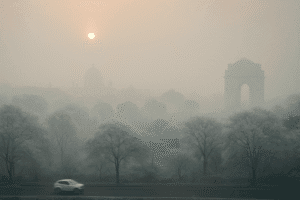
The familiar, unsettling haze that heralds Delhi’s winter has arrived, but this year, it’s accompanied by an unexpected bite in the air. As the sun struggled to pierce the smog on a recent November morning, the capital woke up to a double whammy: the coldest November day recorded in three years and air quality firmly lodged in the ‘very poor’ category. This isn’t just a spell of bad weather; it’s a complex environmental crisis unfolding, one where plummeting temperatures and polluted air are conspiring to create a public health challenge of significant proportions.
The headline figure was 9 degrees Celsius, a reading that sent many scrambling for winter wear much earlier than usual. But beneath this single data point lies a deeper story about shifting weather patterns, the dangerous physics of pollution, and what the coming months may hold for the millions who call the National Capital Region home.
The Anatomy of an Early Chill: More Than Just a Cold Day
On the surface, a cold day in November might not seem alarming. However, the devil is in the meteorological details. The recorded minimum temperature of 9°C wasn’t just a random dip; it was a substantial 4.5 degrees below the seasonal normal average. This “departure from normal” is a critical metric for climatologists, indicating a significant disruption in the usual weather systems.
But why did this happen?
- Clear Skies and Northerly Winds: The Indian Meteorological Department (IMD) pointed to a combination of clear skies and steady northwesterly winds. Clear nights, devoid of cloud cover, allow the earth’s heat to escape rapidly into the atmosphere—a phenomenon known as radiative cooling. This is compounded by winds blowing in from the snow-clad Himalayas, which carry a natural chill.
- The Cold Wave Threshold: This is where public understanding often diverges from scientific definition. As the report notes, a cold wave is officially declared only when the minimum temperature dips below 10°C and is at least 4.5°C below normal for two consecutive days. Sunday’record-breaking cold was a single-day event, hence the IMD held off on an official declaration. However, the stage is set, and the forecast of similarly low temperatures for the following days made the announcement of a cold wave highly probable.
This early and intense cold snap sets a concerning precedent. When such conditions establish themselves in November, they often reinforce a pattern that can persist, leading to a longer and more severe winter season. The body, and the city’s infrastructure, are granted no gradual acclimatization.
The Smog Synergy: How Cold Air Worsens Delhi’s Perennial Pollution Crisis
While the cold is a new and dramatic character in this year’s story, the toxic air is a returning antagonist. On the same morning the mercury plunged, the overall Air Quality Index (AQI) stood at 358, deep in the ‘very poor’ zone, with areas like Jahangirpuri and Narela breaching 400 into the ‘severe’ category.
This is not a coincidence. Cold weather and poor air quality are locked in a vicious, self-reinforcing cycle.
- The Inversion Layer Trap:Under normal conditions, warm air near the earth’s surface rises, carrying pollutants with it and dispersing them into the higher atmosphere. During winter, however, a layer of cold, dense air gets trapped near the ground, capped by a layer of warmer air above. This “temperature inversion” acts like a lid on a pot, preventing the vertical dispersion of pollutants. The result is a concentrated soup of toxic particles that hangs over the city, growing denser with each passing day and each new emission.
- Dominance of PM2.5 and PM10:As noted, tiny particulate matter—PM2.5 and PM10—remainthe dominant pollutants. These microscopic particles, emanating from vehicle exhaust, construction dust, industrial emissions, and agricultural stubble burning, become hyper-concentrated in the cold, stagnant air. PM2.5, particles so small they can bypass the body’s natural defenses and enter the bloodstream, pose the most severe health risk, linked to heart disease, strokes, lung cancer, and respiratory infections.
- A Confluence of Sources:Thecold weather doesn’t create these pollutants, but it amplifies their impact. It also coincides with the tail end of stubble burning in neighbouring states, a significant contributor to Delhi’s winter pollution. Furthermore, the drop in temperature drives an increase in local biomass burning (like wood and coal) among the urban and peripheral poor for heating, adding another layer of particulate matter to the already saturated air.
A Tale of Two Extremes: The Human Cost of a Cold, Toxic Winter
For Delhi’s residents, this combination is a daily ordeal with tangible consequences.
- Compromised Health: Doctors report a predictable surge in patients with exacerbated asthma, bronchitis, and chronic obstructive pulmonary disease (COPD). The cold air can trigger bronchospasms (airway constriction), while the pollutants cause inflammation and long-term damage. For the elderly, children, and those with pre-existing conditions, this period becomes a battle for basic lung function.
- The “Shut-In” Effect: The advice from health experts during such periods is to avoid outdoor activities, especially in the early mornings and late evenings when pollution is at its peak. This disrupts daily life—morning walks are cancelled, children’s playtime is restricted, and the simple act of commuting becomes a health hazard. The city, in a sense, grinds to a reluctant halt, its public spaces rendered uninhabitable.
- Psychological Toll: Beyond the physical, the unrelenting grey haze and the inability to see the sun or blue sky for days on end contribute to a phenomenon sometimes called “seasonal affective disorder” or general winter blues. The combination of being physically confined and breathing toxic air can lead to increased anxiety and a sense of helplessness.
Beyond Delhi: A Regional Pattern of Disruption
The article’s brief mention of an 87% rainfall deficit in Himachal Pradesh is a crucial piece of this puzzle. It signals that the weather anomalies are not confined to the plains. A dry November in the northern hills means less snow accumulation and lower water retention, which can have downstream effects on river systems and agriculture. It also suggests a larger-scale shift in weather patterns, possibly influenced by global phenomena like the evolving La Niña/El Niño cycle, which can alter temperature and precipitation distribution across the Indian subcontinent.
Looking Ahead: What Does This Mean for the Rest of Winter?
The IMD’s prediction that minimum temperatures will remain below normal until at least Friday, with departures of 2-5 degrees Celsius, is a clear indicator that this is not a fleeting cold snap. It is the likely beginning of a sustained pattern.
If this early chill persists, we can expect:
- A longer and more intense winter season than in recent years.
- A prolonged period of poor air quality, as the meteorological conditions that trap pollution will be in place for months, not weeks.
- Increased pressure on authorities to implement and sustain Graded Response Action Plan (GRAP) measures, potentially leading to more stringent restrictions on vehicles, construction, and industrial activity.
A Call for Cohesive Action, Not Just Coping
The dual challenge of extreme cold and hazardous air requires a move beyond crisis management. While individual actions—using air purifiers, wearing N95 masks outdoors, and avoiding strenuous activity—are essential for personal protection, they are mere stopgaps.
The situation demands a sustained, multi-pronged strategy:
- Aggressive Transition to Clean Energy: Accelerating the shift to electric vehicles and clean public transport is non-negotiable.
- Year-Round Source Control: The focus on pollution cannot be a seasonal affair. Stricter, year-round enforcement on industrial emissions, construction dust, and waste management is critical.
- Regional Collaboration: The problem of stubble burning requires empathetic and economically viable solutions for farmers, backed by robust interstate cooperation.
- Robust Public Health Advisories: Clear, accessible, and frequent communication from health authorities is needed to guide citizens through these hazardous periods.
The record-breaking cold of this November is a stark reminder. It’s a signal that Delhi’s winter is evolving, becoming a more complex and dangerous adversary. The city isn’t just getting colder; it’s getting trapped. And breaking free from this toxic trap will require a collective will as formidable as the winter itself.
You must be logged in to post a comment.