
Delhi’s Chilling Dip: Beyond the 4.4°C Reading Lies a Tale of Fog, Filth, and Fluctuating Forecasts
On Saturday, Delhi grappled with a sharp cold wave as temperatures plunged to 4.4°C, significantly below seasonal norms, while dense morning fog gave way to an unusually warm afternoon, highlighting the city’s stark diurnal swings.
However, the more severe and persistent crisis remained the dangerously deteriorating air quality, which escalated from ‘very poor’ to ‘severe’ levels, prompting authorities to reinstate Stage 3 pollution curbs under the GRAP action plan. Although a private weather forecast predicts a temporary rise in temperatures and possible light rain offering brief respite, another intense cold spell is anticipated later in the month, ensuring that Delhi’s winter will continue to be a challenging interplay of biting cold, toxic smog, and disruptive fog for its residents.
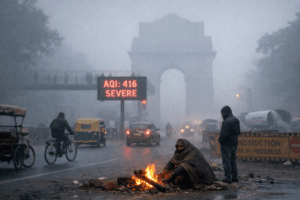
Delhi’s Chilling Dip: Beyond the 4.4°C Reading Lies a Tale of Fog, Filth, and Fluctuating Forecasts
On a Saturday morning that felt more like a scene from a silent film, Delhi woke up shrouded. Dense, opaque fog swallowed landmarks, muffled sounds, and turned familiar commutes into cautious crawls. Within this icy veil, the city recorded a minimum temperature of 4.4 degrees Celsius, a sharp 3.2 degrees below what is typical for a January day. This number, however, is merely the entry point into a more complex story of Delhi’s winter—a narrative of meteorological twists, a relentless air quality crisis, and the palpable strain on its millions of inhabitants.
The Cold Hard Facts: More Than Just a Number
A minimum of 4.4°C, while not an all-time record, is significant. It represents a substantial departure from the “season’s average,” a statistic that encapsulates the expected rhythm of winter. For Delhi’s residents, especially the homeless and those in poorly insulated homes, this isn’t a weather note; it’s a physical hardship. The cold penetrates, demanding layers, heaters, and constant vigilance against seasonal illnesses.
Yet, in a classic Delhi winter paradox, the day also witnessed a maximum temperature of 24.6°C, a full five notches above normal. This 20-degree swing within hours is a key character in Delhi’s winter tale. It creates a diurnal rollercoaster—bitter, fog-bound mornings giving way to pleasantly warm afternoons, only to collapse back into bone-chilling nights. This fluctuation stresses the human body and complicates daily preparedness, blurring the line between winter wear and lighter clothing.
The Forecast: A Brief Thaw Before the Next Icy Grip
According to Mahesh Palawat of Skymet Weather, the immediate future holds a nuanced prediction. From January 17-20, a gradual rise in minimum temperatures is expected, accompanied by the possibility of light winter rain. This “western disturbance” can bring temporary relief from the intense cold, as cloud cover acts like a blanket, trapping some terrestrial heat.
But Delhi’s winter is seldom a linear retreat. Palawat’s forecast contains a crucial second act: another cold spell is anticipated between January 23 and 26. This seesaw pattern is central to North Indian winters. Brief moderations are often merely interludes between waves of cold air sweeping down from the snow-clad Himalayas. It serves as a reminder to citizens that the winter’s bite is not yet done; any respite is likely temporary.
The Unseen Adversary: Air Quality Plunges to ‘Severe’
If the cold is a visible, felt adversary, the more insidious companion is the air Delhi breathes. On this same day, the city’s 24-hour average Air Quality Index (AQI) deteriorated from a “very poor” 354 to a severe 416 by evening. This transition past the 400-mark is a critical threshold, indicating pollution levels hazardous to all, not just the vulnerable.
The science behind this is as chilling as the temperature. The India Meteorological Department (IMD) and IITM pointed to a “stable atmosphere” and slow wind speeds—classic winter conditions in the Indo-Gangetic plain. These meteorological factors act as a lid, trapping pollutants from vehicles, industry, construction, and seasonal burning close to the ground. The fog, laden with this particulate matter (PM2.5 and PM10), transforms into a toxic smog, making every breath a health hazard with links to respiratory, cardiovascular, and cognitive issues.
GRAP Stage 3: The Machinery of Mitigation Grinds Back Into Gear
In response to this predictable yet severe downturn, the Commission for Air Quality Management (CAQM) re-invoked Stage 3 of the Graded Response Action Plan (GRAP). This is the operational dimension of the crisis. Stage 3 restrictions are substantial, including:
- A ban on most private construction and demolition projects.
- Possible restrictions on the entry of certain polluting trucks into the city.
- The potential closure of brick kilns, hot mix plants, and stone crushers not operating on clean fuel.
- A push for intensified mechanized road cleaning and water sprinkling.
Notably, these measures had been relaxed just two weeks prior on January 2, highlighting the stop-start, reactive nature of the pollution battle. While Stages 1 and 2 measures (like banning diesel gensets, enforcing dust control, and parking fees) remain, the return to Stage 3 underscores the fragility of any improvement and the powerful role of unfavorable weather.
The Human Insight: Life in the Balance
Beyond data points and policy codes, this confluence of events shapes daily human experience. It means:
- A dual burden of protection: Masks, which saw a decline, return not for a virus, but for pollution. They must be worn alongside heavy jackets and scarves meant for the cold.
- Disrupted life: Flights and trains face delays due to low visibility. Morning walks, a lifeline for many, become a health risk. Outdoor work and commerce slow down.
- The inequality of exposure: While the affluent may retreat to air-purified homes and heated cars, a vast population of street vendors, security guards, traffic police, and homeless citizens endures the full, unmitigated force of the elements and the poisoned air for hours on end.
- Psychological toll: The prolonged greyness, the inability to see the sun, and the physical discomfort can contribute to a sense of seasonal malaise and anxiety about health.
Looking Ahead: A Pattern of Extremes
Delhi’s Saturday of 4.4°C and severe AQI is not an anomaly; it is a stark representation of the new normal for the megacity’s winters. It reveals a pattern where meteorological conditions act as a trigger, amplifying a pre-existing, man-made pollution crisis. The forecast of rising temperatures and rain offers a brief, literal breath of fresh air, but the predicted return of cold conditions later in the month suggests the atmospheric “lid” will slam shut again.
The story, therefore, is one of interlinked challenges. Effective action requires a dual-track strategy: robust, long-term, year-round measures to slash emission sources (transport, energy, waste management, and regional agricultural practice), coupled with agile, accurate forecasting to optimize the timing of GRAP interventions. For now, Delhiites navigate this landscape with resilience and adaptation, hoping for stronger winds of change—both meteorological and systemic—to clear the air for good. The cold will eventually pass with the season, but the question of breathable air remains the city’s most pressing, year-round winter.
You must be logged in to post a comment.