
Deepavali’s Global Recognition: What UNESCO Heritage Status Means for India’s Festival of Lights
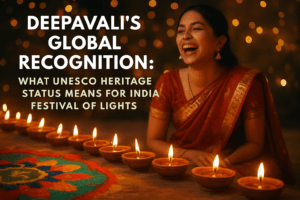
Deepavali’s Global Recognition: What UNESCO Heritage Status Means for India’s Festival of Lights
The Significance of UNESCO’s Intangible Cultural Heritage List
The recent inscription of Deepavali on UNESCO’s Representative List of the Intangible Cultural Heritage of Humanity marks a pivotal moment in global cultural recognition. Unlike UNESCO’s World Heritage List, which focuses on physical sites like monuments and natural landscapes, the Intangible Cultural Heritage List celebrates living traditions, skills, and social practices passed down through generations. This includes oral traditions, performing arts, festivals, social rituals, and traditional craftsmanship.
UNESCO established the 2003 Convention for the Safeguarding of Intangible Cultural Heritage precisely because these living expressions face unprecedented threats—from globalization and urbanization to environmental crises and cultural homogenization. The list serves not just as an honor roll but as a global safeguarding mechanism, encouraging international cooperation and support to ensure these traditions remain vibrant and relevant.
When a cultural element like Deepavali receives this recognition, it validates the communities who have sustained it for centuries. As Tim Curtis, Director of UNESCO’s Regional Office for South Asia, noted, “This inscription is a recognition for all people who keep this heritage alive—the elders who safeguard and pass on this knowledge and young people who carry it forward with creativity and pride”.
The Rigorous Path to UNESCO Recognition
The process for inscription on UNESCO’s list is deliberate and community-centered. Each member state can nominate only one element every two years, making selection highly competitive. India nominated Deepavali for the 2024-25 cycle, and it was chosen among 67 nominations considered in 2025.
UNESCO evaluates nominations against specific criteria designed to ensure that recognized traditions are truly living heritage:
UNESCO’s Key Criteria for Intangible Cultural Heritage Recognition
| Criteria | What It Means | How Deepavali Exemplifies This |
| Transmission Across Generations | Knowledge and practices passed from elders to youth through informal teaching | Elders teach children rituals, stories, and preparations through hands-on participation |
| Community Identity & Social Cohesion | Strengthens bonds and shared identity within and between communities | Unites families, neighborhoods, and diaspora across religious and regional lines |
| Diversity & Inclusivity | Involves people regardless of age, gender, or background | Celebrated by Hindus, Sikhs, Jains, and Buddhists with varied regional customs |
| Continuous Recreation & Adaptation | Living tradition that evolves while maintaining core meaning | Blends ancient rituals with contemporary expressions and digital transmission |
| Contribution to Cultural Diversity | Enriches humanity’s shared cultural landscape | Represents unique Indian philosophical concepts with universal appeal |
The nomination dossier must demonstrate how the element meets these criteria through community consent, detailed documentation, and proposed safeguarding measures. Deepavali’s successful inscription reflects both its deep cultural roots and its dynamic, evolving nature as a living tradition.
Deepavali: More Than a Festival, a Living Philosophy
Deepavali’s UNESCO description captures its essence as “a light festival celebrated annually by diverse individuals and communities across India, that marks the last harvest of the year and the start of a new year and new season”. But this practical description only scratches the surface of what makes Deepavali a compelling candidate for global heritage recognition.
The festival embodies the Indian philosophical concept of Vasudhaiva Kutumbakam—”the world is one family”—as noted by Shri Vivek Aggarwal, Secretary of India’s Ministry of Culture. This universality explains why Deepavali resonates beyond India, celebrated officially in countries including Nepal, Malaysia, Singapore, Fiji, and Trinidad & Tobago, with significant observances in global cities from New York to London.
Deepavali‘s multi-layered symbolism addresses fundamental human experiences:
- Light over darkness: Literal illumination with diyas (oil lamps) and metaphorical enlightenment
- Renewal and cleansing: Physical cleaning of homes alongside spiritual purification
- Prosperity and sharing: Worship of Lakshmi alongside charitable giving and gift exchange
- Community and family: Rituals that reinforce social bonds and intergenerational connections
What makes Deepavali particularly compelling as intangible heritage is its diversity within unity. Across India’s regions, celebrations take distinct forms—from Lakshmi Puja in the north to Kali Puja in Bengal, from the agrarian celebrations in rural Punjab to the elaborate temple rituals in Tamil Nadu. UNESCO’s recognition encompasses this entire spectrum, validating not just a monolithic festival but an ecosystem of related traditions that collectively represent India’s cultural richness.
India’s Growing Portfolio of Recognized Cultural Heritage
Deepavali becomes India’s 16th element on UNESCO‘s Intangible Cultural Heritage list, joining an impressive array of traditions that showcase the country’s cultural diversity. This portfolio reflects strategic efforts by India’s Ministry of Culture to document and nominate significant traditions since ratifying the 2003 Convention in 2005.
India’s UNESCO-Recognized Intangible Cultural Heritage Elements
| Year | Element | Category | Region/Community |
| 2008 | Tradition of Vedic chanting | Oral tradition | Pan-India |
| 2008 | Kutiyattam, Sanskrit theatre | Performing arts | Kerala |
| 2008 | Ramlila | Festival/Performance | Northern India |
| 2009 | Ramman festival | Ritual theatre | Garhwal Himalayas |
| 2010 | Chhau dance | Performing arts | Eastern India |
| 2010 | Kalbelia folk songs and dances | Performing arts | Rajasthan |
| 2010 | Mudiyettu, ritual theatre | Performing arts | Kerala |
| 2012 | Buddhist chanting of Ladakh | Oral tradition | Ladakh |
| 2013 | Sankirtana | Ritual performance | Manipur |
| 2014 | Traditional brass and copper craft | Craftsmanship | Punjab |
| 2016 | Yoga | Knowledge system | Pan-India |
| 2016 | Nowruz (shared with 11 countries) | Festival | Parsi community |
| 2017 | Kumbh Mela | Festival | Four pilgrimage sites |
| 2021 | Durga Puja in Kolkata | Festival | West Bengal |
| 2023 | Garba of Gujarat | Dance/Festival | Gujarat |
| 2025 | Deepavali | Festival | Pan-India & diaspora |
This growing list reveals several patterns in India’s cultural diplomacy approach. First, there’s a geographical and typological diversity—traditions from nearly every region and encompassing festivals, performing arts, crafts, and knowledge systems. Second, recent years show increased momentum, with five inscriptions in the last five years alone. Third, the selections balance pan-Indian practices (Yoga, Deepavali) with highly localized traditions (Ramman of a single Garhwal village).
The timing of Deepavali’s recognition during UNESCO’s 20th Intergovernmental Committee session in New Delhi—the first time India has hosted this meeting—further underscores the strategic dimension of cultural diplomacy. The session was chaired by H.E. Mr. Vishal V. Sharma, Ambassador of India to UNESCO, with side events at the historic Red Fort symbolically connecting global heritage governance with India’s own historical monuments.
The Ripple Effects: Beyond Recognition to Safeguarding
UNESCO recognition brings tangible and intangible benefits that extend far beyond ceremonial acknowledgment:
Cultural Preservation Framework Inscription triggers systematic documentation and safeguarding plans. For Deepavali, this means recording regional variations, supporting artisan communities who create diyas and rangoli materials, and developing educational resources. The UNESCO Convention provides access to the Intangible Cultural Heritage Fund, which can support community-led preservation initiatives.
Economic and Tourism Implications Global recognition typically boosts cultural tourism, with travelers seeking authentic experiences. This creates sustainable livelihoods for traditional artisans, performers, and ritual specialists. As noted in UNESCO’s description, Deepavali “supports local economies and creative expression”, from clay lamp makers to sweet vendors to rangoli artists.
Diaspora Identity and Cultural Diplomacy For the 30+ million Indian diaspora, UNESCO recognition validates their cultural celebrations abroad. It strengthens their connection to heritage while facilitating cross-cultural dialogue in multicultural societies. When landmarks like the Empire State Building or Sydney Opera House illuminate for Deepavali, it now carries the added weight of UNESCO-sanctioned cultural significance.
Educational Integration Schools worldwide increasingly incorporate UNESCO-recognized elements into curricula. Deepavali’s inclusion means its philosophical dimensions—the universal themes of light overcoming darkness—can be taught alongside its ritual practices, promoting deeper intercultural understanding.
Environmental and Adaptive Considerations An emerging aspect of safeguarding involves addressing environmental concerns, particularly around fireworks. UNESCO recognition may encourage communities to develop eco-friendly adaptations that maintain symbolic meanings while reducing ecological impact—an example of the “continuous recreation” intrinsic to living heritage.
Challenges and Responsibilities of Recognition
With recognition comes responsibility. The UNESCO listing is not an endpoint but a commitment to ongoing safeguarding. Challenges include:
- Commercialization vs. Authenticity: Balancing mainstream popularity with preservation of core meanings and community ownership
- Generational Transmission: Ensuring youth engagement in an increasingly digital world
- Documentation Without Fossilization: Recording traditions without stifling their natural evolution
- Regional Equity: Ensuring all variations of Deepavali receive attention, not just dominant narratives
As UNESCO emphasizes, safeguarding intangible heritage is fundamentally about supporting the communities who practice it, not freezing traditions in time. This means creating conditions for Deepavali to evolve naturally while maintaining its essential character—a delicate balance between preservation and organic development.
Looking Forward: Deepavali in a Global Context
Deepavali’s inscription coincides with broader reflections on cultural heritage in the 21st century. UNESCO’s 20th session in New Delhi also featured discussions on how living heritage intersects with contemporary challenges like climate change, digital transformation, and social inclusion.
The festival’s universal themes—light, renewal, community, and hope—resonate particularly in turbulent times. As a UNESCO-recognized heritage, Deepavali now serves as both a specific cultural practice and a symbolic resource for humanity, reminding us of shared values across cultures.
For India, this sixteenth inscription reinforces its position as a guardian of civilizational continuity—a country where ancient traditions thrive alongside modernity. It also represents a strategic success in cultural diplomacy, showcasing soft power through heritage rather than political or economic influence.
As families light diyas this Deepavali season, they’ll do so with renewed awareness that their personal celebration contributes to a global tapestry of human creativity recognized by UNESCO. This dual consciousness—of local tradition and global significance—may be the most profound impact of the UNESCO recognition, illuminating not just homes but our understanding of cultural heritage itself.
The true test will be how Deepavali evolves in the coming decades as a recognized heritage element. Will it become a static performance for tourist consumption, or will it remain a living, breathing tradition that adapts while retaining its soul? The answer lies with the communities who have sustained it for millennia and who now carry both the honor and responsibility of UNESCO recognition.
You must be logged in to post a comment.