
Cricket’s Diplomatic Crisis: Beyond the Boundary, Can the 2026 T20 World Cup Survive Geopolitics?
In an unprecedented move that has escalated a cricketing dispute into a full-blown geopolitical standoff, the Bangladesh Cricket Board (BCB) has withdrawn its team from traveling to India for the 2026 T20 World Cup, citing security concerns and the “prevailing situation.” This decision was triggered by the controversial exit of pace bowler Mustafizur Rahman from the Kolkata Knight Riders IPL squad after a BCCI directive, an incident perceived in Bangladesh as a political slight intertwined with recent bilateral tensions. The move presents a severe logistical and diplomatic crisis for the ICC, threatening the tournament’s integrity and forcing the governing body to navigate between host commitments and member safety, while a satirical offer from the Icelandic Cricket Association to take Bangladesh’s spot has ironically highlighted the absurdity of the situation and the vulnerability of global sport to off-field politics.
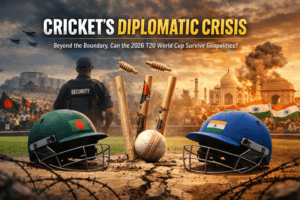
Cricket’s Diplomatic Crisis: Beyond the Boundary, Can the 2026 T20 World Cup Survive Geopolitics?
The world of cricket, often celebrated as a unifying force, finds itself at a precarious crossroads. In an unprecedented move that has sent shockwaves through the sporting community, the Bangladesh Cricket Board (BCB) has formally withdrawn its team from traveling to India for the 2026 ICC Men’s T20 World Cup. Citing grave security concerns and “prevailing circumstances,” this decision transcends sport, plunging into the turbulent waters of international diplomacy and bilateral tensions. The catalyst? A seemingly routine franchise cricket transaction involving pace bowler Mustafizur Rahman that spiraled into a symbol of deeper, more complex fissures.
The Mustafizur Saga: When a Cricket Signing Becomes a Political Football
To understand the BCB’s drastic decision, one must dissect the episode that ignited the crisis. Mustafizur Rahman, Bangladesh’s celebrated left-arm seamer, was a high-profile acquisition by the Kolkata Knight Riders (KKR) in the IPL 2026 auction for a hefty ₹9.20 crore. For fans, it was a thrilling prospect; for the player, a career highlight. Yet, within weeks, the BCCI intervened, instructing KKR to release the player from its squad.
Officially, reasons were vague. Unofficially, reports swirled of pressures stemming from political and religious groups within India, ostensibly in reaction to recent, troubling incidents of violence against minorities in Bangladesh. This move transformed Mustafizur from a cricketing asset into a geopolitical pawn. For Bangladesh, the perceived slight was multifaceted: it implied their premier player was unwelcome, it questioned the nation’s internal security narrative, and it represented an external influence dictating terms in what is considered a global, apolitical league. The BCCI’s directive, whether motivated by genuine security assessments or political sentiment, was the spark that lit the fuse.
Bangladesh’s Stance: Security Concern or Strategic Statement?
The BCB’s official communication to the ICC is a masterclass in diplomatic language, emphasizing “comprehensive review,” “government consultations,” and “safety of players and officials.” On the surface, it is a sovereign nation’s legitimate right and duty to protect its citizens. India has historically been a secure host for massive global events, including ICC tournaments and the IPL. This invites scrutiny: is the security threat perception grounded in specific, credible intelligence, or is it a vehicle for a broader political rebuttal?
Many analysts perceive this as Bangladesh leveraging its cricketing participation to make a pointed statement. It is a declaration that the nation will not participate in a flagship event hosted by a neighbor perceived to have disrespectfully entangled its athlete in non-cricketing agendas. It pushes the uncomfortable question of where sport ends and politics begins, forcing the ICC into a dilemma it desperately tries to avoid. By requesting the relocation of its matches, Bangladesh isn’t just opting out; it’s challenging the very location of the tournament, a logistical and financial nightmare for the organizers.
The ICC’s Quandary: A Tournament in Jeopardy
The International Cricket Council now faces its most severe administrative and diplomatic test in recent memory. Its flagship event, meticulously planned for years, is under threat of fragmentation before a ball is bowled. The ICC’s core principles revolve around inclusivity, fair competition, and the spirit of the game. Bangladesh’s withdrawal, if upheld, strikes at all three.
Does the ICC force Bangladesh’s hand, risking the integrity of the tournament and the safety of players? Does it capitulate and reseed an entire group, potentially to a neutral venue, setting a dangerous precedent where future hosts could be held hostage to bilateral disputes? The financial ramifications are staggering, involving broadcast deals, venue contracts, and fan travel. The credibility cost is higher: can the World Cup be called a “World Cup” if a top-tier Full Member nation is absent not due to qualification, but due to political discord?
Iceland’ Viral Interjection: Satire Holding a Mirror to Absurdity
In the midst of this high-stakes impasse, an unlikely voice cut through the tension with sharp, Nordic wit. The Icelandic Cricket Association, representing a nation where cricket is a niche summer hobby, tweeted its now-famous offer to take Bangladesh’s spot, cheekily noting their lack of security concerns. This was not a serious bid; it was brilliant satire. It highlighted the absurdity of the situation—that in a sport struggling for true global expansion, a established nation was stepping away while an aspiring one, undeterred by geopolitical strife, was eager for the chance.
Iceland’s tweet did more than just go viral; it framed the crisis in a relatable, human context. It reminded fans and administrators alike of the pure, aspirational joy of competition that was being overshadowed. Their message underscored a painful truth: for many emerging nations, the dream of playing on the world stage is paramount, a stark contrast to the complex realities that preoccupy the sport’s established powers.
The Human Element: Fans, Players, and the Spirit of Cricket
Beyond the boardrooms and official statements, this crisis resonates deeply with the lifeblood of the sport: its fans and players. Bangladeshi and Indian cricket supporters have shared a storied, if rivalry-tinged, relationship for decades. Matches between the two are electric, passionate affairs. Denying fans these contests, and denying players like Mustafizur, Shakib Al Hasan, or Virat Kohli the chance to compete at their peak in a World Cup, is a profound loss. It deprives athletes of legacy-defining moments and fans of shared memories that transcend borders.
The “spirit of cricket” is often invoked in moments of on-field controversy, but it must also apply off the field. It champions respect, fairness, and the shared love of the game. The current standoff feels like a betrayal of that spirit. Players become collateral damage in disputes they did not create, and fans are left with a hollowed-out tournament.
Looking Ahead: Pathways to Resolution and Lasting Implications
The path forward is fraught but not impossible. Resolution likely requires quiet, back-channel diplomacy, moving beyond cricketing boards to higher echelons of government. A mediated assurance on security and a mutual commitment to de-escalate rhetoric could provide a face-saving solution. The ICC might need to act as a neutral broker, guaranteeing a safety protocol overseen by independent experts to reassure all parties.
Regardless of the outcome, the implications are lasting. This crisis exposes the fragility of international cricket’s ecosystem in the face of regional politics. It forces a conversation about the need for clearer, stronger ICC frameworks to insulate tournaments from bilateral disputes. It also questions the future of bilateral tours and player exchanges in franchise leagues when diplomatic winds shift.
The 2026 T20 World Cup was meant to be a celebration of cricket’s shortest, most explosive format. Instead, it has become a stark reminder that no sport exists in a vacuum. The hope remains that cooler heads will prevail, that the boundary ropes will once again mark the limits of contention, and that the game, in its purest form, will reclaim center stage. For now, the world watches and waits, as a sport beloved by billions grapples with the weight of the world beyond the boundary.
You must be logged in to post a comment.