
Clear Skies and Century Showdown: How Weather Set the Stage for Raipur’s ODI Thriller
The second ODI between India and South Africa in Raipur on December 3, 2025, was played under perfectly clear skies with a 0% chance of rain, guaranteeing a full, uninterrupted match. The decisive factor, however, was the significant evening dew, which led South African captain Temba Bavuma to win the toss and choose to field first. Batting under ideal conditions, India posted a formidable 358/5, fueled by centuries from Virat Kohli and Ruturaj Gaikwad. Yet, the heavy dew that set in during the evening chase made the ball slippery for bowlers and aided strokeplay, enabling a historic South African run-chase.
Led by Aiden Markram’s century, the Proteas successfully chased down the target with four wickets and four balls to spare, leveling the series 1-1 in a match where the pre-ordained weather conditions proved to be the ultimate game-changer.
Clear Skies and Century Showdown: How Weather Set the Stage for Raipur’s ODI Thriller
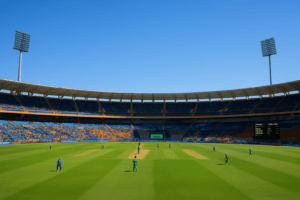
In the aftermath of a nail-biting series opener, the narrative for the second ODI between India and South Africa in Raipur was refreshingly straightforward: the outcome would be decided solely by skill, strategy, and nerve. For once, the weather—a frequent and fickle protagonist in cricket—would play no part. With forecasts promising uninterrupted sunshine and a 0% chance of precipitation, the stage at the Shaheed Veer Narayan Singh International Stadium was set for a pure contest.
This guarantee of a full 50-over game shifted the tactical focus inward, to the black-soil pitch and the creeping evening dew, setting up a high-stakes battle where India aimed to clinch the series and South Africa fought to stay alive.
The Weather Guarantee: A Full Contest Assured
As players and fans arrived in Raipur on December 3, they were met with ideal cricketing conditions. Multiple weather services, including AccuWeather and the India Meteorological Department (IMD), aligned in their predictions: clear, hazy skies with virtually no cloud cover.
- Temperature: A comfortable high of around 28-29°C during the afternoon start, cooling to the low 20s by evening.
- Wind: Light northeasterly winds at approximately 9 km/h, with occasional gusts.
- Rain Probability: A definitive 0% chance of precipitation, ensuring no interruptions.
This clarity was a blessing for organizers and a relief for fans, guaranteeing value for money and setting the expectation for a complete, dramatic sporting contest without external interference.
Beyond the Sunshine: The Pitch and the Dew Factor
While the sun was a constant, the conditions on and around the pitch presented the real strategic puzzle for both captains.
The Raipur Pitch Report: A Balanced Battlefield The Shaheed Veer Narayan Singh International Stadium has a limited but telling international record. Its most notable fixture saw India bowl out New Zealand for a mere 108 in January 2023. This history, combined with its black soil composition, suggested a surface different from the flat batting paradise witnessed in Ranchi.
Experts anticipated a more balanced and slightly sluggish pitch. The table below summarizes the key environmental and pitch parameters that defined the playing conditions:
| Parameter | Expected Condition | Strategic Implication |
| Weather | Clear skies, 0% rain | Guaranteed full match; no Duckworth-Lewis calculations. |
| Day Temperature | ~28-29°C | Good batting conditions; manageable for bowlers. |
| Evening Dew | Significant accumulation expected post 8:30 PM | Major advantage for team batting second; ball becomes slippery for bowlers. |
| Pitch Type | Black soil, balanced to slightly slow | Not a 350+ surface like Ranchi; par score estimated between 270-300. |
| Historical Trend | One previous ODI: Bowler-dominated (NZ all out 108) | Suggested assistance for disciplined bowlers, but high scores still possible with application. |
The Invisible Opponent: Evening Dew The most critical conditional factor was not rain, but dew. Forecasts indicated significant moisture accumulation on the outfield as evening temperatures dropped after sunset (around 8:30 PM IST). This phenomenon heavily skews the game:
- For bowlers (especially spinners): The ball becomes wet and slippery, making it extremely difficult to grip. Executing slower balls, maintaining control, and generating turn becomes a major challenge.
- For batters: The ball comes onto the bat nicely, and skids quicker off the surface, aiding stroke play in the crucial middle and death overs.
The consensus was clear: winning the toss would likely lead any captain to choose to field first. The goal would be to exploit any early moisture in the pitch and then have the best possible conditions for the chase under lights.
Match Narrative: A Forecast Fulfilled in Fireworks
The predictions proved accurate, culminating in one of the most memorable ODIs of the year. True to the forecast, not a single drop of rain fell, and the dew arrived as scheduled, turning the match into a tale of two innings defined by the conditions.
First Innings: Masterful Batting on a Good Surface India, put in to bat by South African captain Temba Bavuma, posted an imposing 358/5. The innings was built on twin centuries—a masterful 102 off 93 balls from Virat Kohli (his 53rd ODI hundred) and a sparkling 105 off 83 balls from Ruturaj Gaikwad (his maiden ODI ton). The pitch played well, confirming it was good for batting, though perhaps not as rapid as Ranchi. India’s total seemed to be a winning one, likely near or above the pre-match par score estimates.
Second Innings: The Dew-Driven Chase South Africa’s chase was a masterpiece of calculated aggression and a validation of the pre-match dew concerns. Aiden Markram led the charge with a magnificent 110 off 98 balls. He was ably supported by Matthew Breetzke (68) and the explosive Dewald Brevis (54).
As the night progressed, the Indian bowlers struggled visibly. The ball gleamed under the lights, and fielders frequently wiped it with towels. Spinners Kuldeep Yadav and others found it hard to control their lines, and the pacemen’s slower balls lost their bite. The wet ball contributed to lapses in the field, including a dropped catch and misfields that cost precious boundaries.
The climax was heart-stopping. Needing 3 runs off the final over, South Africa’s Corbin Bosch hit the winning runs with four balls to spare, sealing a four-wicket victory. They had successfully chased down 359, equalling the record for the highest successful run-chase against India in ODIs.
Conclusion: Conditions as the Silent Umpire
The Raipur ODI was a perfect case study in how conditions, even in perfect weather, dictate modern cricket. The clear skies allowed the game to proceed, but the pre-ordained factor of evening dew ultimately became the decisive tactical element.
South Africa’s decision to field first, based on this forecast, was vindicated. Their batters, knowing the conditions would ease, paced their chase to perfection. India, despite two centuries and a massive total, found themselves defending with a literal and figurative slippery ball in the decisive phase[ciration:2].
The victory leveled the series 1-1, setting up a grand finale in Visakhapatnam. It also served as a potent reminder that in cricket, the contest is never just between bat and ball. It is a triangular fight involving the players, the pitch, and the atmosphere. In Raipur, the atmosphere provided no rain, but its nightly gift of dew was enough to tilt the scales in a historic chase, proving that even on the clearest of days, the weather always has a role to play.
You must be logged in to post a comment.