
Bridging Millennia: How Digital Technology is Reawakening India’s Heritage for a New Generation
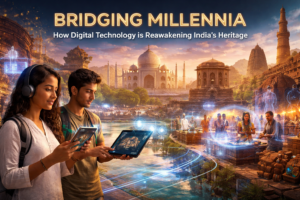
Bridging Millennia: How Digital Technology is Reawakening India’s Heritage for a New Generation
India doesn’t just have history; it lives and breathes it. In its temple carvings, its fading frescoes, its bustling bazaars, and the silent, stoic grandeur of its forts, millennia whisper to those who listen. Yet, for the modern traveller, these whispers are often drowned out by the cacophony of overcrowded sites, inadequate interpretation, and a transactional tick-box approach to tourism. Despite holding approximately 40 UNESCO World Heritage Sites and an intangible cultural wealth that is immeasurable, India captures less than 2% of the global tourism pie. The paradox is stark: we are custodians of one of the world’s most profound cultural narratives, yet we have struggled to tell it in a language that resonates today.
The solution, emerging not a moment too soon, lies in a powerful fusion of our ancient past with cutting-edge digital futures. This isn’t about replacing the authentic with the virtual; it’s about using technology as a bridge—a bridge that connects curious minds to profound stories, artisans to global markets, and forgotten sites to renewed relevance.
The Disconnect: Passive Viewing in an Active World
For generations, India’s heritage tourism model has been largely passive. Visitors are shepherded through sites, presented with a placard of bare facts, and left to decipher the profound spiritual significance of Khajuraho or the astronomical genius of Jantar Mantar on their own. This creates a distance, a glass wall between the observer and the observed. For the digitally-native, experience-driven traveller—whether domestic or international—this model feels archaic. They seek immersion, context, and connection.
The consequence is more than just underwhelmed tourists. It’s dwindling livelihoods for traditional artisans, the slow erosion of intangible crafts, and a dangerous perception among younger Indians that heritage is static, dusty, and unrelated to their modern identity.
The Digital Toolkit: From Observation to Immersion
The digital transformation of this space is multifaceted, moving beyond simple app-based ticketing to create a layered, intelligent ecosystem.
- Augmented & Virtual Reality: Resurrecting ContextImagine pointing your smartphone at the ruins of the Vijayanagara Empire at Hampi and seeing the bustling marketplaces, vibrant processions, and grand structures rebuild themselves in real-time on your screen. AR overlays can animate architectural fragments, showing how ashikhara was constructed or what daily life in a stepwell entailed. VR can transport students from a classroom in Kanpur to a virtual walkthrough of the Ellora Caves, experiencing the scale and artistry long before they can visit physically. This technology doesn’t distract from the real; it enriches it, providing the crucial context that turns a pile of stones into a page of history.
- Artificial Intelligence: The Personalised PathshalaAI can move heritage from a one-size-fits-all experience to a personalised journey. An AI-driven app could curate a visitor’s trail based on their interests: a culinary enthusiast in Delhi is guided to the history of Paranthe Wali Gali and nearby food heritage museums, while an architecture student receives deep dives into Mughal geometry at Humayun’s Tomb. AI-powered chatbots, accessible 24/7, can act as multilingual virtual guides, answering nuanced questions about symbolism or local lore. Furthermore, AI-driven crowd analytics can manage tourist flow in real-time, suggesting less congested times or alternative sites, preserving the monuments and enhancing visitor comfort.
- Blockchain & Digital Marketplaces: Empowering the ArtisanA major pain point has been the disconnect between the tourist and the artisan. Blockchain technology can create transparent, authenticated digital ledgers for handicrafts. Each handwoven Banarasi sari, each Dhokra metal artefact, can have a digital certificate of origin, tracing its journey from a specific artisan’s loom in Maheshwar to the showroom. This fights counterfeiting, ensures fair compensation, and allows the tourist to own not just an object, but a verifiable story. Integrated e-commerce platforms can then extend the artisan’s reach far beyond the physical souvenir shop, creating sustainable, year-round income.
- Digital Twins & 3D Modelling: Preservation and AccessFor fragile sites threatened by overtourism or environmental decay, or those simply inaccessible, high-fidelity digital twins offer a revolutionary tool. Creating precise 3D models through LiDAR scanning allows for detailed conservation planning. It also opens up access; the interiors of ecologically sensitive cave temples or remote monastic complexes can be explored virtually by anyone, anywhere, democratising access to culture while aiding its preservation.
The Bansilalpet Blueprint: A Community-Centric Model
The inspiring restoration of Hyderabad’s Bansilalpet Stepwell is a microcosm of this holistic approach. The revival wasn’t merely architectural; it was social, economic, and digital. Community engagement was paramount. Today, the model showcases how digital tools can amplify impact:
- Pre-Visit: Immersive social media content and virtual previews build anticipation.
- On-Site: QR codes link to stories of the stepwell’s history and the restoration heroes, while digital installations might layer in audio of traditional water-drawing songs.
- Post-Visit: Online workshops with local block-print artisans or curated playlists of Telugu folk music keep the connection alive, turning a one-time visit into an ongoing cultural relationship.
This model proves that success is measured not just in footfall, but in the depth of engagement and the strengthening of local economic circuits.
Building a Sustainable Ecosystem: Beyond the Hype
For this transformation to be lasting, it must be underpinned by a viable business model and strategic collaboration.
- Public-Private Synergy: Government bodies like the ASI and Tourism Ministry hold the keys to sites and policy. They must partner with tech innovators, storytellers, and local entrepreneurs to co-create solutions. Initiatives like ‘Incredible India 2.0’ and ‘Digital India’ provide the perfect policy umbrella.
- Revenue for Reinvestment: Smart ticketing for premium AR experiences, licensing of high-quality digital content to educational institutions, and commissions from authenticated artisan marketplaces can generate funds that are cycled back into conservation and community development.
- Skill Development: Upskilling local guides as digital narrators, training artisan clusters in e-commerce, and fostering tech talent focused on cultural applications are essential. This ensures the ecosystem is rooted in and benefits the community.
The Ultimate Goal: From Cultural Consumption to Co-Creation
The true endgame of this digital renaissance is a fundamental shift from cultural consumption to cultural co-creation. The traveller is no longer a passive spectator but an active participant. They might use an AR filter to ‘try on’ historical armour at a Rajput fort, participate in a live-streamed Pattachitra painting session from Odisha, or follow an AI-generated personalised mythology trail through the temples of Tamil Nadu.
This does not diminish the sacred or the authentic; it invites a deeper, more informed form of respect. It turns heritage from a relic into a conversation—a dynamic, living dialogue between the past and the future.
By weaving together high-tech and high-culture, India has an unprecedented opportunity. We can protect our fragile heritage, empower our keeper communities, and craft travel experiences that are truly transformative. In doing so, we won’t just be boosting tourism revenue; we will be rekindling a sense of wonder and pride, ensuring that India’s timeless stories are not just preserved in stone, but continue to resonate in the hearts and minds of generations to come. The bridge is being built; it is time to walk across it.
You must be logged in to post a comment.