
Brace for Impact: India’s 2026 Summer Forecast Predicts Severe Heatwaves and What It Means for You
The India Meteorological Department (IMD) has forecast a harsh summer for 2026, predicting above-normal temperatures and an increased number of heatwave days across most of the country from March to May, with particularly severe conditions expected in east, central, northwest, and parts of south India, where regions could experience three to fifteen more heatwave days than usual. While a brief reprieve with normal temperatures is expected in March, the warning follows a historically dry and warm February—the third driest since 1901—and is linked to the weakening of La Niña and a likely transition to El Niño conditions. The forecast poses significant risks to public health, particularly for vulnerable populations, and threatens to strain water resources, agriculture, and power infrastructure, prompting the IMD to advise state authorities to prepare cooling shelters and health surveillance systems.
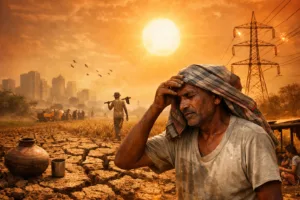
Brace for Impact: India’s 2026 Summer Forecast Predicts Severe Heatwaves and What It Means for You
The news hit on a Saturday morning, buried perhaps under weekend distractions, but its implications will ripple through the lives of over a billion people in the coming months. The India Meteorological Department (IMD) has released its forecast for the March-to-May 2026 season, and the message is unambiguous: prepare for a harsh summer with above-normal temperatures and an increased number of heatwave days across most of the country.
I spent the weekend speaking with meteorologists, public health experts, urban planners, and farmers to understand what this forecast actually means for ordinary Indians—not just in terms of temperature readings, but in terms of daily life, health risks, and the quiet ways extreme heat reshapes how we live, work, and survive.
The Forecast: Beyond the Headlines
Let’s start with what the IMD actually said, because the details matter more than the broad strokes.
During the March to May 2026 season, above-normal heatwave days are likely over most parts of east and east central India, many parts of the southeast Peninsula, and some parts of northwest and west central India. We’re looking at states like Haryana, Punjab, Rajasthan, West Bengal, Bihar, Odisha, Andhra Pradesh, and parts of Uttar Pradesh experiencing three to fifteen more heatwave days than normal.
“Normal” here is relative. When meteorologists talk about heatwaves, they’re not just describing uncomfortable weather. There’s a technical definition: a heatwave is declared when the maximum temperature reaches 45 degrees Celsius in the plains, or when the daytime temperature exceeds the normal by 4.5 degrees. These aren’t arbitrary thresholds—they’re the points at which human bodies begin to struggle and infrastructure starts to fail.
Dr. R.K. Singh, a retired IMD scientist who spent three decades tracking Indian weather patterns, put it to me simply: “When we say ‘above normal heatwave days,’ we’re not saying it will be a little warm. We’re saying the number of days when temperatures cross the danger threshold will be significantly higher than what people are used to.”
March itself may offer a brief reprieve. The IMD forecasts normal maximum temperatures over parts of northwest India during March, with some rainfall and cloud cover expected over the northern plains. But this is a pause, not a pattern change. By April and May, the heat will build.
The Science Behind the Forecast
To understand why this summer looks particularly brutal, we need to look thousands of kilometers away, to the Pacific Ocean.
Currently, weak La Niña conditions are prevailing over the equatorial Pacific. Sea surface temperatures remain below normal across much of the central and eastern Pacific. La Niña typically brings some moderation to Indian summers. But here’s the catch: these conditions are expected to gradually weaken during the upcoming season.
“We can expect a transition to ENSO neutral conditions soon and thereafter to El Niño,” IMD Director General M. Mohapatra explained at the press conference announcing the forecast.
For those unfamiliar with the terminology, this matters enormously. El Niño years typically bring weak monsoons and harsh summers to India. The warming of the Pacific Ocean surface affects atmospheric circulation patterns thousands of kilometers away, altering the jet streams and weather systems that influence the subcontinent.
Dr. Madhavan Rajeevan, former secretary of the Ministry of Earth Sciences, has studied these connections for decades. “El Niño doesn’t guarantee a bad summer, but it loads the dice,” he told me in a phone conversation. “The probability of extreme heat events increases significantly. What we’re seeing in the models is consistent with that pattern.”
The Indian Ocean Dipole (IOD)—a climate pattern affecting the Indian Ocean—is currently neutral and expected to remain so. That’s neither good nor bad news; it simply means no moderating influence from that direction.
The February That Was: A Warning Sign
February 2026 wasn’t just dry—it was historically dry. The numbers are stark: a 59.9% rain deficiency from January 1 to February 28. Regionally, the deficiencies were even more dramatic: 89.5% over east and northeast India, 78.7% over central India. Only the south Peninsula saw excess rainfall at 2.3% above normal.
But here’s the statistic that should stop you: rainfall over India (4.2 mm) was the third lowest since 1901, and the lowest since 2001. Over northwest India, the 5.9 mm of rainfall was also the third lowest since 1901 and the lowest since 2001.
Dr. Singh pointed out what this means: “The ground is already dry. There’s no moisture to moderate temperatures as the sun gets stronger. When the ground is parched, it heats faster and retains that heat. It’s like walking on bare earth versus walking on grass—the difference is palpable.”
February was also the third warmest for northwest India when mean temperatures are considered, and the third warmest for the country when night temperatures are considered. The mean temperature in February over northwest India was 27.41 degrees Celsius—1.71 degrees above normal. The average minimum temperature over the country was 14.76 degrees Celsius, 0.94 degrees above normal.
Those warm nights matter. When temperatures don’t drop at night, bodies don’t get the recovery time they need. Prolonged heat exposure without nighttime cooling is one of the biggest risk factors for heat-related illness and death.
What This Means for Your Health
I spoke with Dr. Priyanka Sehrawat, the AIIMS-trained neurologist whose warnings about reheated cooking oil recently went viral, about the health implications of extreme heat. Her perspective was both medical and practical.
“Heat stress isn’t just about heatstroke, though that’s the most dramatic manifestation,” she explained. “It’s about cardiovascular strain as the heart works harder to pump blood to the skin for cooling. It’s about kidney stress from dehydration. It’s about electrolyte imbalances that can affect everything from muscle function to brain function.”
The IMD’s advisory explicitly mentions these risks, noting that the increased likelihood of heatwave conditions “may pose significant risks to public health, water resources, power demand, and essential services, particularly affecting vulnerable populations such as the elderly, children, outdoor workers, and individuals with pre-existing medical conditions.”
Dr. Sehrawat added a layer of concern about how heat interacts with other health issues. “People with hypertension, diabetes, heart disease—they’re on medications that can affect how their bodies handle heat. Diuretics increase dehydration risk. Beta-blockers can reduce the body’s ability to sweat. Patients and their families need to be extra vigilant.”
She also raised an unexpected concern: “When it gets very hot, people avoid cooking. That’s understandable. But then they rely on reheated food, reheated oil, which carries its own cancer risks. The heat creates a cascade of behaviors that affect health in multiple ways.”
The Urban Heat Island Effect
Cities will bear the brunt of this summer in ways rural areas won’t. The urban heat island effect—where concrete, asphalt, and buildings absorb and retain heat—means cities can be several degrees warmer than surrounding areas.
Dr. Shahana Ali, an urban planner based in Ahmedabad, has been studying heat mitigation strategies for years. Ahmedabad was the first city in South Asia to develop a Heat Action Plan, back in 2013, and has served as a model for other cities.
“We’ve learned that early warning systems matter enormously,” she told me. “When people know a heatwave is coming, they can prepare. But preparation requires resources—access to cooling, ability to stay indoors, knowledge of symptoms. Not everyone has those resources.”
The IMD has recommended that state authorities and district administrations ensure “timely preparedness, including operational readiness of cooling shelters, adequate drinking water supply, and strengthened health surveillance.” These aren’t abstract recommendations—they’re life-saving measures.
But Dr. Ali pointed out gaps. “Cooling shelters work if people know about them and can reach them. For the elderly living alone, for daily wage workers who can’t afford to stop working, for slum dwellers without reliable electricity—the formal systems don’t always reach them.”
She emphasized the importance of community networks. “In our most successful interventions, it wasn’t the government alone. It was neighbors checking on elderly residents, local shops providing water, auto-rickshaw drivers knowing the signs of heat stress. Heat is a community problem that requires community solutions.”
Agriculture and Water: The Slow-Burning Crisis
While the health impacts of heatwaves are immediate and dramatic, the agricultural and water impacts unfold over weeks and months—and their consequences last longer.
Dr. Rajesh Kumar, an agricultural economist at Punjab Agricultural University, spoke about what the forecast means for farmers. “The concern isn’t just heatwaves, though those can damage standing crops. It’s the cumulative effect of high temperatures on soil moisture, on irrigation requirements, on groundwater depletion.”
Punjab, Haryana, and western Uttar Pradesh—the breadbasket of India—are among the regions forecast to see above-normal heatwave days. These are also regions already struggling with groundwater depletion.
“When temperatures rise, crops need more water,” Dr. Kumar explained. “Farmers pump more groundwater. The water table drops. Next year, you need even more energy to pump from deeper levels. It’s a spiral.”
Wheat is particularly vulnerable to heat stress during the grain-filling stage. If temperatures spike in March or April, when wheat is maturing, yields can drop significantly. India became a major wheat exporter in recent years, but that status depends on stable production.
The horticulture sector—fruits and vegetables—is even more sensitive to heat. High temperatures can cause flower drop in vegetables like tomatoes and brinjal, reducing yields. Fruit set in mangoes and citrus can be affected. For farmers already operating on thin margins, a bad summer can mean a year of debt.
Power Demand: The Invisible Crisis
Every summer, India’s power grid strains under the weight of air conditioners, coolers, and fans. This summer is likely to be worse.
The IMD’s warning about “additional stress on infrastructure and resource management systems” is understated. During the 2024 heatwave, north India saw power demand hit record levels, leading to blackouts in some areas. The problem isn’t just generating enough power—it’s transmitting it without lines overheating and transformers failing.
Dr. Anjali Srivastava, an energy policy researcher at a Delhi think tank, explained the compounding factors. “Coal plants need water for cooling. In extreme heat, water sources can be depleted or too warm for effective cooling. Solar panel efficiency drops in very high temperatures. Wind patterns change. Every source of power faces some challenge.”
The result is often load-shedding—planned blackouts to prevent grid collapse. For those without backup power, load-shedding means no fans, no coolers, no refrigeration. For the vulnerable, that can be dangerous.
“There’s an equity dimension here that’s often ignored,” Dr. Srivastava noted. “The wealthy have generators and inverters. The poor don’t. When the power goes out in a heatwave, it’s the poor who suffer most.”
The March Window: A Time for Preparation
The IMD’s forecast of near-normal temperatures in March, with some rainfall expected over the northern plains, isn’t just a weather prediction—it’s a warning period. March is the time to prepare for what comes after.
What does preparation look like at different levels?
For individuals and families, it means checking cooling equipment before it’s needed. Clean cooler pads, service air conditioners, check fans. It means identifying the coolest room in the house—often one with northern or eastern exposure, minimal windows, and good cross-ventilation. It means knowing the symptoms of heat exhaustion (heavy sweating, weakness, cold skin, fast pulse) and heatstroke (high body temperature, confusion, loss of consciousness).
For communities, it means identifying vulnerable neighbors—the elderly living alone, those with chronic illnesses, families without cooling. It means mapping water sources and ensuring they’re functional. It means planning for power outages.
For local governments, the IMD has provided clear guidance: cooling shelters, drinking water supply, health surveillance. These aren’t new recommendations—they’ve been made before, after every heatwave. The question is whether they’ll be implemented before the next one, rather than after.
Learning from Past Heatwaves
India has learned painful lessons from past heatwaves. The 2015 heatwave in Andhra Pradesh and Telangana killed more than 2,500 people. In the aftermath, both states developed comprehensive heat action plans. When similar temperatures occurred in subsequent years, death tolls were dramatically lower.
What made the difference? Early warning systems that reached people through multiple channels. Public awareness campaigns about heat risks. Training for healthcare workers. Opening public buildings as cooling centers. Adjusting school and work timings.
These interventions work, but they require sustained commitment. Heat action plans need funding, staffing, and political will. When attention shifts to other priorities, plans can languish.
Dr. Ali from Ahmedabad noted that her city’s plan has evolved over more than a decade. “It’s not a static document. We learn from every heat event, adjust our responses, build new partnerships. The private sector has become involved—companies providing water, malls offering cooling spaces. It’s become part of the city’s fabric.”
Beyond 2026: The Long-Term Trend
While this forecast is for summer 2026, it fits a longer pattern. The IMD’s data shows a stark trend of low rainfall in February from 2016 onward. Mean temperatures are rising. Heatwaves are becoming more frequent, more intense, and longer-lasting.
Dr. Singh, the retired IMD scientist, was philosophical about the trend. “When I started my career, a heatwave was news. Now it’s expected. We’re not talking about whether there will be heatwaves, but how many and how severe. That’s climate change, visible in the data, measurable in the impacts.”
The forecast mentions that “elevated temperatures can lead to heat-related illnesses and additional stress on infrastructure and resource management systems.” That’s the scientific way of saying what millions of Indians experience: summers that are harder to work through, harder to sleep through, harder to survive.
What You Can Do: Practical Advice
After speaking with experts across fields, I’ve compiled practical advice for navigating the coming summer:
Know your risk. The elderly, young children, pregnant women, and those with chronic illnesses are most vulnerable. If you or family members fall into these categories, plan accordingly.
Hydrate strategically. Don’t wait until you’re thirsty. Drink water throughout the day. Avoid alcohol and excessive caffeine, which can dehydrate. Electrolyte solutions can help if you’re sweating heavily.
Time your activities. If you must be outdoors, do it in the early morning or after sunset. The peak heat hours—typically 11 a.m. to 4 p.m.—are when heat stress is highest.
Create cool spaces. Even if you don’t have air conditioning, you can create cooler microenvironments. Block direct sun with curtains or shades. Use cross-ventilation. Damp cloths on the skin can provide evaporative cooling.
Check on neighbors. Isolation is a risk factor for heat-related death. A quick check-in can make a difference.
Know emergency signs. If someone shows signs of heatstroke—high body temperature, confusion, loss of consciousness—seek medical help immediately. While waiting, move them to a cool area, remove excess clothing, and cool with wet cloths or a cool bath.
The Bottom Line
The IMD’s forecast is not alarmism—it’s information. The science is clear, the models are consistent, and the warnings are specific. Above-normal temperatures, increased heatwave days, and risks to health, agriculture, and infrastructure.
But information without action is just noise. The value of this forecast lies in what we do with it—as individuals, as communities, as a society.
March offers a window. A brief period of near-normal temperatures before the heat builds. A chance to prepare cooling equipment, check on vulnerable neighbors, stock up on essentials, and make plans. A reminder that summer is coming, and this one will be harsh.
The question isn’t whether we’ll have heatwaves. The forecast says we will. The question is whether we’ll be ready.
You must be logged in to post a comment.