
Beyond the Screen: How Affordable Home Tech is Redefining India’s Digital Dream
Beyond the Screen: How Affordable Home Tech is Redefining India’s Digital Dream
For years, the narrative of India’s digital revolution has been dominated by a single, shimmering image: the smartphone screen. We’ve celebrated soaring data consumption, applauded UPI transactions, and tracked internet penetration metrics. But a quieter, more profound transformation is taking place inside Indian homes, one that moves beyond connectivity to address the core of daily life. The true measure of digital empowerment is not just in our pockets, but in our living rooms and kitchens—in the tools that grant time, hygiene, and dignity. This is where a new breed of retailers and brands are writing the next chapter, not by chasing the next high-tech fantasy, but by making practical technology affordable for every family.
The Unsung Heroes: From Luxury to Lifesaver
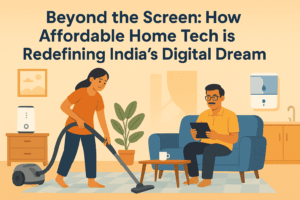
Consider the humble vacuum cleaner. A decade ago, it was a symbol of urban, upper-class living, often relegated to wedding gift lists. Today, as Aditya More, Founder and CEO of MecTURING, points out, it’s fast becoming a mainstream consideration. This shift is emblematic of a larger trend. The initial wave of digital India connected people to the world; the current wave is about enhancing the world within the four walls of home. Retailers, both online and offline, have been instrumental in this shift. They’re not merely stocking products; they’re curating entry-points into tech-enabled living.
By offering a range of models at fiercely competitive price points, launching India-specific campaigns that resonate in tier-2 and tier-3 cities, and ensuring omnichannel availability, they have democratized access. The result is a fundamental change in perception. Technology is no longer seen as a frivolous luxury for the “well-heeled,” but as a legitimate enabler for the middle-class and first-time adopters. It’s the first step on a ladder of technological comfort, beginning with a device that tackles pervasive dust and saves hours of manual labor.
The Ripple Effect: Time, Health, and Collective Well-being
The impact of this accessibility extends far beyond mere convenience. In cities like Indore or Lucknow, a dual-income family juggles work, remote schooling, and household chores in a compact apartment. An affordable, efficient cleaning appliance does more than clean floors; it reclaims precious hours. In regions with high dust levels, it directly contributes to better respiratory health. This is the substantive core of bridging the digital divide—it’s about tangible improvements in quality of life.
When millions of households gain access to tools that reduce drudgery, the collective benefit is monumental. It frees up cognitive space and time that can be redirected towards education, skill development, or simply rest. This is digital inclusion with a human face: less about streaming speed and more about creating a foundation of well-being from which families can thrive. Retailers facilitating this are, perhaps unknowingly, acting as agents of public health and social mobility.
The Enablers: Flexible Finance and Foundational Trust
Understanding the Indian consumer’s nuanced financial reality, retailers and brands have moved beyond mere selling to building ecosystems of adoption. Easy EMI options, no-cost financing, and subscription models have become commonplace, effectively lowering the barrier of daunting upfront costs. This financial innovation is as crucial as the technological one.
Moreover, recognizing the hesitation of a first-time buyer in Raipur or Guwahati, forward-thinking players are investing heavily in after-sales support, vernacular demo videos, and robust service networks. They are educating consumers on long-term value—not just the product’s price, but its cost-per-use over years. This builds a critical foundation of trust. When a consumer’s first foray into home tech is positive and supported, it builds confidence for future adoption, creating a virtuous cycle of technological assimilation.
Synergy with a Trillion-Dollar Vision
This grassroots tech revolution is perfectly aligned with the macro projection of India’s retail market hurtling towards a $1 trillion valuation by 2030. As noted in the related analysis, branded retail is set to double, driven by demand for quality and trust. The new-age brands driving affordable home tech are a prime example of this shift. They are growing two to three times faster than traditional players by leveraging D2C channels and e-commerce to reach untapped markets.
The digital landscape is the great equalizer. With smartphone penetration headed to 70% and social media narrowing the awareness gap between metros and smaller towns, a brand can now communicate directly with a consumer in Muzaffarpur about a product that solves their specific problem. The fall of general trade’s dominance from 91% to a projected 70% signifies this change: the pathway to the Indian consumer is diversifying, and it’s allowing niche, consumer-centric brands to flourish.
The Road Ahead: Dignity Through Practicality
The future of India’s digital story will be written not only in silicon chips and fiber optic cables but in the quiet hum of an affordable air purifier in a Kanpur home, the efficiency of a budget-friendly water purifier in a Jaipur kitchen, and the time saved by a basic robotic sweeper in a Pune apartment. Retailers at the forefront of this movement are doing more than driving sales; they are facilitating a quiet, dignified upward mobility.
The ultimate bridge across the digital divide is built with pillars of relevance, affordability, and trust. It connects aspirations to attainable reality. As India consumes, it seeks not just flash, but function; not just connectivity, but concrete improvement. The retailers and brands who understand that the most powerful technology is that which seamlessly integrates into, and elevates, the daily rhythm of life, will not only capture a market but will also help build a more inclusive, empowered, and fundamentally healthier India. The mission has evolved: from connecting India to comforting India, one home at a time.
You must be logged in to post a comment.