
Beyond the Press Release: Lupin’s Dabhasa Expansion and the Race for Peptide Dominance
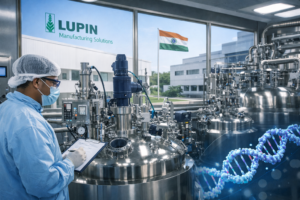
Lupin Manufacturing Solutions’ strategic expansion of its Dabhasa, India facility represents a pivotal move to secure a leadership position in the high-growth peptide therapeutics market by scaling its production of critical peptide building blocks, which are essential for next-generation drugs like cancer-fighting Antibody-Drug Conjugates (ADCs) and blockbuster metabolic therapies. Beyond merely adding manufacturing capacity, the investment in dedicated, flexible infrastructure and the deepening of its 250+ scientist team sends a clear signal to global biotech innovators that LMS is a committed, scientifically rigorous partner capable of de-risking the complex journey from early-stage development to commercial-scale production. This expansion not only strengthens India’s role in the advanced pharmaceutical supply chain but also underscores a future where collaborative, specialized manufacturing is the key to turning innovative molecular ideas into life-saving patient therapies.
Beyond the Press Release: Lupin’s Dabhasa Expansion and the Race for Peptide Dominance
The pharmaceutical manufacturing landscape is rarely static, but certain announcements signal more than just a routine capacity increase. They signal a strategic pivot, a response to the shifting tectonic plates of global drug development. The recent news from Lupin Manufacturing Solutions (LMS) regarding the expansion of its facility in Dabhasa, India, is precisely one of those signals.
On the surface, the March 19, 2026, press release announces new bricks and mortar—a new block, two specialized manufacturing units. But for those who follow the intricacies of the Contract Development and Manufacturing Organization (CRDMO) world and the complex chemistry of modern therapeutics, this is a story about foresight, specialization, and the quiet battle to control the building blocks of the next generation of medicine.
To understand the significance of this investment, we must look beyond the corporate announcement and delve into the science of peptides, the evolution of the CRDMO model, and what this means for innovators from Mumbai to Boston.
The Molecule of the Moment: Why Peptides?
For decades, drug development was a story of two extremes: the small molecule (a simple, well-defined chemical compound) and the large molecule biologic (a complex protein produced in living cells). Peptides, which are short chains of amino acids, occupy a sweet spot in between. They offer the potency and specificity of biologics with a stability and manufacturing profile closer to small molecules.
This “Goldilocks” zone is why peptides are experiencing a renaissance. We see it in the headlines: the blockbuster success of GLP-1 agonists for diabetes and weight loss (like semaglutide) has thrust peptides into the global spotlight. But the application goes far beyond metabolic disorders. Peptides are the foundational warriors in the fight against cancer, serving as the targeting mechanisms in cutting-edge Antibody-Drug Conjugates (ADCs). They are being engineered as novel antimicrobials, targeted pain therapies, and innovative treatments for rare diseases.
This surge in demand creates a unique challenge. Manufacturing peptides at scale is not like mixing aspirin. It is a complex, multi-step process requiring significant chemical expertise. The process involves sequentially linking protected amino acids—the individual building blocks—into a chain. The quality of the final peptide therapeutic is entirely dependent on the quality and consistency of these building blocks. A single impurity or inconsistency can derail years of development.
This is where Lupin Manufacturing Solutions’ expansion comes into sharp focus. By scaling its “peptide building-blocks platform,” LMS is not just adding generic capacity. It is strengthening the very foundation upon which its pharma partners will build their future blockbusters.
Deconstructing the Dabhasa Expansion: More Than Just Capacity
The official announcement mentions a “new block” and “two additional specialized units.” In the world of pharmaceutical infrastructure, these words carry significant weight. Let’s translate what this likely means on the ground.
- Dedicated Facilities, Contamination-Free: Peptide synthesis, particularly using solid-phase methods, requires meticulous control. By creating dedicated units, LMS is implementing a “facility within a facility” strategy. This is critical for preventing cross-contamination and allowing for the handling of highly potent compounds. It means that a drug being developed for a niche oncology target won’t be manufactured in the same space as a high-volume metabolic drug, ensuring safety and regulatory compliance.
- Flexibility for the Development Journey: One of the most underappreciated challenges in pharma is the leap from lab-scale to commercial-scale. A process that works beautifully in a 5-liter flask often fails miserably in a 5,000-liter reactor. The new infrastructure at Dabhasa is designed for “flexible manufacturing.” This implies a range of reactor sizes and configurations that can adapt to a molecule’s journey. It allows a partner to start with small-scale toxicology batches and, once the drug proves successful, seamlessly scale up to commercial volumes in the same facility, with the same team and the same validated processes. This de-risks the entire development timeline.
- Enabling Complex Modalities: The press release explicitly links the expansion to supporting “complex therapeutics” and “biologic ADCs.” ADCs are often described as “biological missiles.” They consist of an antibody (the guidance system) linked to a powerful toxin (the warhead). Peptides are increasingly used as the “linker” or even as the targeting moiety. The ability to manufacture high-purity, specialized peptides is therefore a prerequisite for playing in the high-value ADC space. This expansion signals that LMS intends to be a key enabler for companies developing these sophisticated cancer therapies.
The Human Element: From 250+ Scientists to a Global Ecosystem
Dr. Abdelaziz Toumi, CEO of Lupin Manufacturing Solutions, frames the expansion around “building deep capabilities and execution excellence.” This point cannot be overstated. A building is just a shell. The true value lies in the intellectual capital within.
With a team of over 250 scientists, LMS is investing in the people who understand the intricate dance of chemistry. These are the minds that troubleshoot a stubborn coupling reaction, optimize a purification process to achieve 99.9% purity, and design a manufacturing process that is both economically viable and environmentally sustainable.
For a young biotech innovator in San Francisco or Basel, partnering with a CRDMO is a leap of faith. They are entrusting their most valuable asset—their molecule—to a partner. What they are really buying is not just reactor time, but peace of mind. They are buying the assurance that the team in Dabhasa has the scientific rigor to handle their complex molecule, the regulatory expertise to file it with the FDA or EMA, and the operational excellence to deliver it on time.
This expansion is a powerful message to that global innovator: “We are investing in your future. We are building the infrastructure and deepening the expertise you will need to succeed.”
A Strategic Move in a Shifting Global Order
The timing of this announcement is also significant. The pharmaceutical industry is in a constant state of flux, seeking to balance cost-efficiency with supply chain resilience. The post-pandemic world has highlighted the dangers of over-reliance on single geographies.
India has long been the “pharmacy of the world” for generic drugs. With this move, Lupin is reinforcing India’s capability to move up the value chain. It’s a statement that Indian companies are not just manufacturers of off-patent pills, but are critical partners in the innovation economy, capable of handling the most complex chemistry required for novel drugs.
Lupin Limited, as the parent company, brings a legacy of scientific rigor and a deep understanding of global regulatory markets. This gives LMS a unique advantage. It’s not a standalone startup trying to build credibility; it’s a subsidiary of a global pharma major with 15 manufacturing sites and 7 research centers. The learnings, quality systems, and regulatory pathways navigated by Lupin for decades are directly transferable to the LMS CRDMO business.
The Future of Partnership
Ultimately, the Dabhasa expansion is a bet on the power of partnership. The days of a pharma company doing everything in-house are long gone. The complexity and cost of modern drug development have made collaboration a necessity.
Companies like Lupin Manufacturing Solutions are becoming the “foundries” for the biotech industry. Innovators bring the ideas and the targets; CRDMOs bring the tools, the expertise, and the manufacturing muscle to forge those ideas into reality.
By scaling its peptide capabilities, LMS is equipping itself with the most advanced tools in the foundry. It is preparing for a future where medicines are more targeted, more complex, and more personalized. For the innovator looking to bring a transformative therapy to patients, having a partner with the foresight to build a facility like the one in Dabhasa isn’t just a convenience—it’s a competitive advantage.
As we watch the construction of this new block in India, we are not just watching concrete and steel take shape. We are watching the infrastructure of tomorrow’s medicine being built, one high-quality peptide building block at a time.
You must be logged in to post a comment.