
Beyond the Nursery Rhyme: Why Ms. Rachel’s NYT Boycott is a Landmark in Modern Activism
In a significant fusion of children’s entertainment and social activism, beloved educator and internet personality Ms. Rachel (Rachel Accurso) announced she is boycotting The New York Times, condemning its “biased and dehumanizing coverage of Palestinians.”
This move, stemming from her consistent advocacy for children’s universal rights, is not an isolated critique but aligns with a broader intellectual revolt; it specifically targets the newspaper’s internal editorial guidance, which critics argue sanitizes the conflict by avoiding terms like “genocide” and “occupied territory.” By leveraging her immense moral authority built on a foundation of child welfare, Ms. Rachel’s stance amplifies a growing public reckoning with media narrative-shaping, transforming a simple act of unsubscribing into a powerful symbol of demanding ethical and accurate journalism.
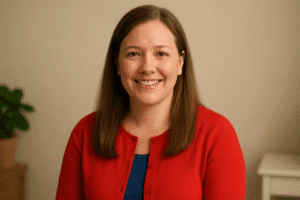
Beyond the Nursery Rhyme: Why Ms. Rachel’s NYT Boycott is a Landmark in Modern Activism
In the curated, often sanitized world of children’s entertainment, the voice is calm, the cardigan is bright, and the lessons are simple. “Hello, friends!” For millions of toddlers and their parents, Ms. Rachel is a daily fixture, a trusted educator who teaches letters, numbers, and emotional regulation through song and gentle repetition. So, when this same voice used her social media platform to declare, “I am unsubscribing from The New York Times because of its biased and dehumanizing coverage of Palestinians and Palestine,” the statement landed with a weight far beyond a typical celebrity political take.
This wasn’t just another entry in the long list of celebrity endorsements or condemnations. Ms. Rachel’s boycott represents a significant cultural moment, illustrating the collision of influencer culture, moral authority derived from child advocacy, and a growing public reckoning with how legacy media shapes our perception of conflict. Her decision to cancel a subscription, a simple act millions perform without fanfare, becomes a powerful symbolic gesture when viewed through the lens of her entire body of work.
The Unlikely Moral Arbiter: From “Songs for Littles” to Geopolitical Critique
Rachel Accurso, the master educator behind the persona, has built an empire on a foundation of unequivocal care for children. Her platform, boasting over 17 million YouTube subscribers and a Netflix series, is predicated on the idea that every child deserves to be seen, heard, and educated with patience and kindness. This established identity is what makes her foray into the incendiary discourse surrounding the Israel-Hamas war so potent.
For Ms. Rachel, advocacy for Palestinian children is not a divergence from her mission; it is a direct extension of it. Her critics, including groups like StopAntisemitism, have accused her of being a mouthpiece for Hamas—an accusation she has vehemently denied as “absurd” and “patently false.” In her defense, she has consistently framed her position not in terms of complex geopolitics, but in the language she has always used: the universal right of every child to safety and security.
Her actions leading up to the NYT boycott reveal a strategic and deeply personal commitment. She didn’t just post a statement. She raised money for Save the Children through paid videos. She featured Rahaf, a three-year-old from Gaza who lost both legs in an airstrike, on her platform, personalizing a statistic into a story. Most strikingly, at the Glamour Women of the Year awards, she wore a gown embroidered with artwork by children in Gaza, transforming a red-carpet event into a sobering canvas for their silenced voices. Each act was a brick in a foundation of credibility, making her eventual critique of the Times not a knee-jerk reaction, but a coherent next step.
Deconstructing the “Style Guide”: The Power of Language to Shape Reality
The core of Ms. Rachel’s critique, elaborated in a follow-up post captioned “words matter,” hinges on a fundamental tenet of media criticism: language is never neutral. Her specific grievance points to an internal New York Times memo, leaked to The Intercept, which provided editorial guidance to journalists on the terminology to be used in covering the conflict.
According to the report, the memo advised avoiding words like “slaughter,” “massacre,” “carnage,” “genocide,” and “ethnic cleansing.” It reportedly discouraged the use of “Palestine” and instructed journalists to refer to Gaza’s “refugee camps” as “neighborhoods” instead.
From a traditional journalistic perspective, this can be framed as an attempt at precision and neutrality, avoiding emotionally charged language. However, to critics like Ms. Rachel and the over 300 writers now boycotting the Times, this is not neutrality but a form of erasure and bias. The argument is that by sanitizing the language, the paper fails to accurately convey the scale and nature of the suffering. To call a refugee camp a “neighborhood” strips it of its historical context and the specific vulnerability of its residents. To avoid the term “occupied territory” is to sidestep a legal and political reality recognized by most of the international community.
This is where Ms. Rachel’s expertise as an educator dovetails with her activism. Her entire career is built on the understanding that words are the building blocks of reality for young minds. The careful, deliberate language she uses to teach a toddler about feelings is the same principle she applies to journalism: the words you choose either illuminate the truth or obscure it. By calling out the Times‘ style guide, she is effectively accusing the paper of failing in its core educational mission to the public.
A Chorus of Dissent: Ms. Rachel and the Wider Boycott Movement
Ms. Rachel’s announcement did not occur in a vacuum. It echoes a broader, more organized intellectual revolt against mainstream media coverage of the war. The coalition of over 300 writers, scholars, and intellectuals—including prominent figures like Naomi Klein and Michelle Alexander—who have pledged to boycott the Times Opinion section represents a significant crisis of legitimacy for the publication.
Their collective statement lays out a damning indictment, accusing the paper of “reprinting outright lies from Israeli officials,” amending coverage “at the behest of the Israeli consulate,” and maintaining “material ties to the Israeli occupation.” For this group, the Times is not merely reporting on events but is actively “manufacturing consent for war, for exploitation, for genocide.”
When Ms. Rachel, a figure beloved for her apolitical comfort, joins this chorus, it changes the dynamic. She brings the movement into the living rooms and playrooms of millions of families who may be disconnected from academic or literary circles. Her endorsement legitimizes the boycott for a mainstream audience that trusts her moral compass. As Assal Rad, a fellow at the Arab Center Washington DC, posted on X: “Ms Rachel joining the @nytimes boycott. You love to see it.”
The Inevitable Backlash and the Price of Speaking Out
Taking a stand on this issue, particularly one that critiques major institutions, guarantees a fierce backlash. The Israeli writer Hen Mazzig has already accused her of hosting a commentator who “praised Hamas” and of invoking a “blood libel” with a post about “Jesus is starving in Gaza.” These are serious charges designed to discredit her and frame her humanitarian concern as antisemitic.
This backlash is a calculated risk of modern activism. For a public figure whose brand is built on universal appeal, wading into one of the most polarized debates in the world is a dangerous game. Yet, her continued outspokenness suggests a calculation that the moral imperative outweighs the commercial risk. It signals a belief that her audience—the parents who have chosen her to help raise their children—shares her core value that caring for children must be a universal principle, not a conditional one.
The Lasting Impact: More Than Just a Cancelled Subscription
The true significance of Ms. Rachel’s boycott may not be its immediate impact on the New York Times’ subscription numbers, but its symbolic power. It demonstrates that moral authority in the digital age can be built in the unlikeliest of places—a YouTube channel for toddlers—and then deployed to challenge one of the most powerful media institutions in the world.
It underscores a growing public weariness with perceived media bias and a demand for a more humane, ethically consistent narrative. In a media landscape often accused of reducing complex human tragedies to sterile statistics, Ms. Rachel’s voice is a persistent reminder of the individual human cost, refracted through the lens of a child’s potential.
Her journey from singing “I’m So Happy” to calling out a media giant for dehumanization is a powerful story of an influencer evolving into an advocate. It proves that the same voice that can calm a crying toddler can also, with unwavering conviction, demand that the world’s most powerful storytellers do better. In the end, Ms. Rachel’s lesson for adults is as simple and profound as the ones she teaches children: words matter, fairness is paramount, and no child—wherever they are—should be invisible.
You must be logged in to post a comment.