
Beyond the Mercury Drop: Decoding North India’s Deep Freeze and Its Human Impact
North India is currently enduring a severe and record-breaking cold wave, with locations across Punjab, Haryana, and Rajasthan plunging to season-low temperatures near 1°C, amplified by harsh winds that create a perilous “feel-like” chill. This crisis stems from clear skies allowing rapid heat loss, winds from snow-bound Himalayas, and a lack of interrupting weather systems, leading to widespread disruption including agricultural threats from frost, hazardous travel due to dense fog, and a public health emergency. While the intense cold is expected to persist for the next three days, a significant shift is forecast around January 18th-21st, when an active western disturbance should bring winter rains, easing the cold wave but introducing new challenges of wet weather and potential crop damage, highlighting the event as a stark reminder of nature’s volatility and the critical need for accurate weather intelligence and public preparedness.
Beyond the Mercury Drop: Decoding North India’s Deep Freeze and Its Human Impact
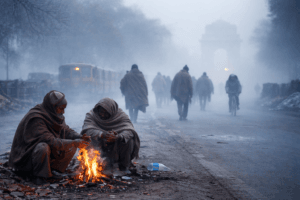
A silent, shivering siege has tightened its grip across the plains of North India. As dawn breaks, the landscape isn’t illuminated by sunlight but is often shrouded in dense, immobilizing fog, with temperatures plunging to their lowest points of the season. This isn’t just a cold snap; it’s a profound meteorological event reshaping daily life, from the bustling streets of Delhi to the remote villages of Rajasthan. We delve beyond the headlines to understand the forces behind this severe cold wave, its tangible human cost, and what the coming days truly hold.
The Stark Numbers: A Region in the Grips of Frost
The data paints a stark picture. Over the past 48 hours, a swath of North India has transformed into an open-air cold storage. Key stations haven’t just cooled; they have touched near-freezing marks:
- Amritsar, Punjab: 1.1°C
- Narnaul & Bhiwani, Haryana: 1.2°C and 1.5°C respectively
- Churu & Ganganagar, Rajasthan: 1.3°C and 1.4°C respectively
Unofficial reports suggest Rewari in Haryana may have even dipped below zero. What makes these figures particularly biting is the “feel-like” factor. A persistent, dry northerly to northwesterly wind, cascading down from the snow-clad Himalayas, creates a wind-chill effect that makes the ambient temperature feel several degrees colder, a true “bone-numbing” experience as described by forecasters.
The Meteorological Engine: Why is This Happening?
This intense cold wave is not a random occurrence but the result of specific atmospheric conditions aligning perfectly:
- Clear Skies and Radiational Cooling: The absence of significant cloud cover, especially at night, allows the heat accumulated during the day to escape rapidly into the atmosphere. The ground and the air near it cool drastically as a result.
- Snow-Bound Himalayas: The heavy snowfall in the mountains earlier in the season acts as a vast refrigerating plate. Winds coming from that direction are already chilled and gain little heat as they sweep across the plains.
- The Absence of Western Disturbances: These are rain- or snow-bearing storm systems from the Mediterranean that typically interrupt cold spells by bringing cloud cover and precipitation. Their recent scarcity has allowed the cold, dry continental air to dominate unchallenged.
- The “Feeble” System & Its Aftermath: The recent weak western disturbance over Jammu & Kashmir, now moving away, was insufficient to bring warmth. Instead, it has been followed by a fresh influx of cold air, setting the stage for the next three days to be potentially the coldest of this phase.
Life in the Cold: The Human Story Behind the Headlines
While numbers are recorded at weather stations, the real story unfolds on the ground:
- Agriculture on Edge: Rabi crops like wheat, mustard, and gram are vulnerable to frost. A “cold wave” is officially declared when the minimum temperature is 10°C or lower and 4.5°C to 6.4°C below the normal. The current temperatures, significantly lower, raise alarms for farmers. Frost can damage crops at the flowering stage, impacting yield. Farmers in Punjab and Haryana are resorting to light irrigation (running water in fields) overnight—a traditional technique to raise field temperature and protect crops.
- Urban Dislocation: Cities are grappling with their own crises. Dense fog, particularly in the Indo-Gangetic plains, is crippling travel. Flight and train schedules are in disarray, causing cascading delays. The morning rush hour becomes a hazardous crawl, with increased risks of road accidents.
- A Health Emergency: Hospitals report a surge in patients with respiratory illnesses—asthma, bronchitis, and pneumonia—exacerbated by the cold, dry air and pollution trapped by fog. The elderly, homeless, and daily wage laborers are disproportionately affected, facing heightened risks of hypothermia.
The Road Ahead: A Glimmer of Moisture in a Cold Forecast
The immediate forecast offers little respite. The next three days (approximately Jan 13-15, 2026) are expected to see temperatures sustain or drop even further marginally, with severe cold wave conditions and dense fog persisting.
However, a significant shift is on the horizon. Meteorological models indicate an active western disturbance approaching around January 18th. Unlike the previous feeble one, this system is anticipated to be more potent. Its interaction with lower-level systems is likely to induce widespread winter rains over the plains of North India between January 18th and 21st.
This forecasted precipitation is a double-edged sword:
- The Relief: Rain will wash away pollutants and fog, and initially, cloud cover will trap some heat, leading to a rise in minimum temperatures. The severe cold wave conditions are expected to abate.
- The New Challenge: However, winter showers bring their own set of disruptions—waterlogging in unprepared urban areas, a raw, pervasive chill from the moisture (a different kind of cold), and potential hail damage to crops in some localized areas.
Expert Insight and Preparedness
AVM G.P. Sharma, President of Meteorology & Climate Change at Skymet Weather, contextualizes the event: “What we are witnessing is a classic, intense cold wave episode amplified by favorable large-scale patterns. The key for the public is to understand the transition. The bitter dry cold will likely give way to a wet, cloudy spell by next week, which, while warmer, requires different preparedness.”
Staying Safe and Informed:
- For the Public: Layer clothing, stay dry, and limit early morning exposure. Check fog advisories and flight/train statuses before travel.
- For Farmers: Stay updated with local agro-meteorological advisories. Prepare for possible frost protection measures and assess crop stages for vulnerability to potential hail.
- For Authorities: Ensure shelters for the homeless are operational and equipped. Have response plans ready for fog-related transport chaos and the potential switch to rain-related issues next week.
Conclusion: A Testament to Nature’s Rhythm
North India’s deep freeze is a powerful reminder of the dynamic nature of subtropical winters. It underscores the intricate dance between continental winds, western disturbances, and local topography. As we navigate the challenging days ahead, the event highlights the critical importance of accessible, accurate, and actionable weather intelligence—not just as data, but as a tool for safeguarding lives, livelihoods, and the rhythms of daily society. The cold will relent, as it always does, but the lessons in resilience and adaptation it imparts remain.
You must be logged in to post a comment.