
Beyond the Ledger: How Technology and Stricter Compliance Are Reshaping Bank Branch Audits
A one-day seminar on bank branch audit hosted by the ICAI Bengaluru Branch brought together chartered accountants and finance professionals to explore the rapidly evolving role of auditors, with Chief Guest Joohi Smita Sinha of SBI emphasizing the need for discipline and transparency in the sector. Technical sessions led by CA Vijay Srinivas Kothapalli, CA Sundararajan, and CA Niranjan Vijay Joshi delved into smart branch audit techniques leveraging technology and data analytics, the complexities of income recognition and asset classification (IRAC) norms, and practical aspects ranging from planning and documentation to final certification. The event underscored that today’s bank auditor must function as a hybrid professional—part accountant, part technologist, and part risk analyst—equipped to navigate stricter regulatory demands while delivering insightful, value-added assurance to the financial system.
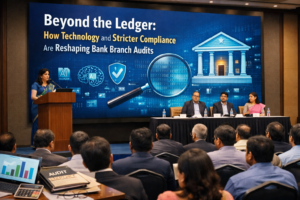
Beyond the Ledger: How Technology and Stricter Compliance Are Reshaping Bank Branch Audits
The annual bank branch audit—a ritual as predictable as the financial year-end itself—is undergoing a seismic shift. Gone are the days when it was merely a retrospective number-crunching exercise. In its place is a dynamic, technology-driven, and compliance-heavy process that demands a new breed of chartered accountant.
This evolving reality was the central theme at a recent one-day seminar hosted by the Bengaluru Branch of the Institute of Chartered Accountants of India (ICAI), held at The Chancery Pavilion. The event, which drew a packed house of finance professionals, served as a critical check-in for the profession, underscoring that in the world of banking audits, adaptation is no longer optional—it is the only path to survival and relevance.
The seminar, organized under the aegis of the Southern India Regional Council (SIRC), was more than just a continuing professional education (CPE) event. It was a masterclass in navigating the complexities of a sector that forms the backbone of the Indian economy.
The Auditor as a Guardian of Systemic Stability
The tone for the day was set by the Chief Guest, Joohi Smita Sinha, Chief General Manager (CGM) at the State Bank of India. In her inaugural address, Sinha painted a compelling picture of the modern auditor, framing the role not just as a compliance officer but as a critical guardian of the financial ecosystem.
“The banking sector is the engine room of our economy,” she noted. “An auditor’s role has evolved from simply verifying transactions to ensuring the very discipline and transparency that prevent systemic risks.”
Her words resonated deeply with the audience. In an era marked by high-profile financial frauds and the increasing complexity of banking products, the expectation from auditors has skyrocketed. The “tick-mark” approach is dead. Today, an auditor must possess the acumen to spot red flags in loan portfolios, understand the nuances of ever-changing regulatory frameworks, and have the courage to flag discrepancies, even under pressure.
Sinha’s address highlighted a crucial reality: the relationship between the bank and the auditor is a symbiotic one. While the bank manages the business, the auditor provides the assurance that builds trust among depositors, investors, and regulators. This trust, as she implied, is the most valuable currency in the banking system.
Decoding the ‘Smart Branch Audit’
The technical sessions that followed translated this high-level philosophy into actionable practice. The first deep dive was led by CA Vijay Srinivas Kothapalli, who tackled one of the most talked-about topics in the profession: the Smart Branch Audit.
Kothapalli’s session went far beyond the buzzwords. He broke down how technology is not just a tool but a foundational element of modern audit strategy. For a branch auditor, this means moving from sampling to near-complete population testing using data analytics.
“Technology is no longer a separate ‘IT audit’ function,” Kothapalli explained during his presentation. “It is woven into the fabric of the core audit. We are looking at how technology controls—like access management in core banking systems and automated reconciliation tools—form the first line of defense.”
His discussion on the Long Form Audit Report (LFAR) was particularly insightful. Traditionally viewed as a mundane checklist, the LFAR has become a powerful tool for communication. Kothapalli emphasized that a well-drafted LFAR is no longer just about pointing out weaknesses; it is about providing constructive, data-backed recommendations to the bank’s management and the board.
He stressed that the modern LFAR should highlight issues like delays in stock statement submissions by borrowers, irregularities in the end-use of funds, and weaknesses in the bank’s own internal control mechanisms. By framing these observations as opportunities for improvement rather than just criticisms, the auditor adds immense value to the branch’s operations.
Navigating the Minefield of Asset Classification
If technology represents the future of audit, asset quality remains its timeless, high-stakes core. This was the domain of CA Sundararajan, whose session on Income Recognition and Asset Classification (IRAC) norms was a masterclass in regulatory precision.
For any banker or auditor, the IRAC norms—governed by the Reserve Bank of India (RBI)—are the Bible. A misclassification here can lead to distorted balance sheets, incorrect provisioning, and severe regulatory penalties. Sundararajan delved into the gray areas that often trip up professionals.
He addressed the critical distinction between a “willful defaulter” and a borrower facing genuine cash flow mismatches—a distinction that has profound implications for how an auditor certifies the accounts. He also touched upon the complexities introduced by resolution frameworks like those for stressed assets, where the lines between “standard,” “special mention account,” and “non-performing asset” (NPA) can blur.
The session was a stark reminder that despite technological advances, the core of bank audit remains a human judgment call. It requires a deep understanding of the borrower’s industry, the local economic environment, and the fine print of RBI circulars. Sundararajan emphasized that thorough documentation is not just a procedural requirement; it is the auditor’s only defense against future litigation or regulatory scrutiny.
From Planning to Certification: The Practical Playbook
The final technical session brought the day’s discussions down to earth. CA Niranjan Vijay Joshi delivered a session on the Practical Aspects of Bank Audit, covering the entire lifecycle of the audit engagement.
Joshi’s strength lay in his ability to articulate the unspoken challenges of a branch audit. He began with planning—a phase often rushed in the face of tight deadlines. He stressed the importance of the “entry meeting” with branch management, a step that sets the tone for cooperation. “Audit is not an adversarial process,” he noted. “Your ability to get information and clarity depends entirely on how you establish your role at the very beginning.”
His segment on documentation was a wake-up call for many in the room. In the age of digital records, the quality of audit evidence is paramount. Joshi highlighted that relying solely on a screenshot from the core banking system is insufficient. The evidence must be robust, traceable, and complete.
Finally, he tackled the certification process, particularly the certification of balances under the Banking Companies (Acquisition and Transfer of Undertakings) Act, a crucial but often tedious task. He provided practical tips on how to reconcile the bank’s general ledger with the subsidiary ledgers and how to verify large-value deposits and advances without getting bogged down in minutiae.
The Bengaluru Context: A Hub of Innovation
Hosting this seminar in Bengaluru was particularly apt. As India’s Silicon Valley, the city is at the intersection of traditional finance and cutting-edge technology. The chartered accountants practicing here are often auditing branches that service the startup ecosystem, multinational tech giants, and a highly digital-savvy clientele.
The discussions resonated with the unique pressures faced by professionals in this region. With the proliferation of fintech, digital lending, and API-driven banking, the nature of evidence an auditor must examine is changing. Physical vouchers are being replaced by digital trails, and the risk landscape now includes cyber threats and data privacy breaches.
A Commitment to Excellence
The seminar was organized under the leadership of CA Kavitha Paramesh, Chairperson of the ICAI Bengaluru Branch, and CA Shripad Hulgol Narayan, the Branch Secretary. Their efforts in curating a relevant and rigorous agenda underscored the ICAI’s commitment to ensuring its members are not left behind by the rapid changes in the industry.
Events like this serve a dual purpose. First, they bridge the gap between theoretical knowledge and practical application, equipping members with the skills to handle the upcoming audit season with confidence. Second, they foster a community of practice, where peers can share challenges, discuss interpretations of new regulations, and build a network of support.
The Road Ahead
As the seminar concluded, a clear message emerged: the bank branch auditor of 2026 is a hybrid professional—part accountant, part technologist, and part risk analyst. The reliance on technology will only deepen, with Artificial Intelligence (AI) and Machine Learning (ML) poised to take over routine verifications, freeing up the human auditor to focus on complex judgments and strategic advisory.
Furthermore, the regulatory environment will continue to tighten. With the RBI’s increasing focus on governance and assurance, the demand for high-quality, insightful audits will grow. The “compliance” aspect of the seminar’s theme is not a burden but a framework for ensuring the long-term health of the banking system.
For the participants who spent their day at The Chancery Pavilion, the return on investment was clear. They walked away not just with updated knowledge, but with a renewed sense of purpose. In a world where financial stability is paramount, the role of the auditor is more critical than ever. And as this seminar demonstrated, the ICAI and its members are rising to meet that challenge, armed with new tools, sharper insights, and an unwavering commitment to professional excellence.
The seminar was a testament to the fact that while numbers tell the story of the past, it is the auditors of today who are helping to build a more resilient and trustworthy financial future.
The annual bank branch audit—a ritual as predictable as the financial year-end itself—is undergoing a seismic shift. Gone are the days when it was merely a retrospective number-crunching exercise. In its place is a dynamic, technology-driven, and compliance-heavy process that demands a new breed of chartered accountant.
This evolving reality was the central theme at a recent one-day seminar hosted by the Bengaluru Branch of the Institute of Chartered Accountants of India (ICAI), held at The Chancery Pavilion. The event, which drew a packed house of finance professionals, served as a critical check-in for the profession, underscoring that in the world of banking audits, adaptation is no longer optional—it is the only path to survival and relevance.
The seminar, organized under the aegis of the Southern India Regional Council (SIRC), was more than just a continuing professional education (CPE) event. It was a masterclass in navigating the complexities of a sector that forms the backbone of the Indian economy.
The Auditor as a Guardian of Systemic Stability
The tone for the day was set by the Chief Guest, Joohi Smita Sinha, Chief General Manager (CGM) at the State Bank of India. In her inaugural address, Sinha painted a compelling picture of the modern auditor, framing the role not just as a compliance officer but as a critical guardian of the financial ecosystem.
“The banking sector is the engine room of our economy,” she noted. “An auditor’s role has evolved from simply verifying transactions to ensuring the very discipline and transparency that prevent systemic risks.”
Her words resonated deeply with the audience. In an era marked by high-profile financial frauds and the increasing complexity of banking products, the expectation from auditors has skyrocketed. The “tick-mark” approach is dead. Today, an auditor must possess the acumen to spot red flags in loan portfolios, understand the nuances of ever-changing regulatory frameworks, and have the courage to flag discrepancies, even under pressure.
Sinha’s address highlighted a crucial reality: the relationship between the bank and the auditor is a symbiotic one. While the bank manages the business, the auditor provides the assurance that builds trust among depositors, investors, and regulators. This trust, as she implied, is the most valuable currency in the banking system.
Decoding the ‘Smart Branch Audit’
The technical sessions that followed translated this high-level philosophy into actionable practice. The first deep dive was led by CA Vijay Srinivas Kothapalli, who tackled one of the most talked-about topics in the profession: the Smart Branch Audit.
Kothapalli’s session went far beyond the buzzwords. He broke down how technology is not just a tool but a foundational element of modern audit strategy. For a branch auditor, this means moving from sampling to near-complete population testing using data analytics.
“Technology is no longer a separate ‘IT audit’ function,” Kothapalli explained during his presentation. “It is woven into the fabric of the core audit. We are looking at how technology controls—like access management in core banking systems and automated reconciliation tools—form the first line of defense.”
His discussion on the Long Form Audit Report (LFAR) was particularly insightful. Traditionally viewed as a mundane checklist, the LFAR has become a powerful tool for communication. Kothapalli emphasized that a well-drafted LFAR is no longer just about pointing out weaknesses; it is about providing constructive, data-backed recommendations to the bank’s management and the board.
He stressed that the modern LFAR should highlight issues like delays in stock statement submissions by borrowers, irregularities in the end-use of funds, and weaknesses in the bank’s own internal control mechanisms. By framing these observations as opportunities for improvement rather than just criticisms, the auditor adds immense value to the branch’s operations.
Navigating the Minefield of Asset Classification
If technology represents the future of audit, asset quality remains its timeless, high-stakes core. This was the domain of CA Sundararajan, whose session on Income Recognition and Asset Classification (IRAC) norms was a masterclass in regulatory precision.
For any banker or auditor, the IRAC norms—governed by the Reserve Bank of India (RBI)—are the Bible. A misclassification here can lead to distorted balance sheets, incorrect provisioning, and severe regulatory penalties. Sundararajan delved into the gray areas that often trip up professionals.
He addressed the critical distinction between a “willful defaulter” and a borrower facing genuine cash flow mismatches—a distinction that has profound implications for how an auditor certifies the accounts. He also touched upon the complexities introduced by resolution frameworks like those for stressed assets, where the lines between “standard,” “special mention account,” and “non-performing asset” (NPA) can blur.
The session was a stark reminder that despite technological advances, the core of bank audit remains a human judgment call. It requires a deep understanding of the borrower’s industry, the local economic environment, and the fine print of RBI circulars. Sundararajan emphasized that thorough documentation is not just a procedural requirement; it is the auditor’s only defense against future litigation or regulatory scrutiny.
From Planning to Certification: The Practical Playbook
The final technical session brought the day’s discussions down to earth. CA Niranjan Vijay Joshi delivered a session on the Practical Aspects of Bank Audit, covering the entire lifecycle of the audit engagement.
Joshi’s strength lay in his ability to articulate the unspoken challenges of a branch audit. He began with planning—a phase often rushed in the face of tight deadlines. He stressed the importance of the “entry meeting” with branch management, a step that sets the tone for cooperation. “Audit is not an adversarial process,” he noted. “Your ability to get information and clarity depends entirely on how you establish your role at the very beginning.”
His segment on documentation was a wake-up call for many in the room. In the age of digital records, the quality of audit evidence is paramount. Joshi highlighted that relying solely on a screenshot from the core banking system is insufficient. The evidence must be robust, traceable, and complete.
Finally, he tackled the certification process, particularly the certification of balances under the Banking Companies (Acquisition and Transfer of Undertakings) Act, a crucial but often tedious task. He provided practical tips on how to reconcile the bank’s general ledger with the subsidiary ledgers and how to verify large-value deposits and advances without getting bogged down in minutiae.
The Bengaluru Context: A Hub of Innovation
Hosting this seminar in Bengaluru was particularly apt. As India’s Silicon Valley, the city is at the intersection of traditional finance and cutting-edge technology. The chartered accountants practicing here are often auditing branches that service the startup ecosystem, multinational tech giants, and a highly digital-savvy clientele.
The discussions resonated with the unique pressures faced by professionals in this region. With the proliferation of fintech, digital lending, and API-driven banking, the nature of evidence an auditor must examine is changing. Physical vouchers are being replaced by digital trails, and the risk landscape now includes cyber threats and data privacy breaches.
A Commitment to Excellence
The seminar was organized under the leadership of CA Kavitha Paramesh, Chairperson of the ICAI Bengaluru Branch, and CA Shripad Hulgol Narayan, the Branch Secretary. Their efforts in curating a relevant and rigorous agenda underscored the ICAI’s commitment to ensuring its members are not left behind by the rapid changes in the industry.
Events like this serve a dual purpose. First, they bridge the gap between theoretical knowledge and practical application, equipping members with the skills to handle the upcoming audit season with confidence. Second, they foster a community of practice, where peers can share challenges, discuss interpretations of new regulations, and build a network of support.
The Road Ahead
As the seminar concluded, a clear message emerged: the bank branch auditor of 2026 is a hybrid professional—part accountant, part technologist, and part risk analyst. The reliance on technology will only deepen, with Artificial Intelligence (AI) and Machine Learning (ML) poised to take over routine verifications, freeing up the human auditor to focus on complex judgments and strategic advisory.
Furthermore, the regulatory environment will continue to tighten. With the RBI’s increasing focus on governance and assurance, the demand for high-quality, insightful audits will grow. The “compliance” aspect of the seminar’s theme is not a burden but a framework for ensuring the long-term health of the banking system.
For the participants who spent their day at The Chancery Pavilion, the return on investment was clear. They walked away not just with updated knowledge, but with a renewed sense of purpose. In a world where financial stability is paramount, the role of the auditor is more critical than ever. And as this seminar demonstrated, the ICAI and its members are rising to meet that challenge, armed with new tools, sharper insights, and an unwavering commitment to professional excellence.
The seminar was a testament to the fact that while numbers tell the story of the past, it is the auditors of today who are helping to build a more resilient and trustworthy financial future.
You must be logged in to post a comment.