
Beyond the Headlines: The Unraveling Ceasefire and the Ripple of a European Arms Ban
Despite a ceasefire agreement nominally in effect since October, Israeli military operations in Gaza have continued, resulting in civilian casualties including the deaths of two Palestinian teenagers in a drone strike—a pattern locals describe as systematic violations of the truce. In a significant parallel development, Belgium enacted a ban on the transit of military equipment to Israel through its airports, citing obligations under international law and responding to substantial domestic pressure, marking a tangible European policy shift aimed at curtailing complicity in the ongoing conflict, which has claimed over 71,000 Palestinian lives and laid waste to the besieged enclave.
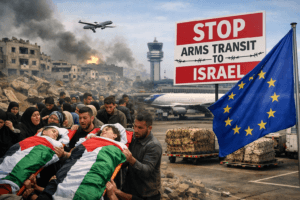
Beyond the Headlines: The Unraveling Ceasefire and the Ripple of a European Arms Ban
While a tenuous ceasefire has nominally held since October, the reality on the ground in Gaza tells a story of its persistent, bloody unraveling. The killing of two Palestinian teenagers, Salman Zakaria (14) and Mohammed Youssef (15), in an Israeli drone strike near a northern Gaza hospital is not merely a tragic statistic. It is a stark symbol of a peace process failing in real-time, and a grim prelude to a separate but resonant decision made thousands of miles away in Brussels. The simultaneous news of Belgium banning the transit of arms to Israel through its airports creates a crucial junction where ongoing human suffering intersects with evolving international responsibility.
The Ceasefire in Name Only: A Pattern of Violence Persists
The deaths of the two boys in Beit Lahia did not occur in a vacuum of renewed heavy combat. According to details from medical sources and eyewitnesses, the strike hit an area from which Israeli forces had previously withdrawn under the very terms of the October ceasefire agreement. This critical detail underscores a devastating pattern: the normalization of violence within the framework of a supposed truce. The incidents reported on that single Saturday—from the injuries on Old Gaza Street in Jabalia to the shooting of a man in Khan Yunis by a quadcopter drone—all share this common thread. They happened in areas theoretically governed by a cessation of hostilities.
Palestinian sources have meticulously documented what they term “ongoing and blatant violations,” citing a toll of 477 killed and 1,301 wounded since the ceasefire began. Whether one debates the technical definitions of “ceasefire violation” or “defensive action,” the human outcome is indisputable: for families in Gaza, the daily fear of airstrikes, shelling, and gunfire has not ceased. The constant presence of Israeli drones, described by residents as a persistent “buzz” in the sky, acts as a psychological weapon, a reminder that surveillance and deadly force can be deployed at any moment, truce or not. This environment perpetuates a deep-seated trauma and a justifiable cynicism about diplomatic promises.
Belgium’s Calculated Move: Symbolism or Substantive Shift?
In this context, Belgium’s decision takes on profound significance. The Belgian Foreign Ministry’s announcement, framed around obligations under international law, is a direct, policy-based response to the very violence claiming lives in Gaza. By issuing a royal decree to prohibit the stopover, transit, export, and transfer of weapons that could be used in the occupied territories, Belgium is making a concrete, albeit limited, legal statement.
Analysts are quick to note the specific wording: “transit.” Belgium is not a major arms supplier to Israel, but its national airport, a key European hub, has been used for the logistical transfer of military material. Closing this avenue is a tangible action. It moves beyond the declaratory diplomacy of “concern” and into the realm of material consequence. The Foreign Ministry spokesperson’s remark—“We are doing everything possible to avoid contributing to the escalation”—is a tacit acknowledgement that the flow of arms is inextricably linked to the continuation of violence.
This decision did not emerge in a political vacuum. It follows months of massive public pressure in Belgium, with protests reportedly reaching up to 120,000 participants. It also aligns with earlier Belgian actions, including sanctions against far-right Israeli ministers and other economic measures. Foreign Minister Hadja Lahbib’s prior criticism of EU divisions on Gaza reveals a strategic aim: to salvage European credibility on human rights and international law by taking national action where collective action has stalled.
The Broader Canvas: A Fracturing Consensus?
Belgium’s move, while unilateral, sends a ripple through the European political landscape. It highlights a growing fracture between official EU positions—often characterized by cautious statements and internal disagreement—and the more decisive actions of individual member states driven by domestic pressure and legal scrutiny. It asks an uncomfortable question of other transit and supply hubs in Europe: if Belgium can invoke international law to justify this ban, what is preventing others from doing the same?
Moreover, it places a spotlight on the contentious issue of arms exports to conflict zones. Under international treaties and the EU’s own Common Position on arms exports, there is a stringent obligation to deny licenses where there is a clear risk weapons might be used to facilitate serious violations of international humanitarian law. By acting, Belgium implies that such a “clear risk” has been identified, setting a potential precedent for legal challenges and political campaigns across the continent.
The Human Cost: The Only Metric That Ultimately Matters
Yet, all diplomatic and legal analysis circles back to the ground truth in Gaza. The overarching toll since October 2023—over 71,000 killed, more than 171,000 wounded, a landscape in ruins—creates a moral imperative that policies must address. For every child like Salman or Mohammed killed after a ceasefire was signed, there is a family, a community, and a generation for whom “peace” is a hollow word. This endless cycle of death and injury, punctuated by periods of slightly less intense violence, erodes any foundation for future coexistence.
The simultaneous occurrence of these two news items—the child fatalities and the arms transit ban—creates a powerful, tragic juxtaposition. It represents the two poles of the conflict: immediate, devastating human loss, and the slow, complex machinery of international policy that either enables or constrains that loss.
Conclusion: A Glimmer of Accountability in a Landscape of Grief
For now, Belgium’s ban stands as a important, symbolic crack in a wall of impunity. It is a demonstration that public mobilization can translate into policy change, and that international legal frameworks can be activated for restraint. However, for the people of Gaza, its true test will be whether it inspires broader action that can materially alter the reality they endure.
The ceasefire, fragile and violated, remains the central fiction. Until the violence definitively ends and a just, political solution addressing root causes is pursued, children will remain in the crosshairs, and the world’s Belgiums will face the continued choice of being bystanders or actors in the narrative of this conflict. The path of true peace requires honoring the spirit of a ceasefire, not just its name, and aligning international arms policy unequivocally with that goal. The two children killed in Beit Lahia are a solemn reminder of what is at stake.
You must be logged in to post a comment.