
Beyond the Headlines: The Two Children and the Unyielding Grip of a Conflict
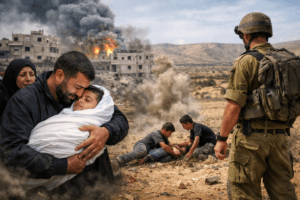
Two Palestinian children were killed on the same day in separate incidents, highlighting the different yet equally devastating ways the conflict claims young lives: 12-year-old Youssef Asaliya was killed by an Israeli airstrike in Gaza, which the military justified as the elimination of a terrorist threat near the border fence, while in the West Bank, a child was killed and another injured by unexploded ordnance left behind from previous military operations. Beyond the immediate tragedy, these deaths underscore the broader, systemic nature of the conflict—whether through high-tech warfare or the lingering remnants of violence embedded in the land—and occur against a backdrop of ongoing settlement expansion and dispossession, raising profound questions about the viability of a peaceful two-state solution when children continue to pay the ultimate price.
Beyond the Headlines: The Two Children and the Unyielding Grip of a Conflict
The news dispatch is brief, a mere aggregation of facts and figures that travel across wire services in an instant. Two Palestinian children killed. A statistic. A footnote in a long and bloody ledger. But behind the cold efficiency of the dateline—GAZA/RAMALLAH, Feb. 17—lie two stories cut impossibly short, two families shattered, and a stark illustration of how the Israeli-Palestinian conflict continues to exact its heaviest toll on the most vulnerable. To understand the news is to look beyond the headlines and into the human reality of a single, devastating Tuesday.
The Sky Falls in Jabalia: The Death of Youssef Asaliya
In the northern Gaza Strip, the Jabalia refugee camp is a place that has known more than its fair share of suffering. A densely packed warren of cinderblock homes and narrow alleyways, it is a symbol of Palestinian displacement and resilience. For 12-year-old Youssef Asaliya, it was simply home. It was where he played, where he went to school, where his family lived. On Tuesday, it became his graveyard.
The Israeli airstrike that killed Youssef was, according to the Israel Defense Forces (IDF), a precise act of self-defense. Their statement is clinical: troops identified a terrorist who crossed the “Yellow Line”—a term referring to the perimeter fence around Gaza—and posed an imminent threat. The terrorist was eliminated.
But in Gaza, the “terrorist” was a child. The “imminent threat” was a 12-year-old boy.
The IDF’s version of events creates an unbridgeable chasm of interpretation. To the Israeli military, operating in a volatile environment where Hamas and other militant groups have used tunnels, rockets, and ground incursions, any unidentified individual approaching the border fence is a potential threat. The trauma of October 7, 2023, a date seared into the Israeli national consciousness, has created a zero-tolerance policy for any perceived breach of security. The soldier who fired the missile or gave the order may have genuinely believed they were protecting their comrades from an attack.
To Youssef’s family, and to Palestinians in Gaza, this is not a story of a thwarted terror attack. It is a story of a sky that offers no safety. For over 16 months of intense warfare, the skies of Gaza have been a source of constant, unpredictable death. The hum of drones is the soundtrack of survival, a noise that can precede a strike by seconds. For a child, what is the border? Is it a political line on a map, or is it simply the edge of your neighborhood, a place where you might go to see something different, to feel a sense of space in a territory that has been sealed off for years? We will never know what brought Youssef near the fence. Was it curiosity? Desperation? A childish game that went terribly wrong? All we know is that his body was taken to Al-Shifa Hospital, a facility that has itself become a symbol of the health system’s collapse under the weight of war, joining the ever-growing list of the dead.
The statistics from the Gaza Health Ministry, cited in the report, are numbing in their scale: over 72,000 dead since October 2023. But behind that number are 72,000 individual worlds. Youssef’s world—his favorite food, his best friend, his dreams for the future—is now irretrievably lost. He is one of thousands of children killed, a generation for whom “ceasefire” is just a word that precedes the next round of violence. The ceasefire that took effect in October 2025 was supposed to be a respite, a chance to breathe. For Youssef Asaliya, it was a brief, false pause before the end.
The Land’s Lethal Legacy: A Child in the Jordan Valley
Seventy kilometers away, in the occupied West Bank, another child died on the same day. The circumstances could not be more different, and yet, they are tragically connected. Here, there was no airstrike, no military operation. The killer was silence. The killer was the past.
In the wide, arid expanse of the central Jordan Valley, a landscape of rolling hills and sparse Bedouin communities, a group of children were playing. The valley, part of the territory Israel captured in 1967, is a patchwork of Palestinian villages and Israeli settlements, military zones and nature reserves. It is also, after years of conflict, littered with the remnants of war. Unexploded ordnance (UXO)—bombs, shells, and grenades that failed to detonate—lie hidden in the sand and scrub, a hidden minefield for the unwary.
For the children, the object they found was likely a curiosity, a piece of metal that looked out of place. For the Israeli army, it was a piece of leftover equipment. The result was an explosion that killed one child instantly and seriously injured another. The IDF confirmed soldiers were dispatched, stating the children were “playing with unexploded ordnance.” The statement is factual, but it carries a chilling detachment. Children do not “play with unexploded ordnance” out of malice or a death wish. They play with it because their environment is saturated with the debris of military conflict, and they are children.
This death is a testament to the long half-life of violence. The ordnance that killed this child could have been dropped or fired months or even years ago. It represents a threat that persists long after the shooting stops. It is a physical manifestation of how the conflict seeps into the very soil, turning the landscape into a permanent hazard. While the world focuses on the dramatic escalation of airstrikes and rockets, children in the West Bank are killed by the silent, waiting remnants of previous battles. Their deaths don’t make the same headlines, but the grief for their families is just as profound.
The Machinery of Conflict and the Cry for a Future
These two deaths, occurring on the same day in two different Palestinian territories, are not isolated incidents. They are symptoms of a deeper, systemic ailment.
In Gaza, the death is delivered by high-tech military hardware, a surgical strike with a blunt-force outcome. It is the product of a siege and a blockade that has created a desperate, enclosed population, where the border is not just a line on a map but a wall that defines existence. The international community, weary after years of failed peace processes, watches as periodic flare-ups erase any progress made in between.
In the West Bank, the death is delivered by the earth itself, poisoned by war. It is the product of a prolonged military occupation that has normalized the presence of military hardware in and around Palestinian communities. It is a death that feels almost accidental, but is, in fact, a direct consequence of a conflict that has no end in sight.
And then there is the context of the land itself. On the very same day, the United Nations agency for Palestinian refugees (UNRWA) issued a stark warning about Israel’s accelerated plan to register West Bank land as state property. Philippe Lazzarini, the UNRWA chief, called it “accelerating the dispossession of Palestinians.” This is the other side of the coin of violence: the slow, bureaucratic, but equally devastating process of land confiscation and settlement expansion.
To a Palestinian family in the Jordan Valley, the unexploded bomb that killed their child and the legal notices declaring their grazing land “state property” are two sides of the same reality. One is sudden and catastrophic; the other is gradual and corrosive. Both serve to make their lives untenable. Both are a form of violence.
The international community, through the UN and countless other bodies, continues to call for a two-state solution. It is the only internationally backed framework for peace, envisioning an independent State of Palestine living side-by-side with Israel in peace and security. But with every airstrike that kills a child, with every unexploded bomb that claims another, with every plot of land declared for settlements, that solution becomes more of a mirage. How do you negotiate a peace based on trust when the ground beneath your feet is either exploding or being taken away?
The deaths of these two unnamed Palestinian children—let us remember Youssef Asaliya, and the nameless boy in the Jordan Valley—are a microcosm of the entire conflict. One killed by the most advanced tools of modern warfare, the other by its most primitive and lingering residue. Both were victims of a failure of imagination, a failure to see the humanity in the “other,” a failure to build a world where children are not targets, either by design or by default. Their short lives ended on a Tuesday, but their absence will be a permanent scar on their families and a haunting question for the rest of the world: how many more children must become footnotes before we finally decide that enough is enough?
You must be logged in to post a comment.