
Beyond the Headlines: How Personal History Fuels Hope for Israeli-Palestinian Peace
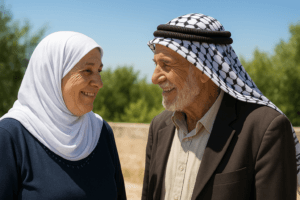
Beyond the Headlines: How Personal History Fuels Hope for Israeli-Palestinian Peace
Against a backdrop of escalating violence, polarizing rhetoric, and deep international divisions, maintaining hope for Israeli-Palestinian peace can feel like an act of defiance. Yet, for journalist Ray Hanania, this optimism is not naive idealism—it is a conviction forged in the shared streets of his childhood and hardened by a lifetime of activism. His perspective, detailed in a recent column, offers a crucial human counter-narrative to the cycle of conflict, reminding us that the current reality is not inevitable and that the path forward is built on a foundation of personal connection that still exists beneath the politics.
A Childhood Blueprint for Coexistence
Hanania’s optimism is rooted in a tangible, lived experience that seems almost foreign today. Growing up in a predominantly Jewish neighborhood in 1950s and 1960s Chicago, his identity was not defined by division.
“We knew each other as friends before we knew the ugly politics that separates our communities and tears us all apart today,” he writes.
This everyday coexistence was made possible by proximity and shared community life. Hanania recounts being included in Jewish social activities, from Thursday nights at the JCC to synagogue events and Bar Mitzvahs, with friends and their families going out of their way to make him feel welcome despite economic differences. This period demonstrates a powerful truth: when communities live side-by-side in equality, familiarity breeds understanding and friendship, not fear. The end of this integrated community through “white flight” was not the result of innate hatred between Arabs and Jews, but of larger social and economic forces—a critical distinction that suggests current divisions are also malleable and not permanent.
The Political Machinery of Division
Hanania argues that the widening gulf today is not a natural evolution but a cultivated one, fueled by political strategy on both sides of the ocean. He observes that politicians, “Republicans and Democrats, who want to get re-elected… exploit the divide between Jews and Arabs to pander for votes and popularity”. This tactic, which focuses on stereotypes and emotion over facts, distracts the public and creates easily hated “others”.
This analysis is reflected in the shifting landscape of American public opinion. While overall U.S. sympathy has historically leaned toward Israel, a profound and accelerating shift is underway, particularly among young people and Democrats. As the table below shows, disapproval of Israel’s military actions and sympathy for Palestinians has grown sharply, revealing a new political dynamic that both reflects and influences the domestic climate Hanania describes.
A Shift in American Public Opinion on the Conflict
| Demographic Group | Approve of Israel’s Military Actions in Gaza (2025) | Sympathies “More with Palestinians” (2025) | Key Change Since War Began |
| Democrats (Overall) | 8% | 59% | Massive drop in approval; sympathy for Palestinians now dominant. |
| Republicans (Overall) | 71% | ~10% (est.) | Approval remains solid and stable. |
| Americans Aged 18-34 | 9% | Data not specified | Highest disapproval rate of any age group. |
In Israel, Hanania points to government figures who normalize extremist rhetoric, while also condemning the terrorism of groups like Hamas. This mirrors recent reports of intensified anti-Palestinian rhetoric and violence in Israel and the West Bank, even following a ceasefire, with some lawmakers openly defending previously ostracized extremist ideologies. This environment makes the work of grassroots peace activists, who operate under threat and censorship, both more dangerous and more essential.
The Grassroots Counter-Movement: Building a “New Majority”
Despite the hostile climate, Hanania’s hope is actively mirrored and enacted by movements on the ground. He specifically mentions attending an event by Standing Together, Israel’s largest Jewish-Arab grassroots movement fighting for “peace, equality, and social and environmental justice”.
This movement, co-directed by a Jewish Israeli and a Palestinian citizen of Israel, represents the practical embodiment of Hanania’s belief. They organize citizens across Israel to oppose occupation and war while advocating for a future based on freedom and safety for all. Their work is difficult and faces state repression; activists face arrest, death threats, and police intimidation at their gatherings. Yet, they are growing. As co-director Alon-Lee Green notes, the harsh reality “pushes a lot of people that used to be indifferent in the past to pick a side,” and many are choosing solidarity.
Their activism extends to direct intervention, such as providing protective presence for Palestinian villages in the West Bank facing unprecedented settler violence. These actions demonstrate that coexistence is not just a memory or a slogan but a daily practice being fought for by thousands.
The Precarious Path Forward and the Imperative for Action
The international context underscores both the urgency and the fragility of the moment. UN Secretary-General António Guterres has warned the conflict is at a “breaking point,” heading toward a one-state reality of “perpetual occupation and inequality”. The only just alternative, he stresses, is a two-state solution, which requires urgent, concrete action beyond rhetoric.
A recent ceasefire deal, while bringing immediate relief and joy to families on both sides, highlights this precariousness. The deal facilitated hostage and prisoner releases and increased aid, but key issues—Gaza’s future governance, reconstruction, and a lasting political solution—are deferred. Without addressing these core problems, any ceasefire risks being temporary. Furthermore, there are concerns that such agreements can normalize the status quo of occupation and inequality without ensuring accountability or Palestinian self-determination.
What You Can Do: From Hope to Action
Hanania concludes with a personal commitment to continue working for change. For readers moved by his story, optimism must be coupled with action. Here are concrete ways to contribute:
- Educate Yourself Critically: Seek out narratives from Palestinian and Israeli peace activists, historians, and civil society organizations. Go beyond mainstream headlines to understand the historical context and human impact.
- Support Grassroots Movements: Organizations like Standing Together and others working for peace and equality need financial support and global amplification. Follow and share their work.
- Engage in Local Politics: As Hanania notes, divisive politics are often local. Advocate with your elected officials for policies that support human rights, humanitarian aid, and a just political solution for both peoples.
- Build Bridges in Your Community: Combat polarization by fostering dialogue. Challenge stereotypes about Arabs, Jews, Muslims, and Israelis in your own circles. Seek out interfaith and intercultural community events.
The story of Ray Hanania’s childhood and the ongoing work of activists prove that the animosity defining the Israeli-Palestinian conflict today is not predestined. It is the result of political choices, failed leadership, and nurtured fear. The alternative—a future of mutual recognition, justice, and peace—is also a choice. It is a choice remembered from shared childhoods, fought for in grassroots movements, and demanded by an increasing number of people around the world. The foundation for peace exists; the task is to build upon it before the breaking point is passed.
You must be logged in to post a comment.