
Beyond the Headlines: Decoding the Nipah Virus Alert and What It Truly Means for Public Health
Thailand’s Disease Control Department has escalated to high alert following a confirmed Nipah virus outbreak in West Bengal, India, where five cases have prompted the quarantine of nearly 100 contacts, highlighting the virus’s severe threat as a zoonotic pathogen that jumps from fruit bats to humans and can cause fatal encephalitis and pneumonia while also spreading between people.
This proactive alert underscores the operational reality of the “One Health” network—a sophisticated, integrated defense system that coordinates human, animal, and environmental health surveillance to detect and contain cross-border threats before they spread, demonstrating that while the immediate public risk in Thailand remains low, such incidents stress the constant need for global vigilance, robust systemic coordination, and individual awareness about the interconnectedness of ecosystem health and human safety in a world where pathogen spillover events are an ongoing reality.
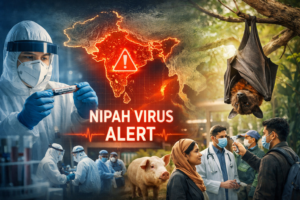
Beyond the Headlines: Decoding the Nipah Virus Alert and What It Truly Means for Public Health
The news cycle moves fast, but some headlines demand we slow down and pay attention. The recent alert from Thailand’s Disease Control Department, issued in response to a Nipah virus outbreak in West Bengal, India, is one such headline. While “high alert” may sound like standard bureaucratic protocol, this situation reveals a much deeper narrative about our interconnected world, the persistent threat of zoonotic diseases, and the silent, sophisticated machinery of public health that operates to keep us safe.
The Outbreak: A Contained Crisis with Global Echoes
On January 23rd, 2026, Indian authorities confirmed five cases of Nipah virus infection. The immediate response—testing, contact tracing, and the quarantine of nearly 100 individuals—highlights the hard-learned lessons from past pandemics. The location, West Bengal, is significant. This region shares a porous border with Bangladesh, a country with a tragic history of Nipah outbreaks. This geographic reality turns a local outbreak into a regional concern, demonstrating how viruses pay no heed to political maps.
Thailand’s swift elevation to “high alert” is not an overreaction but a calibrated, professional response. It signifies that surveillance networks have been activated, border health units are scrutinizing travelers with relevant symptoms, and laboratories are ensuring diagnostic capabilities are primed. The critical detail, “Thailand has not reported any cases,” is a testament to prevention, not an indication of irrelevance.
Nipah: Why This Virus Earns Its Dangerous Reputation
To understand the alert, one must understand the adversary. The Nipah virus is not a new pathogen, but it is a notoriously efficient one. Classified among Thailand’s most dangerous communicable diseases, its fearsome reputation rests on three pillars:
- Deadly Zoonotic Origins: The virus circulates silently in fruit bat populations, a natural reservoir. Human infection often begins at the interface where wildlife and human life collide—through consuming raw date palm sap contaminated by bat droppings, or direct contact with infected animals like pigs. This “spillover” event is the constant, low-probability but high-consequence risk that One Health networks monitor.
- Clinical Severity: Nipah begins deceptively with fever, headache, and muscle pain, masquerading as influenza. However, it can rapidly descend into severe respiratory distress (pneumonia) or fatal encephalitis (brain inflammation). Its case fatality rate has historically ranged from 40% to 75%, a stark contrast to more common respiratory viruses.
- Human-to-Human Transmission: Unlike some zoonoses that dead-end in humans, Nipah can spread through direct contact with infected bodily fluids. This characteristic transforms it from a tragic accident of animal contact into a potential chain of transmission, particularly in household or healthcare settings, demanding rigorous infection control.
The “One Health” Network: The Real Story Behind the Alert
The press release’s mention of coordination with the “One Health network” is the most understated yet crucial part of the story. This is not just a buzzword; it is the operational backbone of modern pandemic prevention.
Imagine a triangular early-warning system. One point is human health—hospitals and clinics reporting clusters of unusual pneumonia or encephalitis. The second is animal health—veterinarians and agricultural departments monitoring unusual sickness or deaths in livestock, particularly pigs. The third is environmental health—ecologists and wildlife experts tracking changes in bat populations and habitats. The One Health network connects these dots in real-time. Thailand’ heightened alert means this triangle is now humming with activity: wildlife officials are on notice, livestock departments are briefed, and physicians are armed with case definitions. It’s a holistic defense system recognizing that human health is inextricably linked to the health of animals and our shared environment.
For the Public: Navigating Alertness Without Anxiety
Public health alerts walk a fine line between informing and alarming. The genuine insight here is that individual vigilance and systemic vigilance are two sides of the same coin.
For the average person in Thailand or any neighboring country, the risk remains exceedingly low. However, the alert empowers informed precaution, particularly for those in high-exposure professions or regions:
- For farmers and those living near wildlife: The advice to wash hands thoroughly with soap after handling animals or their waste is foundational. Avoiding consumption of raw date palm sap or fruits partially eaten by bats is a specific, life-saving measure.
- For travelers: Awareness is key. While no travel restrictions are in place, being mindful of symptoms after travel, especially from affected regions, and seeking prompt medical attention while informing a physician of travel history, is crucial.
- For everyone: This outbreak reinforces the enduring importance of basic hygiene, especially regular handwashing, and responsible practices around wildlife. It is a reminder that respecting the boundary between human and animal ecosystems is a matter of personal and public safety.
A Broader Lens: Nipah in a World of Emerging Pathogens
This event is not an isolated incident. It occurs against a backdrop of Marburg virus in Ethiopia, persistent Zika concerns, and the ever-present specter of avian influenza. Each outbreak is a stress test for our global health infrastructure. The rapid response in India and the proactive alert in Thailand suggest that the traumatic lessons of the past decade have, in some corridors, been learned. Surveillance is faster, international communication channels are more open, and the One Health paradigm is gaining tangible traction.
However, it also underscores a perpetual vulnerability. As deforestation, climate change, and agricultural expansion continue to alter ecosystems, the frequency of these human-wildlife interactions may increase. Investing in One Health is not just about containing outbreaks; it’s about addressing the root environmental and economic drivers that create them.
Conclusion: Vigilance as a Constant
The Disease Control Department’s high alert is, ultimately, a signal of a system functioning as intended. It is the visible output of countless unseen hours of planning, cross-sectoral coordination, and scientific monitoring. For the reader, this news should instill not fear, but a measured confidence. It is a reminder that in our complex world, pathogens will emerge, but our capacity to detect, analyze, and respond has evolved.
The true value of this story lies not in the headline itself, but in the sophisticated, interconnected public health architecture it represents—and in the empowered, informed citizenry that remains its most vital component. The watchfulness continues, quietly and professionally, so that daily life can go on, undisturbed.
You must be logged in to post a comment.