
Beyond the Headlines: Decoding the MSME Revival and What It Truly Means for India’s Economic Engine in 2026
India’s MSME sector is displaying early but promising signs of a sustained revival, shifting from a mindset of survival to one of strategic growth, according to the latest NeoInsights report. Driven by robust festive demand, improved cash flow visibility from digital payments, and benefits from GST simplification, nearly 80% of MSMEs report better recent performance, with 86% expecting growth in 2026.
This optimism is most pronounced in consumer-facing sectors like beauty, automotive, and F&B, and is translating into concrete plans—over 71% aim to expand physically and half intend to seek credit for expansion and inventory. As the sector looks toward Budget 2026, MSMEs seek pragmatic support in the form of easier access to working capital, faster rollout of government schemes, and further compliance simplification to solidify this cautious yet positive outlook into broad-based, durable economic growth.
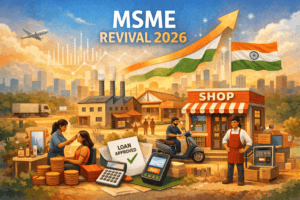
Beyond the Headlines: Decoding the MSME Revival and What It Truly Means for India’s Economic Engine in 2026
A quiet but significant transformation is stirring within the backbone of the Indian economy. For years, the narrative around India’s Micro, Small, and Medium Enterprises (MSMEs) has been a tense blend of resilience and struggle, weathering a global pandemic, supply chain ruptures, and inflationary pressures. Now, a fresh wave of data suggests a pivotal turn. The latest NeoInsights MSME Business Confidence Study for 2026 paints a picture not just of recovery, but of a sector gathering the confidence to invest, expand, and look toward the medium term. But what lies beneath this surge in sentiment? Is this a temporary sugar rush from festive spending, or the foundation of a sustainable revival? This analysis moves beyond the percentages to explore the human stories, structural shifts, and critical challenges that define this moment for India’s 63-million-strong MSME ecosystem.
The Sentiment Shift: From Survival to Strategy
The headline figures are undoubtedly powerful: nearly 80% of MSMEs report better recent performance, and a staggering 86% anticipate growth in 2026. This isn’t merely a sigh of relief; it’s a strategic exhale. The shift from “managing cash flow to survive the next quarter” to “planning a new outlet or product line for next year” is profound. It indicates that business owners are finally able to lift their gaze from the immediate firefight and engage in forward planning.
This optimism is corroborated by the Confederation of Indian Industry’s broader survey, creating a convergent narrative of recovery. The key driver here is resilient domestic demand. Unlike export-dependent recoveries, this one is powered from within—by Indian consumers in Indian markets. The recent festive season acted as a powerful catalyst, but more importantly, it served as a validation. For the small retailer or restaurant owner, strong Diwali or Christmas sales did more than improve the ledger; it confirmed that consumer appetite was back, restoring a fundamental belief in the market.
The Structural Catalysts: More Than Just Festive Cheer
While festive demand provided the spark, two structural enablers are fanning the flames:
- GST 2.0 and the Easing of Compliance Burden: The incremental but steady improvements under the GST regime—simplified filings, rationalized rates, and easier compliance processes—are starting to yield tangible benefits. For an MSME owner, time spent navigating complex tax portals is time not spent on business development. The report’s mention of GST 2.0 benefits suggests that these administrative efficiencies are translating into better cash flow management and reduced operational friction, allowing entrepreneurs to focus on their core competencies.
- The Digital Payments Revolution as a Lifeline: The increased adoption of digital payments is a silent hero in this revival. It’s not just about convenience; it’s about financial transparency and predictability. For MSMEs, historically plagued by cash flow opacity and delayed receivables, digital transactions mean immediate settlement, clearer records, and easier access to formal credit. This “cash flow visibility” is crucial—it turns sales on paper into usable capital in the bank, empowering timely inventory purchase, salary payments, and reinvestment.
Ground Zero of Optimism: Consumer-Facing Sectors Lead the Charge
The report identifies beauty & wellness, automobiles, and food & beverages as the most optimistic sectors. This is highly instructive. These are quintessential “high-touch,” experience-driven industries that were hardest hit during pandemic lockdowns. Their rebound speaks directly to the return of consumer confidence and discretionary spending.
- The beauty and wellness surge isn’t just about cosmetics; it’s about the reopening of salons, spas, and clinics, signaling a return to self-care and social normalcy.
- Automobile optimism, particularly in the two-wheeler and used-car segments serviced by MSMEs, points to renewed mobility needs and replacement cycles.
- Food and beverages thriving indicates the robust return of social dining, celebrations, and tourism-linked spending.
This sector-specific confidence suggests the revival is organic, driven by real consumer behavior rather than artificial stimulus.
The Expansion Imperative and the Credit Question
Perhaps the most telling data point is that over 71% of MSMEs plan physical expansion, and over half intend to take a business loan in 2026. This moves the conversation from sentiment to action. The intent to borrow is a high-stakes vote of confidence. Loans are no longer sought for emergency survival but for purposeful growth—inventory buildup, new machinery, or store expansion.
However, this is also the most critical juncture. Access to timely, affordable, and hassle-free credit remains the single biggest bridge between intent and execution. While NBFCs like NeoGrowth have played a pivotal role in addressing this gap, the report highlights that MSMEs still seek faster access to government schemes and working capital. The upcoming Budget 2026 is therefore not just a policy event but a psychological one for the sector. MSMEs are looking for signals that the system will support their ambition.
The Budget 2026 Wishlist: Clarity, Continuity, and Digital Enablement
As expectations build, the MSME community’s asks are notably pragmatic, not populist. They seek:
- Operational Continuity: Stable policies, not disruptive changes.
- Timely Working Capital: Simplified, accelerated loan disbursement mechanisms under existing schemes.
- Further GST Simplification: A continued push to reduce the compliance load.
- Digital Infrastructure Support: Recognition and perhaps incentives for adopting digital tools and online payments, which enhance both efficiency and market reach.
Around a quarter of respondents specifically pointed to the need for better access to government schemes—a call not for new schemes, but for making existing ones more accessible and less bureaucratic. This is a mature ask, focusing on execution over announcement.
Cautious Optimism: Navigating the Road Ahead
To label this a wholesale, unqualified boom would be premature. The report wisely notes a “cautious but positive outlook.” MSMEs have learned hard lessons in resilience. They are aware of global headwinds, geopolitical uncertainties, and potential inflationary pressures. Their optimism is now tempered with preparedness.
The true significance of this NeoInsights report is that it captures a psychological tipping point. The MSME sector, which contributes roughly 30% to India’s GDP and employs over 110 million people, is transitioning from a defensive, preservation mode to an offensive, growth-oriented mindset.
Conclusion: The Ripple Effect of MSME Confidence
This nascent revival has implications far beyond individual shop floors. A confident MSME sector triggers a positive economic ripple effect: increased employment, greater demand for raw materials, busier logistics networks, and stronger local economies. It fuels the formalization of the economy and boosts inclusive growth.
The year 2026, therefore, stands as a potential inflection point. With supportive policies—particularly in the upcoming budget—that address the credit gap and ease doing business, this early revival can solidify into a durable expansion. The data shows the engine is turning over. The task now is to ensure it has the clear, open road it needs to truly accelerate, powering India’s broader economic journey forward. The story is no longer about survival; it’s about ambition, and that may be the most valuable insight of all.
You must be logged in to post a comment.