
Beyond the Headlines: Decoding Sam Altman’s India Visit and the High-Stakes AI Summit
Beyond the Headlines: Decoding Sam Altman’s India Visit and the High-Stakes AI Summit
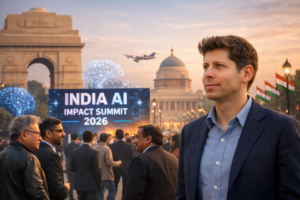
The global AI map is being redrawn, and its new epicenter, for one week in February 2026, will be New Delhi. The news of OpenAI CEO Sam Altman’s planned, low-key return to India isn’t just a diary entry for tech enthusiasts; it’s a strategic move in a complex game of geopolitical tech influence, market capture, and infrastructural ambition. While the India AI Impact Summit 2026 boasts a public roster of star CEOs, the real narrative is unfolding in the closed-door meetings and sideline events where the future of AI adoption is being negotiated.
Why India, Why Now? The Unspoken Stakes of the 2026 AI Summit
On the surface, the summit is a celebration. It’s India’s debutante ball on the world AI stage, showcasing its massive market, developer talent, and governmental ambition. Confirmed appearances by Nvidia’s Jensen Huang, Google’s Sundar Pichai, and Anthropic’s Dario Amodei, alongside Indian titan Mukesh Ambani, signal unanimous acknowledgment of India’s irreplaceable role.
But Altman’s separate, quieter planning is telling. It underscores a pivotal shift: India is no longer just a market for user acquisition; it’s a battleground for enterprise contracts, a laboratory for local AI solutions, and a critical test for sustainable infrastructure. The “cluster of events” by U.S. firms isn’t coincidental—it’s a coordinated siege on the world’s most populous democracy’s digital future.
Altman’s Agenda: The Three-Front Challenge for OpenAI in India
Sam Altman’s expected agenda reveals OpenAI’s specific pressures and opportunities:
- The Enterprise Bridge: OpenAI’s hiring spree in India across sales, deployment, and legal roles points to one goal: moving ChatGPT from consumer curiosity to enterprise backbone. Altman’s meetings with tech executives and founders will focus on embedding ChatGPT and its API into India’s vast banking, education, and media sectors. The challenge? Competing with Google and Microsoft’s deeply entrenched enterprise clouds and local partnerships, like Google-Jio and Perplexity-Airtel.
- Solving the Monetization Puzzle: India is ChatGPT’s largest download market but a conversion conundrum. The introduction of the sub-$5 ChatGPT Go plan was a direct response to this. Altman’s mission is to crack the code on converting massive, price-sensitive adoption into a sustainable revenue stream. This may involve showcasing new, India-specific use cases or partnership models that go beyond simple subscription bundling.
- The Infrastructure Dilemma: Sources hint at OpenAI exploring India for infrastructure expansion. This is the highest-stakes, most complex frontier. While Google and Microsoft have announced multi-billion-dollar data center investments, OpenAI would face the same brutal constraints: erratic power grids, high energy costs, and water scarcity for cooling. Building in India isn’t just about capital; it’s about navigating ecological and logistical tightropes. Altman’s conversations with government officials will likely probe for incentives and assurances on these fronts.
The Shadow Summit: Closed Doors and Sovereign AI Dreams
The real deal-making won’t happen on the main stage. Anthropic’s developer day in Bengaluru, Nvidia’s evening soirée, and OpenAI’s own VC-heavy event represent the shadow summit. Here, the focus is on winning the hearts and minds of India’s 5-million-strong developer community and its prolific startup ecosystem. The goal is to make their tools and models the default choice for the next generation of Indian AI startups.
Conversely, the Indian government is playing its own strategic game. The push for domestic startups to build “smaller models for local use cases” is a clear bid for AI sovereignty—a desire to reduce dependence on U.S.-based systems and their inherent cultural and regulatory biases. The government’s hope for $100 billion in investment from this summit is balanced by a quiet, long-term goal of fostering home-grown alternatives.
The Human Element: Beyond Billions and Bandwidth
Amidst the talk of downloads and data centers lies the human reality. AI’s impact in India will be profound and unique. It will shape a education system serving hundreds of millions, transform agricultural supply chains, and redefine a vast, informal economy. The discussions in New Delhi must grapple with questions beyond pure technology:
- How will AI models handle India’s staggering linguistic diversity beyond Hindi and English?
- What are the ethical frameworks for deploying AI in a society with deep socio-economic divides?
- Can AI infrastructure be built without exacerbating regional water and energy stresses?
The leaders converging in Delhi, Altman included, aren’t just selling products; they are, consciously or not, shaping the contours of Indian society for decades to come. The most insightful conversations may be those that acknowledge this immense responsibility alongside the commercial opportunity.
Conclusion: More Than a Visit, A Defining Moment
Sam Altman’s return to India is a single move in a much larger board. The India AI Impact Summit 2026 is a symbolic inflection point, marking the moment the global AI industry formally anointed India as its most critical future arena. For India, it’s a test of its ability to leverage its market size into strategic influence, investment, and technological self-reliance.
The outcomes won’t be clear in February 2026. They will unfold in the enterprise deals signed in Mumbai offices, the code written by developers in Hyderabad using Claude or OpenAI’s APIs, and the success or failure of India’s own sovereign AI models. One thing is certain: the conversations in the closed rooms of New Delhi will echo through the future of technology, making this summit far more than a meeting—it’s the drafting table for the next era of global AI.
You must be logged in to post a comment.