
Beyond the Forecast: How Delhi’s Clear Skies Set the Stage for a Cinematic Awakening
With Delhi enjoying a pleasant spell of mainly clear skies and temperatures hovering around 30°C—a welcome break from its usual extremes—the city is set to host its first International Film Festival of Delhi (IFFD) from March 25 to 31, transforming the capital into a vibrant cultural hub. Featuring over 140 films from 47 countries, free public screenings at venues ranging from Bharat Mandapam to outdoor locations and mobile units, masterclasses with icons like Manoj Bajpayee and Imtiaz Ali, and a restored 4K retrospective of Guru Dutt’s Pyaasa, the festival aims to democratize cinema and celebrate storytelling against the backdrop of the capital’s rare, comfortable late-March weather.
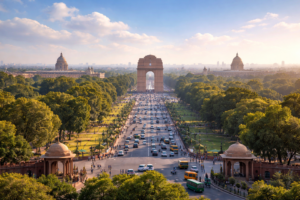
Beyond the Forecast: How Delhi’s Clear Skies Set the Stage for a Cinematic Awakening
As the early morning light filtered through a thin veil of clouds over the national capital on Sunday, there was a palpable sense of transition in the air. For the millions navigating the sprawling arteries of Delhi, it was a morning of pleasant contradictions. The India Meteorological Department (IMD) recorded a minimum temperature of 15.6 degrees Celsius—a slight nip in the air, settling 1.1 notches below the seasonal average. Yet, the forecast promised a different reality by afternoon: a mainly clear sky with the mercury climbing to a comfortable 30 degrees Celsius.
It is this very duality—the crisp chill of a Delhi morning yielding to the gentle warmth of a late-winter day—that sets the stage for what promises to be a landmark week for the city. While the weather charts predict partly cloudy conditions by Sunday evening, the cultural forecast for the coming days is anything but cloudy. Delhi is bracing for its first-ever International Film Festival (IFFD) 2026, a week-long extravaganza that aims to transform the capital’s already rich cultural landscape.
For residents waking up to a “moderate” Air Quality Index (AQI) of 154—a number that, while not perfect, is at least manageable for outdoor excursions—the timing of the festival feels almost serendipitous. The city, often bogged down by the extremes of summer heat or winter fog, finds itself in a narrow meteorological window where stepping out for a film screening or a workshop feels less like a chore and more like a luxury.
A City Ready for Its Close-Up
Delhi has always been a muse for filmmakers—from the narrow, politically charged lanes of Old Delhi to the sprawling, tree-lined avenues of Lutyens’ zone. It has been the backdrop for stories of love, loss, and resilience. Yet, ironically, the city has never hosted a film festival of this scale on its own turf, often playing second fiddle to Mumbai’s Bollywood-centric events or the cosmopolitan allure of international film hubs.
That narrative changes this week. From March 25 to 31, the International Film Festival of Delhi (IFFD) 2026 will attempt to democratize cinema in a way that mirrors the city’s own chaotic, inclusive spirit. With over 140 films from 47 countries, the festival isn’t just reserving its magic for the red carpets of Bharat Mandapam; it is taking the show to the streets.
Organized by the Delhi Tourism and Transportation Development Corporation (DTTDC) in association with the Delhi government, the festival’s most compelling promise is accessibility. In a city where the divide between the elite and the masses is often stark, IFFD is opting for a decentralized model. Screenings will be held not only in the plush comfort of PVR-INOX theatres but also at public venues, outdoor locations, and even mobile screening units.
This move to “widen access to cinema” is a significant shift. For the auto-rickshaw driver who parks near Connaught Place, or the student from Jamia Millia Islamia who dreams of direction, the chance to watch an Oscar-nominated film or a restored classic at a public venue breaks down the barriers that usually define film festivals as elitist gatherings. It recognizes that the love for storytelling in Delhi is not confined to auditoriums with expensive ticket prices; it thrives in the collective huddle around a television during a cricket match or the animated discussions at a university canteen.
The Legacy of Guru Dutt and the Language of Restoration
While the festival boasts a star-studded lineup—with figures like Vicky Kaushal, Hema Malini, and Rana Daggubati expected to grace the red carpet hosted by Arjun Kapoor and Nimrat Kaur—the true soul of the event lies in its curation. Specifically, the special retrospective marking the birth centenary of filmmaker Guru Dutt.
Dutt, often regarded as one of the greatest auteurs of Indian cinema, had a complicated relationship with the commercial film industry. His works, particularly Pyaasa (1957) and Kaagaz Ke Phool (1959), were deeply personal, melancholic explorations of artistic alienation in a materialistic world—themes that resonate profoundly in a city like Delhi, where ambition and anonymity collide daily.
The screening of a restored 4K version of Pyaasa is more than just a trip down memory lane; it is a statement about preservation. In an era of digital content churn, where films are consumed and discarded in the span of a weekend, the painstaking restoration of a black-and-white classic underscores the importance of film heritage. For young Delhiites, who might know Guru Dutt only as a name in trivia, the opportunity to see his masterpiece in 4K clarity on a big screen, surrounded by an audience, offers a chance to understand the roots of the cinematic language that influences the OTT series they binge-watch today.
Beyond the Screen: A Platform for Dialogue
A city that never truly sleeps, Delhi is as much about dialogue as it is about spectacle. Recognizing this, the IFFD has structured itself to be more than a passive viewing experience. The inclusion of masterclasses and “in-conversation” sessions with industry heavyweights like Manoj Bajpayee, Boman Irani, Imtiaz Ali, and Shekhar Kapur is a clever acknowledgment of the city’s intellectual appetite.
Delhi’s audience is notoriously discerning. Unlike the glamour-driven crowds of Mumbai, Delhi’s cinephiles are known for their sharp critiques and passionate debates. Having a masterclass with Manoj Bajpayee—an actor who rose to fame with the gritty Delhi-based crime drama Satya and has since become a national treasure—feels particularly poignant. It bridges the gap between the on-screen depiction of Delhi’s underbelly and the real-world aspirations of its actors and storytellers.
Furthermore, the industry platform, IFFD CineXchange, signals that the festival aims to have a tangible economic impact. By bringing together filmmakers, producers, distributors, and OTT platforms for curated labs and co-production markets, Delhi is positioning itself not just as a host, but as a facilitator of future art. In a post-pandemic world where the boundaries between theatrical release and streaming are blurring, such platforms are crucial for the business of cinema to thrive.
A Breath of Fresh Air
As the IMD predicts a mainly clear sky with the temperature hovering around 30 degrees Celsius, it’s hard to ignore the metaphor. Delhi, often suffocated by pollution and the relentless pace of life, is being offered a breath of fresh air—both literally and metaphorically. The moderate AQI of 154, while still a concern for health experts, is at least an invitation for residents to step out and engage with their city in a new way.
The timing of the festival also coincides with the end of the financial year, a period where the city usually feels the stress of deadlines and targets. To have a week dedicated to art, where entry to screenings is free (subject to prior booking), serves as a cultural reset. It invites the tired corporate worker, the curious homemaker, and the aspiring artist to reclaim public spaces for art and leisure.
Moreover, the selection of Sirat, the Oscar-nominated film, as the opening gala screening at Bharat Mandapam is a nod to global recognition. It suggests that while Delhi is hosting a local festival, its ambitions are international. The presence of restored classics, animation, documentaries, and selections from partner festivals like the Singapore International Film Festival ensures that the menu is diverse enough to cater to every palate.
The Road Ahead
As the city prepares to navigate the week ahead, the synergy between the weather and the event is hard to ignore. Sunday’s cloudy morning gave way to the promise of clear skies. Similarly, Delhi’s cultural scene has often been overshadowed by its political and bureaucratic identity. With the IFFD, there is a sense that the city is finally stepping into the light, claiming its space as a cultural capital.
For the Delhi Tourism department, this is a strategic move to rebrand the city. While the Red Fort, India Gate, and Chandni Chowk will always draw tourists, the addition of a high-profile cultural calendar—complete with film screenings, workshops, and red carpets—adds a new dimension to the city’s identity. It invites visitors to see Delhi not just as a historical monument, but as a living, breathing entity that creates and consumes cutting-edge art.
As the sun sets on Sunday and the partly cloudy conditions take over, the city will be gearing up for the red carpet ceremony. The weather might remain pleasant, the air moderate, but the excitement is set to be electric.
In a metropolis often defined by its extremes—extreme heat, extreme cold, extreme politics—this last week of March offers a rare equilibrium. The temperature is balanced. The air is manageable. And for the first time, the lens of international cinema is turning toward Delhi not just as a location, but as a host. For the residents, it is a reminder that amidst the daily grind, the city has the capacity to pause, look at a screen, and dream.
Whether it is watching the restored tears of Guru Dutt’s Pyaasa fall in 4K, or catching a documentary from Singapore under the open sky, the week ahead promises that in Delhi, the story is finally shifting from the headlines to the heart.
You must be logged in to post a comment.