
Beyond the Forecast: Decoding Tamil Nadu’s Final Monsoon Whisper and Its Ripple Effect on Life, Land, and Livelihood
The final spell of Tamil Nadu’s northeast monsoon, predicted to bring light to moderate rain to coastal and northern regions until December 28 with a possible follow-up around December 30, represents more than just a weather event—it is a critical transitional period with wide-ranging impacts. This late-December precipitation, driven by strengthening easterly winds, coincides with significantly cooler temperatures and frost warnings in hill areas, creating a complex scenario for agriculture where it can both benefit late sowing and threaten standing crops near harvest. For urban residents, it brings pleasant mornings and practical adjustments, while ecologically, it provides vital soil moisture before the dry season. Occurring against the backdrop of a near-normal but variable monsoon season, this “parting gift” underscores the increasing unpredictability of weather patterns, demanding adaptive responses from farmers, city planners, and communities as they navigate the nuanced intersection of climate, livelihood, and daily life.
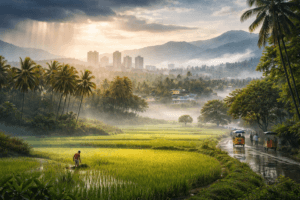
Beyond the Forecast: Decoding Tamil Nadu’s Final Monsoon Whisper and Its Ripple Effect on Life, Land, and Livelihood
As the calendar year draws to a close, so too does a vital meteorological chapter for Tamil Nadu: the Northeast Monsoon. The latest update from the Regional Meteorological Centre (RMC) is more than a simple weather bulletin; it’s a narrative about transition, resilience, and the subtle interplay between climate and culture. Predicting light to moderate showers for coastal and northern regions until December 28, with a potential encore around December 30, this “final spell” is a nuanced event with layers of impact far beyond the rainfall figures. This is the monsoon’s parting gift—or perhaps its last reminder—before the full embrace of the dry season.
The Science of the Swansong: Why This “Final Spell” Matters
Meteorologically, this late-December activity is a tale of converging forces. The strengthening easterly winds, moisture-laden from the Bay of Bengal, are making a final push against the subcontinent. As they interact with localized atmospheric conditions and the residual heat from the land, they trigger these sporadic, often mild, showers. It’s a delicate balance, a last gasp of the monsoon system before the larger-scale wind patterns shift definitively.
The concurrent drop in minimum temperatures—by 2-3°C below normal in areas like Salem, Namakkal, and the hills—is intrinsically linked. The clear, dry air masses following rain clouds allow for uninhibited “night-time radiation,” where the day’s heat escapes rapidly into the atmosphere. This explains the crisp chill, the misty Chennai mornings, and the significant frost warnings for horticultural hubs like Kodaikanal and the Nilgiris, where the mercury in Udhagamandalam recently dipped to a stark 5.4°C.
This period encapsulates the “neither here nor there” character of Tamil Nadu’s winter: a blend of damp earth from sporadic rain and a sharp, descending cold, especially in the interior and elevated regions.
The Agricultural Calculus: A Blessing or a Complication?
For the agrarian community, this weather update demands careful calculus. The northeast monsoon, or Thalavarī, is the lifeline for the Samba crop cycle. With a seasonal rainfall tally of 42.7 cm—deemed “normal” though slightly below average—the primary water reservoirs have been replenished. However, these final, light showers present a dual-edged sword.
For coastal districts with standing crops nearing harvest, untimely moisture can invite fungal blights or complicate the drying process. Farmers are now engaged in a delicate dance with the clouds, potentially accelerating harvests or applying protective coatings. Conversely, for farmers preparing land for late winter or summer crops, this rain is a boon, reducing dependency on groundwater for initial ploughing and sowing. The frost warnings in the Nilgiris are critical alerts for tea, coffee, and vegetable growers; a single night of ground frost can damage tender leaves and buds, impacting yield quality and the livelihoods of small-holder planters. This isn’t just weather; it’s a direct input into the annual balance sheet of rural households.
Urban Rhythms and the Human Experience
In Chennai and other coastal cities, the forecast translates into a sensory and practical shift. The predicted “cool, pleasant mornings with mist or haze” transform the urban commute. The usual blanket of humid heat is replaced by a gentle, salty breeze carrying the petrichor of sporadic, light rain. This weather influences daily rituals: morning walks stretch longer, evening outings become more popular, and the consumption of hot, local beverages like filter kaapi sees a subtle spike.
However, the “chance of light rain” also keeps municipal corporations on alert. After the intense memories of past floods, even moderate forecasts trigger precautionary checks on stormwater drains and water-logging hotspots. It’s a testament to a city’s learned weather anxiety. For residents, it’s a time of layered clothing—a shawl for the misty morning, an umbrella in the bag, and lighter cotton for the afternoon sun—a sartorial response to the season’s caprice.
Ecological Interlude: A Drink for the Parched Earth
Beyond farms and cities, this final precipitation plays a subtle ecological role. It provides a crucial top-up for soil moisture, aiding the survival of non-irrigated vegetation and the delicate root systems of trees as they enter a drier phase. The showers help settle dust and cleanse the urban air, temporarily improving air quality indices. For wildlife in the scrub forests and coastal ecosystems, these pockets of moisture are vital water sources. The phenomenon underscores how even declining monsoon phases are woven into the region’s ecological balance.
The Long View: Normalcy, Variability, and Climate Questions
The RMC’s note that the monsoon officially concludes on December 31, but that rain can spill into January, is a crucial acknowledgement of increasing variability. Classifying this year’s monsoon as “normal” based on near-average totals can mask local disparities—some districts may have been excessively wet while others remained dry. This final, sputtering spell epitomizes that unevenness.
This pattern aligns with broader climate observations of changing monsoon behaviors: not necessarily less rain, but altered intensity and timing. The “final spells” are becoming more erratic, and the cold spells more pronounced, as seen in the plummeting plains temperatures. This isn’t an anomaly but part of a new pattern that farmers, city planners, and disaster management teams must increasingly factor into their long-term planning.
Living with the Monsoon’s Echo
The true human insight from this weather update lies in the adaptive rhythm of life in Tamil Nadu. The hill station vendor storing extra blankets, the Chennai auto-rickshaw driver keeping his rain cover handy, the Nilgiris farmer deploying frost-protection nets, the weather-sensitive asthmatic in Chennai carrying an inhaler more diligently due to the mist—all are reading the same forecast and writing their own unique response.
This final monsoon spell is a gentle reminder of our embeddedness in natural cycles. It’s a time for grounded reflection, for enjoying the rare coolness, and for preparing for the arid months ahead. The rain may be light, and the season nearly over, but its implications water the roots of countless daily decisions. It’s not merely about whether one needs an umbrella tomorrow, but about how an entire region navigates the delicate, ongoing dialogue between the sky and the earth beneath its feet. As the monsoon whispers its farewell, it leaves behind a landscape, a people, and a culture subtly altered, waiting for the next turn in the eternal weather cycle.
You must be logged in to post a comment.