
Beyond the Fog: Understanding Bihar’s Weather Crisis and Its Human Toll
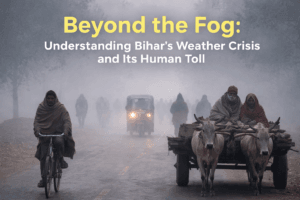
Beyond the Fog: Understanding Bihar’s Weather Crisis and Its Human Toll
From Disrupted Lives to Health Hazards: A Deep Dive into the State’s Chilly Blanket
As dawn broke over Bihar this past week, a familiar yet disquieting scene unfolded. A dense, milky-white fog descended, swallowing entire towns and reducing the world to a mere 20 metres in places like Bagaha and Madhubani. This isn’t just a weather event; it’s a phenomenon that brings life to a near standstill, posing silent threats to health, safety, and daily survival. While the India Meteorological Department (IMD) has issued alerts for 12 districts and warns of a 2–4°C drop in minimum temperatures, the real story lies beneath the surface of this cold blanket. This persistent fog is more than an inconvenience—it is a complex interplay of climate, geography, and pollution that traps millions in a hazardous, invisible chamber, with consequences reaching far beyond chilly mornings and poor visibility.
The Science of the Shroud: Why Fog Grips Bihar
The current fog engulfing Bihar is a product of specific atmospheric conditions. Unlike active weather systems that bring rain, this phenomenon occurs in stable environments. Meteorologists attribute it to a combination of north-westerly cold winds and moisture in the lower atmosphere. With no active western disturbance—a storm system originating from the Mediterranean that typically brings precipitation to North India—the skies remain largely dry, allowing dense fog to form during the long, cold nights.
This situation is part of a larger pattern affecting the entire Indo-Gangetic plains. From February 3 onward, the IMD forecasted dense to very dense fog across northern, central, and eastern India, with states like Uttar Pradesh, Haryana, and Madhya Pradesh sharing Bihar’s plight. A fresh western disturbance is, however, active over the western Himalayas, bringing isolated rain and snow to Jammu & Kashmir, Ladakh, and Himachal Pradesh. The cold winds descending from these snow-laden hills sweep across the plains, further chilling the air and contributing to the foggy conditions experienced from Punjab to Bihar.
District-by-District: A Landscape of Reduced Visibility
The impact of the fog is not uniform across Bihar. Northern and border districts are typically hardest hit due to geographical and meteorological factors. The IMD’s alert highlights specific concerns for these regions.
The following table summarizes the key affected areas and their conditions:
| District/Region | Reported Conditions | Key Advisory/Impact |
| Bagaha & Madhubani | Visibility as low as 20 metres | Severe travel disruption; extreme caution required. |
| Northern Bihar (Border Areas) | Persistent dense fog expected | Night and morning travel most affected. |
| 12 Alerted Districts (inc. West/East Champaran, Sitamarhi, etc.) | Dense fog alert in effect | Reduced visibility during early morning & late evening. |
| Patna & Southern Districts | Light to moderate fog; clearer daytime weather | Yellow alert for fog; chill felt during mornings/nights. |
| Bhagalpur | Recorded state’s lowest minimum temp. at 9°C | Highlighted as the coldest district in recent report. |
While Patna experiences a “normal winter chill,” with temperatures between 10–12°C at night and 22–24°C during the day, the real danger lies in the north. For residents of the alerted districts, the world shrinks every morning. Commutes become perilous journeys, economic activities slow, and the simple act of moving outdoors requires significant precaution.
A Dual Threat: When Fog Meets a Toxic Atmosphere
The health implications of this fog extend far beyond the chill. Doctors across Bihar are issuing urgent advisories, noting that pollutants become trapped in the stagnant air during foggy conditions. This toxic mix can severely exacerbate respiratory illnesses like asthma and bronchitis, leading to increased complaints of eye irritation, coughing, and breathing difficulties.
This public health warning points to a more sinister underlying crisis: Bihar’s dangerously polluted air. Patna consistently ranks among the most polluted cities in India during winter. As of February 6, the PM2.5 concentration in Patna was 9.4 times the World Health Organization’s annual guideline value, with an air quality index (AQI) deemed “Unhealthy for Sensitive Groups”. The fog acts as a lid, preventing the dispersal of these deadly particulates.
Health Advisory: Pulmonologists warn that prolonged exposure to polluted fog is particularly dangerous. Dr. Tarkeshwar Tiwari, a senior pulmonologist, links Bihar’s intense air and water pollution to a troubling rise in lung cancer among non-smokers. “Adenocarcinoma is now the most common form of lung cancer among non-smokers,” he states, highlighting a direct consequence of the environmental burden. Vulnerable groups—including children, the elderly, pregnant women, and those with pre-existing conditions—are advised to limit morning outdoor exposure, wear N95 masks if going out is essential, and seek medical attention for persistent respiratory issues.
Life in the Slow Lane: Transportation and Daily Grind
The practical disruption caused by dense fog is immense. The IMD has consistently advised commuters and transport authorities to exercise extreme caution. Drivers are urged to use fog lights, maintain low speeds, and avoid high-speed travel altogether during low-visibility windows. For a state where a significant population relies on roadways, from daily wage laborers to students, these conditions mean delayed starts, missed appointments, and heightened anxiety.
The impact isn’t limited to roads. While the current IMD forecasts focus on land travel, similar weather patterns have previously disrupted aviation and marine activities in other parts of the country. The persistence of such conditions highlights the vulnerability of India’s transport infrastructure to regional weather phenomena.
The Road Ahead: Forecast and Coping Mechanisms
The immediate forecast offers little relief. The IMD predicts fog will continue in northern Bihar for the next two to three days, with minimum temperatures potentially falling further before stabilizing. Southern districts may see clearer weather with bright sunshine during the day, but the cold nip in the morning and evening will persist.
Looking beyond the current spell, a gradual rise in temperatures is expected. In fact, a previous IMD bulletin suggested “pleasant days are ahead,” with maximum temperatures hovering between 20°C and 26°C in the coming week as westerly winds slow down. However, the cycle of winter fog is a recurring reality.
Coping requires a combination of public preparedness and systemic action. On an individual level, adhering to travel advisories, wearing masks, and managing health are crucial. Systemically, the link between fog and pollution cannot be ignored. Long-term solutions require addressing the root causes of air pollution—be it agricultural stubble burning, industrial emissions, or construction dust—to ensure that when the fog descends, it is not a toxic shroud.
The dense fog over Bihar is a stark reminder of how climate and environment converge to shape human life. It is a weather event that tests resilience, exposes systemic vulnerabilities, and demands a response that looks beyond the immediate chill to the clearer, healthier horizon its people deserve.
You must be logged in to post a comment.