
Beyond the Correction: What a Name Change Reveals About India’s Fight Against a Rare Brain Clot
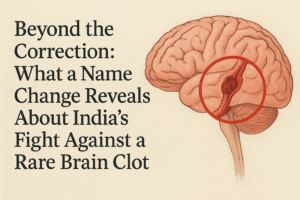
Beyond the Correction: What a Name Change Reveals About India’s Fight Against a Rare Brain Clot
A recent correction notice in the prestigious journal Scientific Reports might seem, at first glance, like a minor administrative fix. The article, “Epidemiology and risk factors for cerebral venous sinus thrombosis: insights from leading centres in the i-RegVeD registry, India,” published in November 2025, contained an error in a researcher’s name and affiliation. “Narendra Kumar” was corrected to Narender Kumar, and his department was changed from Radiology and Oncology to Hematology.
Yet, this small correction is a tiny window into a much larger, critically important story. It highlights the monumental, collaborative effort underway across India to understand a complex and often devastating condition: Cerebral Venous Sinus Thrombosis (CVST). The very existence of the i-RegVeD registry and this dedicated study signals a pivotal shift in how the Indian medical community is tackling rare diseases through data, collaboration, and specialized expertise.
Decoding the Headline: What is Cerebral Venous Sinus Thrombosis (CVST)?
To appreciate the significance of this research, one must first understand CVST. Unlike the more common arterial strokes, which occur when a blood clot blocks an artery in the brain, CVST is a rare form of stroke that happens when a blood clot forms in the brain’s venous sinuses—the vital channels that drain deoxygenated blood away from the brain.
When this drainage system is blocked, blood backs up in the brain. This can lead to a cascade of dangerous events:
- Increased Intracranial Pressure: Leaking fluid from the blood vessels can cause cerebral edema (brain swelling), leading to severe headaches, visual disturbances, and confusion.
- Hemorrhage: The increased pressure can cause veins to rupture, leading to bleeding in the brain.
- Neurological Damage: Depending on the area affected, CVST can cause seizures, focal weaknesses, speech difficulties, and even coma or death.
The insidious nature of CVST lies in its non-specific symptoms. A persistent, throbbing headache is the most common presenting sign, often misdiagnosed as a migraine or tension headache. This diagnostic challenge makes large-scale studies like the one from the i-RegVeD registry invaluable.
The i-RegVeD Registry: A Nationwide Collaborative Powerhouse
The correction notice, by listing the extensive author affiliations, inadvertently maps out the ambitious scale of the i-RegVeD registry. This is not a single-institution study. It is a concerted, pan-Indian effort that brings together leading minds from a diverse range of specialties and geographies:
- From AIIMS in New Delhi and Guwahati to NIMHANS in Bengaluru.
- From the Postgraduate Institute in Chandigarh to medical colleges in Chennai, Shillong, and Srinagar.
This geographic diversity is not just for show. It is the core strength of the registry. India is a subcontinent of vast genetic, dietary, and environmental diversity. A risk factor prevalent in Punjab may not be the same as one in Tamil Nadu or Meghalaya. By pooling data from these leading centers, the i-RegVeD registry can capture a truly national picture of CVST, identifying patterns that would be invisible to a single hospital.
The correction itself underscores this collaborative, multi-specialty approach. The initial misattribution of Dr. Narender Kumar to Radiology and Oncology, later corrected to Hematology, is telling. It highlights that CVST is not solely a neurological or radiological problem. Hematologists—experts in blood and clotting disorders—are central to the team. They investigate the underlying “why”: the prothrombotic states, genetic predispositions (like Factor V Leiden or Prothrombin gene mutation), and acquired conditions that make blood more likely to clot.
The Critical Insights: What We’re Learning About CVST in India
While the full findings of the original Scientific Reports article are the primary source, the context of this registry allows us to explore the key risk factors and epidemiological questions it was designed to address.
- The Demographic Puzzle:CVST disproportionately affects young adults and middle-aged individuals, particularly women. This stands in stark contrast to arterial strokes, which are more common in the elderly. Understanding this demographic is crucial for early suspicion and diagnosis.
- The Risk Factor Landscape:The i-RegVeD study likely delves deep into the unique constellation of risk factors in the Indian population, which can be broadly categorized:
- Gender-Specific Factors in Women: A significant driver of CVST in young women is the hormonal influence of oral contraceptive pills and the hypercoagulable state associated with pregnancy and the postpartum period. This makes obstetric and gynecological history a critical part of the diagnostic workup.
- Infections and Inflammation: In a country where infections are still prevalent, conditions like chronic otitis media (ear infections), sinusitis, meningitis, and systemic infections like sepsis can trigger local inflammation and lead to CVST.
- Thrombophilias (Inherited Clotting Disorders): This is where the expertise of hematologists like Dr. Narender Kumar becomes paramount. The registry data can reveal the prevalence of inherited clotting disorders in Indian CVST patients, which has significant implications for long-term management and family screening.
- Lifestyle and Dehydration: Especially in India’s harsh climate, severe dehydration—from inadequate fluid intake, diarrhea, or other causes—is a known, preventable risk factor for CVST.
- The Post-COVID-19 Context: A major, global focus on CVST has emerged since the COVID-19 pandemic, where the virus itself and, in extremely rare cases, certain vaccines, were linked to an increased risk of CVST via an immune-mediated mechanism. The i-RegVeD registry is uniquely positioned to track the long-term epidemiological trends of CVST in this new era.
Why This Correction and This Research Truly Matter
For the average person, this might seem like an arcane detail. But for the medical community and for patients, it represents something profound: rigor and accountability.
- The Humanization of Science: Correcting a researcher’s name is a act of respect. It ensures that Dr. Narender Kumar receives proper credit for his contribution in the field of Hematology, accurately reflecting his role in understanding the blood-based mechanisms of CVST. This integrity is the bedrock of trustworthy science.
- A Model for Future Research: The i-RegVeD registry serves as a blueprint for how to study rare diseases in large, diverse countries. By leveraging a networked model, India is building a powerful domestic evidence base, reducing its reliance on data from Western populations that may not be fully applicable.
- Direct Impact on Patient Care: The ultimate goal of this registry is to save lives and improve outcomes. By identifying regional risk factors and establishing a “typical” patient profile for India, the findings can:
- Speed up Diagnosis: Educate physicians across the country to consider CVST when a young woman presents with a persistent headache post-pregnancy, or when a patient with a chronic ear infection develops neurological symptoms.
- Guide Treatment: Help standardize and optimize treatment protocols, which typically involve anticoagulation therapy, across participating centers.
- Inform Public Health: Shape awareness campaigns about the importance of hydration and the recognition of warning signs.
Conclusion: A Small Edit, A Giant Leap for Collaborative Medicine
The correction to the Scientific Reports article is far more than a footnote. It is a testament to the meticulous, multi-disciplinary, and nationwide endeavor that is the i-RegVeD registry. The change from “Narendra” to “Narender” and from “Radiology” to “Hematology” symbolizes a commitment to getting the details right—because in medicine, the details are everything.
As this registry continues to grow and publish its findings, it promises to demystify Cerebral Venous Sinus Thrombosis, turning it from a often-missed diagnostic mystery into a condition that can be swiftly identified and effectively treated. For the people of India, this means that no matter where they are—in a metro like Delhi or a remote town in the Northeast—the collective expertise of the nation’s best medical minds is working to protect them from this rare but serious threat.
You must be logged in to post a comment.