
Beyond the Chill: Unpacking Delhi’s Cold Snap and Its Cascading Impact on Life, Health, and Livelihood
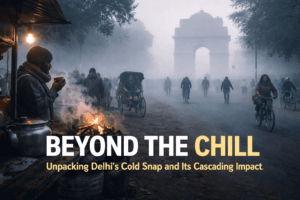
Beyond the Chill: Unpacking Delhi’s Cold Snap and Its Cascading Impact on Life, Health, and Livelihood
Delhi’s winter is a phenomenon that transcends mere temperature readings. It is a visceral experience, a cultural interlude, and for many, a period of significant hardship. The recent recording of a minimum temperature of 4.4 degrees Celsius, nearly three-and-a-half degrees below the seasonal average, is not just a statistic from the India Meteorological Department (IMD). It is the starting point of a complex chain reaction that touches every facet of life in the National Capital Region (NCR). This deep dive goes beyond the headline to explore the multifaceted reality of a city in the grip of a cold wave, poised between a brief respite and the promise of another frigid spell.
The Anatomy of a Winter Morning: More Than Just a Number
Picture Saturday morning in the capital. The headline figure of 4.4°C, while stark, doesn’t capture the full sensory experience. Dense fog, a silent companion to the cold, envelops the city, reducing visibility to a few hundred meters. This isn’t just picturesque mist; it’s a disruptive force. Flight schedules at Indira Gandhi International Airport become tentative, a cascade of delays and cancellations rippling through travel plans. On the roads, the familiar chaos is tempered by extreme caution. Headlights pierce the grey gloom as commuters navigate at a crawl, turning routine journeys into tests of patience. The cold is a physical presence, biting through layers of wool, prompting roadside chai wallahs to do brisk business as people clutch steaming kulhads for warmth that goes beyond the physical.
Paradoxically, the day offered a significant thermal contrast, with the maximum temperature soaring to 24.6°C, five notches above normal. This 20-degree swing within hours is a classic feature of Delhi’s dry winter, creating a daily rhythm of shivering mornings and pleasantly warm afternoons. It demands a wardrobe strategy of its own—layers that can be shed and reassembled as the sun journeys across the sky.
The Intertwined Crisis: When Cold Air Traps More Than Just the Cold
The meteorological conditions creating this cold spell are the very same ones exacerbating one of Delhi’s most persistent challenges: air pollution. As Mahesh Palawat of Skymet Weather noted, the coming days might see light rainfall, offering a transient cleanse, but the overarching pattern is one of a “stable atmosphere” and “slow wind speed.” In simpler terms, a layer of cold, dense air acts like a lid over the city—a phenomenon known as temperature inversion.
This lid traps pollutants close to the ground. The data tells a grim story: the 24-hour average Air Quality Index (AQI) began the day at 354 (‘very poor’) and deteriorated to 416 (‘severe’) by evening. This isn’t coincidental. The cold, still air prevents the dispersal of emissions from vehicles, industries, and winter-specific sources like biomass burning for warmth. The Commission for Air Quality Management (CAQM) has been forced to re-invoke Stage 3 of the Graded Response Action Plan (GRAP), a clear indicator of the crisis.
The human impact of this dual assault of cold and polluted air is severe. Hospitals and clinics report a surge in patients with respiratory distress—exacerbated asthma, bronchitis, and chronic obstructive pulmonary disease (COPD). The cold air alone can constrict airways, but when it’s laden with particulate matter (PM2.5 and PM10), the effect is dangerously multiplicative. For the elderly, the homeless, and those with pre-existing conditions, this period becomes a direct threat to well-being.
The Forecast: A Temporary Thaw Before Another Icy Grasp
The weather narrative for Delhi is one of oscillation. Private agencies like Skymet and the IMD predict a gradual rise in minimum temperatures from January 17-20. This moderation, potentially aided by light winter rain, will be a welcome relief. It may slightly improve air quality by “washing” some pollutants away and could disrupt the inversion layer.
However, this respite is forecast to be short-lived. A second cold spell is expected between January 23 and 26, with temperatures dipping once more. This pattern of waves—cold, moderate, cold again—is typical for January, a month where western disturbances (weather systems originating from the Mediterranean) and northerly winds from the Himalayas battle for dominance over North India’s climate. For citizens, this means preparedness cannot lapse. The break in the cold is not the end of winter; it’s merely an interlude.
Life at Ground Zero: The Human and Economic Ripple Effects
The implications of such weather extend far beyond discomfort:
- For the Vulnerable: The city’s homeless population faces a direct battle for survival. Night shelters see increased demand, but outreach remains a critical challenge. For daily wage laborers—construction workers, street vendors, rickshaw pullers—the cold mornings mean delayed starts, reduced working hours, and a direct hit on already precarious incomes.
- For Agriculture: In the surrounding NCR regions, the cold wave and fog can damage key Rabi season crops like mustard and vegetables, potentially impacting yields and market prices in the weeks to come.
- For Infrastructure: Dense fog disrupts the entire transportation network—road, rail, and air. The economic cost of these delays, in terms of lost productivity, logistics nightmares, and fuel wastage, is immense.
- The Cultural Winter: Conversely, for some, this is the quintessential Delhi winter. It’s the season for picnics in Lodhi Garden under the afternoon sun, for street food like gajar ka halwa and spicy aloo chaat, and for the social life that moves to sun-drenched balconies and cafes. The cold, in this view, defines a season of distinct character.
Navigating the Dual Challenge: Practical Insights for Residents
Given this reality, how does one navigate the weeks ahead intelligently?
- Health First: Limit early morning and late evening outdoor exposure when cold and pollution peak. If exercise is essential, shift routines to late morning. Well-fitted N95/KN95 masks remain crucial protection against pollutants, not just pathogens.
- Monitor Responsibly: Keep an eye on both the temperature forecast and the real-time AQI. Apps from SAFAR-India and others provide localized data to guide daily activities, like when to ventilate your home (typically mid-day when AQI and cold are relatively lower).
- Support Systems: This is a time for community awareness. Checking on elderly neighbors, supporting NGOs that distribute blankets, and being mindful of service staff who work outdoors are small acts with significant impact.
- Long-Term Lens: The recurring pattern underscores the need for sustained, year-round action on pollution—transition to cleaner energy, robust public transport, and green infrastructure—to ensure that every winter is not a public health emergency.
Conclusion: A Season of Resilience
Delhi’s record of 4.4°C is more than a data point; it is a snapshot of a city grappling with a complex environmental reality. The cold wave, with its attendant fog and trapped pollution, tests infrastructure, highlights inequality, and challenges the resilience of every resident. The forecast of a fleeting warm-up followed by another cold spell is a metaphor for the larger climate challenges we face—temporary improvements must not breed complacency.
As the sun struggles to pierce the winter fog, it illuminates a city that is, as always, vibrant and enduring. Understanding the depth of the season’s impact—from the meteorological mechanisms to the chai seller’s stall—is the first step toward not just enduring the winter, but navigating it with empathy, preparedness, and a collective drive for a healthier, more sustainable urban future. The true measure of Delhi’s winter is not found on a thermometer, but in the resilience of its people and the wisdom of its response.
You must be logged in to post a comment.