
Beyond the Chill: How Kolkata’s Coldest Morning at 14.5°C Weaves Into the City’s Winter Tapestry
Kolkata experienced its coldest morning of the season on Saturday, with temperatures plunging to 14.5 degrees Celsius, a dip 2.1 degrees below normal, as the India Meteorological Department forecasted a further decline across Gangetic West Bengal within 24 hours. This sharp cold wave, accompanied by evening mist and fog, signals a profound seasonal shift in the city, transforming its rhythm as residents embrace layered clothing, heartier cuisine, and sun-seeking rituals.
Beyond the meteorological data, this chill represents a brief, cherished interlude in Kolkata’s climate—a time of cozy street-side tea, vibrant outdoor life in the daytime warmth, and a unique, reflective vitality that defines the city’s transient yet deeply cultural winter experience.
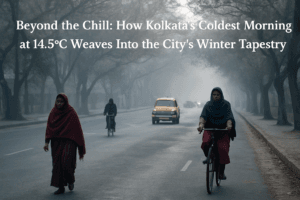
Beyond the Chill: How Kolkata’s Coldest Morning at 14.5°C Weaves Into the City’s Winter Tapestry
As dawn broke over the Hooghly River this past Saturday, a familiar yet intensified stillness settled over Kolkata. The iconic Howrah Bridge, usually a vibrating artery of ceaseless activity, stood draped in a gentle haze as pedestrians, wrapped in mufflers and sweaters, walked a little quicker. The reading at the Alipore observatory told the tale: 14.5 degrees Celsius. This wasn’t just another cool December morning; it was the season’s coldest, marking a definitive entry into the heart of a Kolkata winter—a season as much a cultural phenomenon as a meteorological event.
This dip, 2.1 degrees below the normal minimum, as reported by the India Meteorological Department (IMD), is more than a statistic. It is a sensory shift that the city, often synonymous with humid summers, anticipates with a quiet relish. The IMD’s forecast of a further drop in the next 24 hours across Gangetic West Bengal isn’t merely a weather bulletin; it’s a cue for the city to change its rhythm, its attire, and even its cuisine.
The Science Behind the Shiver
The cold wave conditions over Gangetic West Bengal are typically a downstream effect of larger atmospheric dramas playing out in the north. Western disturbances, coupled with northwesterly winds sweeping down from the snow-clad Himalayas, bring dry, cold air into the Indo-Gangetic plain. With clear skies and calm winds at night, the earth radiates heat back into the atmosphere rapidly, leading to a significant drop in minimum temperatures. The “misty and foggy conditions” predicted for the evenings are a classic winter signature here, where moisture from the river and the land condenses in the cold air, softening the city’s edges and blurring its colonial facades into hauntingly beautiful silhouettes.
This year’ pattern feels particularly sharp. While 14.5°C might seem mild to residents of northern India, for Kolkata, it represents a tangible crispness. The city’s infrastructure and lifestyle are built around heat and monsoon; the winter cold, while pleasant, is a brief visitor that demands adaptation.
A City Transformed: The Human Rhythm of Winter
Kolkata’s relationship with winter is deeply poetic and practical. The season transforms public life:
- The Street as a Sunroom: By mid-morning, as the sun climbs to a projected high of around 26°C, a beautiful inversion occurs. The same streets that were deserted in the early chill become bustling sunrooms. Park benches, maidans (open fields), and the steps of heritage buildings are occupied by people soaking in the gentle warmth—students revising, friends chatting, the elderly reading newspapers. This daily migration to sunlit spots is a cherished urban ritual.
- A Culinary Shift: The chill triggers a change in the city’s palate. Street vendors see a surge in demand for ‘kadak’ chai (strong tea), often served in earthy kulhads (clay cups). Evening snacks shift from cold drinks to ghugni (spicy pea curry), muri (puffed rice) with mustard oil, and roasted peanuts. In homes, the planning for lunch begins to feature richer, heartier dishes like shukto followed by kosha mangsho (slow-cooked mutton), with seasonal produce like cauliflower, peas, and carrots taking center stage.
- The Layered Aesthetic: Kolkata’s winter fashion is an eclectic, pragmatic display. It’s a time when classic woolen shawls and sweaters coexist with modern puffer jackets. The iconic Kashmiri shawl sellers find their business peaking, while old trunks are opened to air out heavy razai (quilts). This dressing up is not just about warmth; it’s a celebration of the brief period when one can layer clothing without discomfort.
Navigating the Dip: Comfort and Caution
For residents and visitors, the forecasted further dip calls for a mindful approach to enjoy the season fully and safely.
- Embrace the Morning Mist: The foggy mornings, while potentially delaying flights and traffic, offer a unique chance to see the city in a new light. Early morning walks along the Princep Ghat or a tram ride through the misty lanes of north Kolkata can be magical experiences.
- The Sun is Your Ally: Plan outdoor activities between 10 AM and 4 PM to make the most of the pleasant daytime temperatures. This is the perfect weather for exploring the Indian Museum, the Victoria Memorial gardens, or taking a river cruise.
- Health First: The sharp contrast between day and night temperatures is a common trigger for colds, coughs, and aggravated respiratory issues. Dressing in easily adjustable layers is key. The elderly and children need extra care, ensuring they are adequately covered in the evenings when the mist and chill descend rapidly.
- Home Comforts: Traditional practices like sealing drafts from windows, using humidifiers to counter dry cold air, and sunning blankets during the day remain effective ways to keep homes cozy.
Winter’s Brief Embrace: A Reflective Moment
Unlike the prolonged winters of the north, Kolkata’s cold spell is fleeting, often lasting from late December to late January. This transience makes it all the more precious. It is a time for adda (long, leisurely conversations) over endless cups of tea, for literary festivals in open grounds, and for weddings under canopies without fear of sweat or rain.
The IMD’s report of the coldest morning is, in essence, a starting pistol for this brief, vibrant season. It’s a reminder that in the midst of the city’s famed chaos and warmth, there are these few weeks of crisp air and golden sunlight that slow time down just a little. The cold may dip further, as predicted, but for Kolkatans, it only deepens the charm of their singular winter—a time not of hibernation, but of a different, more reflective kind of vitality.
As the city bundles up, it doesn’t shut down; it transitions. The cold morning at 14.5°C isn’t just a record on a meteorologist’s chart; it’s the first full verse in Kolkata’s beloved winter poem, read aloud in the rustle of wool, the steam from a tea stall, and the golden haze of a sun struggling to pierce the afternoon fog over the Howrah Bridge.
You must be logged in to post a comment.