
Beyond the Chill: Decoding North India’s Triple Weather Threat and Its Real-World Impact
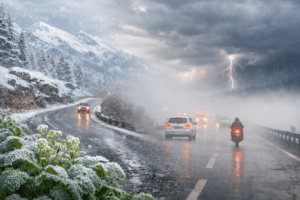
Beyond the Chill: Decoding North India’s Triple Weather Threat and Its Real-World Impact
As the sun struggles to pierce the thick, milky blanket over the northern plains this morning, millions are stepping into a day defined not just by cold, but by a complex meteorological drama. The India Meteorological Department’s (IMD) latest bulletin isn’t just a routine forecast; it’s a stark map of intersecting weather phenomena conspiring to test the resilience of daily life across a vast swathe of the country. This isn’t merely a “cold day.” It’s a synchronized dance of a lingering cold wave, pervasive dense fog, and an incoming storm system—a trifecta that demands a deeper understanding beyond the basic “wrap up warm” advisory.
The Silent Adversary: Cold Wave and the Invisible Frost
The term “cold wave” often loses its bite in repetition, but its current manifestation is particularly acute. In isolated pockets of Punjab, Haryana, and the National Capital Region, night temperatures are plunging to levels where the cold actively seeps into infrastructure and physiology. This isn’t just discomfort; it’s a public health concern, especially for vulnerable populations. The cold wave tightens its grip through radiative cooling—clear nights allowing ground heat to escape unimpeded into the atmosphere. But there’s a subtler, more hazardous player in the Himalayan foothills of Uttarakhand: isolated ground frost.
Ground frost occurs when the temperature at ground level drops below the freezing point of water, while the air a few feet above might be slightly warmer. For farmers, this is a silent catastrophe. It can damage winter crops like mustard and peas at the root level, invisible to the eye until the damage manifests days later. For early morning travelers on hill roads, it creates black ice—a thin, transparent coating that makes roads deceptively and dangerously slick. This specific warning underscores how hyper-localized weather impacts can be, far removed from the experience of urban centers just a few hundred kilometers away.
The Great Blinding: Dense Fog and the Psychology of Navigational Hazard
The IMD’s distinction between “dense” and “very dense” fog is critical. Very dense fog reduces visibility to 50 meters or less. At this level, the world dissolves. Highway travel becomes a nerve-wracking crawl, with tail lights appearing like ghostly orbs before vanishing again. Flight schedules enter a state of chaos, with cascading delays across the national network. But the impact is more than logistical.
There’s a psychological weight to navigating such fog. The constant strain of the eyes, the tension in the shoulders of every driver, the profound disorientation—it heightens stress and fatigue. For commuters on two-wheelers or pedestrians, it’s a period of heightened vulnerability. The advisory for “night and early morning” is key because this is when moisture content is highest and wind speeds are lowest, allowing fog particles to coalesce and persist. In states like Bihar, Odisha, and Chhattisgarh, where fog might be less common in public perception, its sudden appearance can catch communities off-guard, leading to increased road incidents.
The Game-Changer: Western Disturbance and Its Two-Faced Gift
Enter the fresh western disturbance, the plot twist in this winter narrative. Originating from the Mediterranean region, these eastward-moving low-pressure systems are the primary architects of winter precipitation in North India. This one, arriving from the night of January 30th, is set to be an active one.
For the Western Himalayas (Jammu & Kashmir, Ladakh, Himachal Pradesh, Uttarakhand): This system brings the promise of scattered to fairly widespread rainfall and snowfall. For ski resorts and winter tourism, this is a blessing—replenishing snow stocks and extending the season. However, the accompanying thunderstorms, lightning, and gusty winds are a wild card. They increase the risk of avalanches in prone areas and can cause power outages due to downed lines. The beautiful, serene snowfall of postcards is often preceded by bouts of violent weather that disrupt connectivity and essential services.
For the Plains (Punjab, Haryana, Delhi, Chandigarh, Uttar Pradesh): The disturbance’s influence here translates to thunderstorm activity and strong winds. While this might initially “break” the cold spell by mixing the air, it leads to a raw, damp chill afterward. The winds can cause property damage, topple temporary structures, and escalate fire hazards. As the system moves eastwards to affect Rajasthan, Madhya Pradesh, and Chhattisgarh, it introduces unstable weather into regions already grappling with cold and fog, creating a messy mix of conditions.
The Ripple Effects: From Seas to Fields and Highways
The IMD’s warning extends to rough sea conditions off the southern coast. This isn’t an isolated note; it’s a reminder of the interconnectedness of weather patterns. The same large-scale atmospheric configuration affecting the north can influence wind patterns over the peninsular seas. For fishing communities, this is a direct economic and safety alert. A few days of halted fishing can significantly impact livelihoods, a stark contrast to the urban focus on commute delays.
The temperature rollercoaster forecasted is another masterclass in meteorological nuance. Northwest India will see a brief rise of 3-5°C, offering false hope, before dipping again by 2-4°C. This fluctuation is more stressful on the human body than a consistently cold temperature, as it constantly forces physiological adjustment. For agriculture, such swings can affect crop hardening. Central India’s “slight drop after a rise” and Gujarat’s “rise-drop-rise” pattern illustrate a fractured thermal landscape, challenging everything from energy load management (heating vs. cooling) to daily wardrobe choices.
Adding Genuine Insight: Navigating the Days Ahead
So, what does this mean for you, beyond the headlines?
- Travel is Not Just Delayed, It’s Transformed: If you must travel, especially by road, reconsider timing. Night and pre-dawn journeys should be avoided if possible. For air travel, build in buffer days for critical commitments. Check not just your destination, but also the weather at your hub (often Delhi) which can snarl nationwide networks.
- Health is About More Than Woolens: The cold wave affects indoor spaces as much as outdoors. Ensure ventilation while using heaters to prevent carbon monoxide buildup. The dampness following the western disturbance’s rain can aggravate respiratory issues; managing indoor humidity becomes key.
- Economic Micro-Impacts: From the street vendor selling fewer items due to fewer people braving the fog, to the spike in demand for certain vegetables if frost hits farms, to the tourism sector in the hills balancing snowfall benefits with accessibility issues—this weather pattern is an economic event at a micro level.
- The Long-Term View for Tourism: The fresh snowfall is a boon for Himalayan tourism in February and March, but potential travelers should monitor local advisories about road closures (like on routes to Manali, Auli, or Gulmarg) immediately after the disturbance.
In essence, the IMD’s warning paints a picture of a region in meteorological transition. We are witnessing the push-and-pull between entrenched winter continental systems and the incoming moisture-laden disturbance. It’s a dynamic, fluid situation where conditions will vary drastically over short distances and between day and night.
The true takeaway is to move beyond seeing this as simply “bad weather.” It is a complex environmental interaction with layered impacts on health, safety, economy, and daily psychology. By understanding the why behind the cold, the fog, and the storm, we can move from being passive recipients of forecasts to active, prepared participants in navigating these challenging days. Stay informed, plan with empathy for the delays of others, and respect the power of these converging natural forces. The key to weathering this spell lies not just in bundling up, but in tuning in—to updates, to one’s own body, and to the altered rhythms of a region under a triple weather threat.
You must be logged in to post a comment.