
Beyond the Chill: Decoding North India’s Deep Freeze and Its Human Impact
A fresh and intense cold wave is gripping North and Central India as retreating western disturbances allow icy north-westerly winds from the Himalayas to sweep across the plains, triggering a sharp temperature drop, widespread dense fog, and renewed cold-wave conditions. This shift brings significant disruption, including transport delays and health risks, while also promising fresh snowfall in the hill states of Jammu & Kashmir, Himachal Pradesh, and Uttarakhand. In contrast, Southern India continues to experience rainfall, highlighting the country’s stark seasonal divides. For millions, particularly the vulnerable, the returning bite of winter underscores a challenging annual cycle of adaptation to severe weather that impacts health, livelihoods, and daily life.
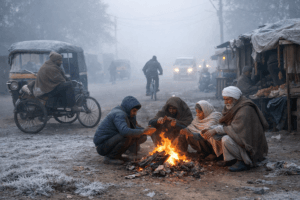
Beyond the Chill: Decoding North India’s Deep Freeze and Its Human Impact
As the sun sets earlier and the air turns sharp, a familiar yet formidable visitor has returned to the plains of North India: a biting, pervasive cold. The India Meteorological Department (IMD) has issued alerts, forecasting a significant dip in temperatures, dense fog, and a resurgence of cold wave conditions. But this weather update is more than just a bulletin; it’s a storyline affecting millions, weaving together climate patterns, daily survival, and regional contrasts. Here’s a deep dive into what this cold spell truly means.
The Meteorological Mechanics: Why the Cold is Returning with a Vengeance
The recent phase of rain and snow across the northern mountains wasn’t merely a standalone event. It was triggered by a western disturbance—a storm system originating from the Mediterranean region. As this system now moves eastward, away from the Indian subcontinent, it has created a vacuum. Nature abhors a vacuum, and in this case, it is being filled by dense, cold north-westerly winds rushing down from the snow-clad Himalayas.
This shift is the primary engine behind the plunging temperatures. The retreat of the western disturbance marks the end of precipitation-induced cloud cover, which had a slight insulating effect. Now, clear night skies allow maximum terrestrial radiation—heat escaping from the ground into the atmosphere—leading to a rapid and significant drop in minimum temperatures, especially in the plains.
The Regional Ripple Effect: From Foggy Plains to Snowy Peaks
The impact is not uniform but a cascade of interrelated conditions across a vast geography.
- The Northern Plains: A Blanket of Fog and Cold WavesFor states likePunjab, Haryana, Chandigarh, and parts of Rajasthan, the immediate threat is dense to very dense fog. This isn’t just a visual hindrance; it’s a massive disruptor. Reduced visibility to near zero cripples transportation networks. Flight schedules are thrown into chaos, train services are delayed for hours, and highway accidents become a grim routine. The fog, combined with calm winds, also acts as a lid, trapping pollutants and raising air quality concerns despite recent rains.
In isolated pockets, cold wave conditions are likely. The IMD declares a cold wave when the minimum temperature dips to at least 4.5°C below normal. For agricultural communities and homeless populations, this isn’t an inconvenience; it’s a direct threat to life and livelihood. Frost formation can damage standing winter crops like mustard and potatoes, impacting yields and farmers’ incomes.
- The Hill States: Fresh Snow and Heightened HazardsWhile the plains shiver, the hills are bracing for another round ofscattered to fairly widespread rainfall and snowfall. Jammu & Kashmir, Ladakh, Himachal Pradesh, and Uttarakhand could witness isolated heavy snowfall. This has a dual impact. Positively, it replenishes the vital winter snowpack, which is crucial for summer water supply in the form of glacial and river melt. Negatively, it cuts off remote villages, triggers avalanches, and makes travel on high-altitude passes treacherous. The forecast of isolated hailstorms adds another layer of risk to early-blooming horticultural crops like apples.
- Central India: Feeling the Northern ChillThe cold will not be confined to the north.Madhya Pradesh and adjoining regions are forecast to see a noticeable dip of 2-4 degrees Celsius. This extension of the cold spell highlights the vast influence of the Himalayan wind system. Cities like Bhopal and Gwalior, which typically have milder winters compared to Delhi, will experience a sharper winter bite, for which many households might be less prepared.
- A Stark Southern Contrast: Persistent RainAs North India grapples with dry cold,Southern India presents a contrasting picture. Tamil Nadu, Puducherry, and Kerala continue to experience light to moderate rain and thunderstorms. This is due to different weather systems, like troughs and moisture feed from the Bay of Bengal and the Arabian Sea. This persistent rainfall is crucial for the region’s water reservoirs but can disrupt daily life and agriculture in its own way.
Delhi’s Dilemma: Fog, Cold, and a Respite Gone
For the national capital, this weather shift is a mixed bag. The recent rains washed away particulate matter, leading to a temporary improvement in air quality from ‘severe’ to ‘poor’ or ‘moderate’. However, this relief is short-lived. The returning cold wave and fog bring a different kind of discomfort.
Minimum temperatures are expected to hover between 4-6°C, but the dampness in the air (a remnant of the rain) will make the cold feel more penetrating and bone-chilling. This “wet cold” is often perceived as harsher than a drier, lower temperature. The forecast of shallow to moderate fog will again challenge the city’s morning commute. For Delhi’s large homeless population and those in inadequately heated homes, the nights become a battle for warmth.
The Human Dimension: More Than Just a Weather Bulletin
Beyond the meteorological data lies the real story—the human experience.
- Health at Risk: Such cold waves exacerbate respiratory and cardiovascular illnesses. The surge in cases of asthma, bronchitis, and heart attacks in emergency rooms is a direct correlate of temperature dips. The fog and pollution cocktail is particularly dangerous for the elderly and children.
- The Urban-Rural Divide: The impact is disproportionately severe in rural areas. Lack of proper heating, greater exposure due to agricultural work, and limited access to immediate healthcare make villages more vulnerable. The phenomenon of “poor man’s winter,” where economic vulnerability amplifies physical suffering, is starkly visible.
- Economic Disruption: From delayed logistics and supply chain snarls due to fog, to damage to cash crops from frost and hail, the economic cost is immense. Daily wage laborers, especially in construction, face loss of income as work halts.
- A Lifestyle Shift: Life adapts. School start times are delayed, morning exercise routines move indoors, and consumption patterns shift towards warm foods and beverages. The winter wardrobe, from razais (quilts) to heaters, becomes a primary focus.
Navigating the Freeze: Practical Insights for Safety and Well-being
Staying safe during such a spell requires proactive measures:
- Layer Up: Dress in multiple thin layers rather than one heavy garment. This traps body heat more effectively. Don’t forget headgear, as significant body heat is lost through the head.
- Protect the Vulnerable: Ensure the elderly, children, and homeless have access to warm clothing and shelter. Community night shelters play a crucial role.
- Health First: People with pre-existing conditions should avoid early morning and late evening exposure. Staying hydrated and consuming warm, nutritious food helps maintain core body temperature.
- Travel with Caution: If driving in fog, use low-beam headlights and fog lamps, maintain large following distances, and avoid speeding. Check train and flight statuses before heading out.
- Secure Livelihoods: Farmers can use light irrigation or create smoke screens to protect crops from frost. Small measures like covering vegetable patches with cloth can mitigate damage.
Conclusion: A Seasonal Pattern with Intensifying Threads
While winter cold is an annual feature in North India, the intensity and frequency of these severe spells are being closely studied in the context of broader climate variability. The interplay between western disturbances, the Himalayan barrier, and wind patterns creates a complex dance that dictates the winter experience for hundreds of millions.
This current alert is a reminder of nature’s power and the profound interconnectedness of India’s climates. The biting cold in Delhi is directly linked to the snowfall in Kashmir, just as the fog in Punjab is a sibling to the dry winds descending from the mountains. Understanding this is key to not just enduring the winter, but adapting to its evolving character in the years to come. As the temperatures dip further, resilience, preparedness, and community care become the most effective shields against the freeze.
You must be logged in to post a comment.