
Beyond the Chill: Decoding Delhi’s First Cold Wave and the Hidden Winter Narrative
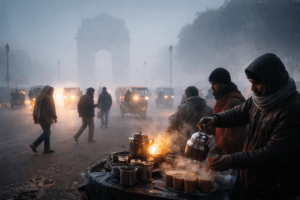
Beyond the Chill: Decoding Delhi’s First Cold Wave and the Hidden Winter Narrative
The headline is stark, almost clinical: “Delhi Gets Its First Cold Wave, Maximum Temperature At 16.9 Degrees Celsius.” For the India Meteorological Department (IMD), it’s a precise milestone, a box ticked based on negative departures from the normal. But for the millions who call the capital home, Saturday, December 20th, 2025, was something far more visceral. It wasn’t just a cold day; it was the day winter truly announced its presence with an oppressive, grey silence—a feeling that numbers alone cannot capture.
The Anatomy of a “Cold Wave Day”: More Than Just a Chill
To understand the significance, we must first move past the simplistic idea of “feeling cold.” The IMD’s declaration is a specific, technical diagnosis. A ‘cold wave day’ is officially recognized when a station’s maximum temperature dips 4.5 to 6.4 degrees Celsius below the normal for that period. On this day, Safdarjung, Delhi’s base observatory, recorded a high of 16.9°C, a significant 5.3-degree plunge below the expected norm. Palam was even colder at 16.3°C, down by 5.6 degrees.
This is crucial context. Delhi is no stranger to cold mornings, with minimums often hovering around 5-6°C in late December. The shock factor of this cold wave lay in the suppression of the daytime high. The sun, that reliable winter reprieve, was absent. A thick, persistent haze and blanket of cloud ensured the mercury never climbed to its comforting, usual winter peak. The city was trapped in a monochrome chill from dawn to dusk, denying people the natural warming cycle they depend on.
A Historical Whisper: How This Cold Wave Stacks Up
While the “first cold wave of the season” tag grabs attention, the historical data provided by the IMD offers a nuanced perspective. This year’s maximum of 16.9°C is colder than recent Decembers:
- 2024: Lowest max was 14.6°C
- 2023: 15.9°C
- 2022: 15.6°C
At first glance, 16.9°C might seem less severe. However, the critical factor is the deviation from what is typical for that specific date. It underscores that a cold wave is a measure of disruption, not just absolute temperature. The weather pattern that caused this—likely a combination of western disturbances, moisture influx, and wind conditions—created an anomaly that felt extreme within the established rhythm of the season. It’s a reminder that our perception of weather is deeply relative, shaped by recent memory and daily expectation.
The Real Disruptor: The Relentless, Sight-Stealing Fog
If the cold wave was the diagnosis, dense fog was the debilitating symptom. The report of visibility dropping to 200 metres at Safdarjung and 350 metres at Palam at 8:30 AM translates to a city brought to its knees. This wasn’t a picturesque, fleeting mist. It was a “very dense fog” that crippled infrastructure and recalibrated daily risk.
- Human Impact: For the daily wage laborer waiting at a chowk, the auto-rickshaw driver navigating blind lanes, the elderly person walking to a market, the fog compounded the cold with genuine peril. Every crossing became a gamble, every breath carried the damp, particulate-laden air deeper into the lungs.
- Systemic Strain: The delayed and cancelled flights at IGI Airport, the slowed train operations, and the inevitable snarls on roads like the DND Flyway or NH-48 are not just news bulletins; they represent economic loss, missed connections, frayed nerves, and a massive productivity dip for the region. The “orange alert” for the following day wasn’t just a forecast; it was a warning to brace for further systemic stress.
The Unseen Layers: Life Inside the Grey Haze
Beyond the data points lies the human story of adaptation and resilience. On such days:
- The Street Economy Shifts: The chaiwallah’s business booms, but his fingers are numb. The roadside vendor selling blankets and gloves sees a surge, but standing still for hours becomes an act of endurance. For the homeless, seeking shelter in night shelters (rain basera) becomes a question of survival.
- Health Becomes a Central Preoccupation: Hospitals see a rise in cases of aggravated asthma, bronchitis, and viral infections, especially among children and the elderly. The cold, damp air acts as an irritant, while indoor crowding to escape the chill facilitates the spread of germs.
- A Psychological Weight: The persistent grey—the “sun remained largely obscured”—has a psychological effect. The lack of sunlight can impact mood and energy levels, adding a layer of seasonal affective dimness to the physical discomfort. Delhi’s vibrant, sun-drenched winter character is replaced by a hushed, muffled version of itself.
Looking Ahead: Preparedness in the Face of Predictability
The IMD’s prediction of dense fog continuing, with temperatures expected to rise slightly, offers a mixed bag. The slight increase in maximum temperature may technically end the cold wave condition, but if the fog persists, the feeling of harsh cold will remain. This is where insight turns to value: understanding that the end of a meteorological “cold wave” does not mean an end to winter’s disruption.
True preparedness involves:
- Infrastructure Accountability: Ensuring airports and railways have the latest CAT III-B instrument landing systems and fog-safe procedures is non-negotiable. Road safety requires functional fog lights on public transport and clear advisories.
- Community Awareness: Vulnerable populations need targeted outreach—access to shelters, warm clothing, and health check-ups.
- Personal Adaptation: It’s about layering effectively, staying hydrated despite the cold, ensuring ventilated heating at home to avoid gas poisoning, and checking on elderly neighbours.
Conclusion: A Signal in the Cold
Delhi’s first cold wave of 2025 is more than a weather event. It is a stark signal, a dry run for the deeper winter weeks likely ahead in January. It tests the city’s systems, from aviation to healthcare, and the resilience of its people. It reminds us that in an era of climate change, where heatwaves dominate the conversation, the ancient challenge of cold remains potent and complex—a blend of meteorology, infrastructure, and human endurance.
The number 16.9°C will be recorded in ledgers. But the real story is etched in the delayed journeys, the collective shiver, the steaming cups of chai clutched a little tighter, and the city’s determined, grumbling push through the grey. It’s the story of a metropolis learning, yet again, to navigate the season’s sharpest edge.
You must be logged in to post a comment.