
Beyond the Casualty Report: What the Wounding of Smotrich’s Son Reveals About Israel’s Northern Quagmire
The wounding of Israeli Finance Minister Bezalel Smotrich’s son in recent Lebanon border clashes serves as a symbolic and strategic revelation, exposing the potential gap between Israel’s official narrative of a contained northern front and the more volatile reality on the ground. While Israeli military statements maintain that Hezbollah has been successfully pushed north of the Litani River under the ceasefire framework with minimal Israeli casualties, the incident involving such a high-profile political figure suggests the fighting may be heavier than publicly acknowledged. Hezbollah’s continued ability to launch sophisticated attacks—including anti-tank missiles and drone strikes on Israeli military positions—indicates that the militant group retains meaningful operational capacity south of the Litani, directly challenging Israel’s core assumption that air power and diplomatic arrangements could effectively neutralize the threat. This miscalculation reveals that Hezbollah’s deep social embeddedness in southern Lebanon, coupled with its organizational resilience, has allowed it to withstand Israeli pressure, turning the northern frontier into a far more contested and strategically uncertain theater than Israeli leadership has been willing to admit.
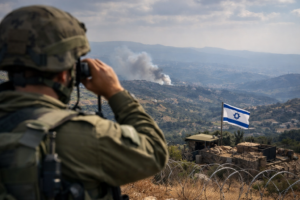
Beyond the Casualty Report: What the Wounding of Smotrich’s Son Reveals About Israel’s Northern Quagmire
The news broke on a Friday, a day typically reserved for quiet in the region, but it sent a distinct ripple through the Israeli political and military establishment: the son of Finance Minister Bezalel Smotrich had been wounded in combat along the Lebanon border.
Officially, the incident was a footnote. Israeli media, citing military sources, described the injury as “mild” and offered scant operational details. The young Smotrich, whose name was withheld by censors, was reportedly in stable condition. By the military’s own accounting, casualties on the northern front remain remarkably low, a statistic intended to project control and stability.
But in the fog of war, statistics are often the first casualty of politics. The wounding of Smotrich’s son is not a military data point; it is a human and strategic revelation. It pries open a window into a front line that Israeli leadership insists is quiet, exposing a reality that is far more volatile, contested, and uncertain. It forces a question that military briefings have tried to bury under a veneer of success: Did Israel fundamentally underestimate Hezbollah’s staying power south of the Litani River?
The Symbolism of a Single Scar
To understand the weight of this event, one must first understand Bezalel Smotrich. As the leader of the Religious Zionist Party and a towering figure in Israel’s far-right settlement movement, Smotrich is the ideological architect of much of the current government’s hardline policy. He is an advocate of annexation, a vocal opponent of Palestinian statehood, and among the most strident voices calling for the annihilation of Hamas and a firm hand against Hezbollah. For the political elite he represents, war is often a strategic abstraction, debated in secure rooms and articulated in press conferences.
When the son of such a man is carried off the battlefield, the abstraction dissolves. The war is no longer a policy to be managed from Tel Aviv; it is a visceral reality that has reached into the home of the cabinet.
While Israeli media adhered to standard practice by omitting specifics—the exact location, the nature of the firefight, the unit involved—the symbolism is inescapable. It suggests that the front line is not a distant, contained perimeter. It is close enough, and dangerous enough, to touch the family of the nation’s most powerful hawks. For the thousands of reserve soldiers who have rotated through the northern border in recent months, this comes as no surprise. But for a public fed a steady diet of official confidence, it is a jarring reminder that the “quiet” is deceptive.
The Credibility Gap and the Numbers Game
Israel has long maintained a strict policy of military censorship, particularly regarding casualties. In a small country where military service is largely compulsory, every loss resonates deeply. Managing that information is seen as crucial to maintaining public morale and strategic deterrence.
The official narrative on the northern front is one of success. Since the ceasefire framework was established, the message has been consistent: Hezbollah has been degraded. Its elite Radwan Force has been pushed back. Its rocket arsenal has been diminished. The buffer zone is secure.
Yet, the numbers tell a story that is almost too clean. If only a handful of soldiers have been wounded in recent clashes, as official statements suggest, the injury of a minister’s son is a statistical anomaly of the highest order. The more plausible explanation, echoed by regional analysts and international observers, is that the fighting has been heavier than publicly acknowledged. The Smotrich incident may be one of the few that pierced the media blockade, not because it was the most severe, but because of the political prominence of the family involved.
This isn’t to suggest a full-scale conspiracy of silence, but rather to highlight a pattern. Throughout the concurrent war in Gaza, independent journalists and human rights organizations have repeatedly documented events on the ground that diverged from, or directly contradicted, official military accounts. If the northern front is subject to the same information control, then the low casualty figures cannot be taken as a full measure of the battlefield reality. They are, at best, a partial picture, and at worst, a carefully curated illusion.
The Ghost of the Litani River
The strategic heart of the matter lies thirty kilometers north of the Israeli border, at the Litani River. The current ceasefire framework, brokered after months of escalating exchanges, is built upon a foundational principle established by UN Security Council Resolution 1701, which ended the 2006 war: Hezbollah forces and heavy weaponry were to withdraw north of the Litani.
The logic was simple and durable. By creating a buffer zone patrolled by the Lebanese Armed Forces (LAF) and UNIFIL peacekeepers, Israel sought to remove the immediate threat of a cross-border incursion. Hezbollah’s presence would be pushed back, its rocket launchers kept out of range of Israeli communities, and its elite units denied the proximity needed for a rapid ground assault. For months, Israel reinforced this framework with thousands of airstrikes, surveillance overflights, and targeted assassinations, all designed to “cleanse” the area south of the river.
But Hezbollah is not a conventional army that can be easily moved with a pen stroke or erased by bombs. It is a deeply embedded socio-military movement, particularly in the villages and hills of southern Lebanon. Its fighters are the sons of the land. Its logistics are woven into the local infrastructure. Its ideology is rooted in resistance to Israeli occupation.
Recent events suggest that the attempt to push them north has been, at best, a partial success. Hezbollah’s military arm has continued to launch sophisticated attacks. Reports have emerged of anti-tank missile strikes on Israeli positions, drone penetrations of Israeli airspace targeting military barracks and even sensitive defense industry facilities associated with Rafael Advanced Defense Systems. These are not the actions of a force that has been pushed back and contained.
The Resilience South of the River
The strategic surprise for Israel may not be what lies north of the Litani, but what has remained stubbornly in place to the south. Israeli media, in moments of candor, have begun referring to “serious security incidents” along the frontier. This euphemistic language hints at a reality where Hezbollah’s forward observation posts, tunnel networks, and missile-launching teams have survived the months of bombardment.
If Hezbollah can still accurately target Israeli military posts with guided missiles, it means their surveillance and targeting capabilities are intact. If they can launch drone swarms at sensitive sites, it means their command and control structures are resilient. If their fighters are still engaging Israeli patrols, it means the Radwan Force, or units like it, are still operating in the very areas they were supposed to have vacated.
This resilience forces a reevaluation of Israel’s core assumption. The belief that Hezbollah could be sufficiently contained through a combination of international diplomacy and air power appears to have been a miscalculation. Air strikes can degrade capabilities, but they cannot easily eradicate an entrenched guerrilla force from its home terrain. The Lebanese army, weak and fractured, has shown neither the will nor the capacity to forcibly disarm Hezbollah. UNIFIL’s mandate restricts it to observation and reporting.
The result is a strategic paradox: Israel claims the area is cleared, but Hezbollah continues to fight from within it.
A Deeper Miscalculation
The wounding of Smotrich’s son is a single pixel in a much larger, more troubling image. It does not, by itself, prove that Hezbollah is stronger than before the 2006 war or that Israel is hiding mass casualties. What it does prove is that the northern front is an open, bleeding wound, not a healed scar.
The deeper miscalculation by Israel may not have been about Hezbollah’s military hardware, but about its political and social capital. They bet that a combination of military pressure and the threat of regional war would force Hezbollah to fold, to prioritize Lebanese stability over confrontation with Israel. They believed that the devastating blast in Beirut’s port, the economic collapse, and the popular fatigue with conflict would weaken the “Party of God” from within.
Instead, Hezbollah has demonstrated an uncanny ability to absorb punishment and adapt. It has framed its ongoing skirmishes as a support front for Gaza, wrapping itself in the mantle of pan-Islamic solidarity. By continuing to launch attacks, it maintains its relevance and its deterrence, proving to its base and its enemies alike that it cannot be bombed into submission.
For Israeli planners, this is the most unsettling conclusion. If Hezbollah’s presence south of the Litani remains strong, then the strategy of containment is already failing. The buffer zone is a mirage. The quiet is an intermission, not an ending.
As Smotrich’s son recovers from his wounds, his father will likely return to the cabinet with renewed fury, calling for a more decisive response. But the incident on the border carries a lesson that transcends politics. It is a reminder that in the hills of southern Lebanon, grand strategies and political rhetoric meet a different kind of reality—one where a determined foe, fighting on its own ground, refuses to simply disappear. And in that confrontation, the families of ministers are just as vulnerable as anyone else.
You must be logged in to post a comment.